


 Jornal O Globo
 Leader of Santo Daime, Padrinho Paulo Roberto is accused of sexual violation by fraud against former followers in a church in Rio
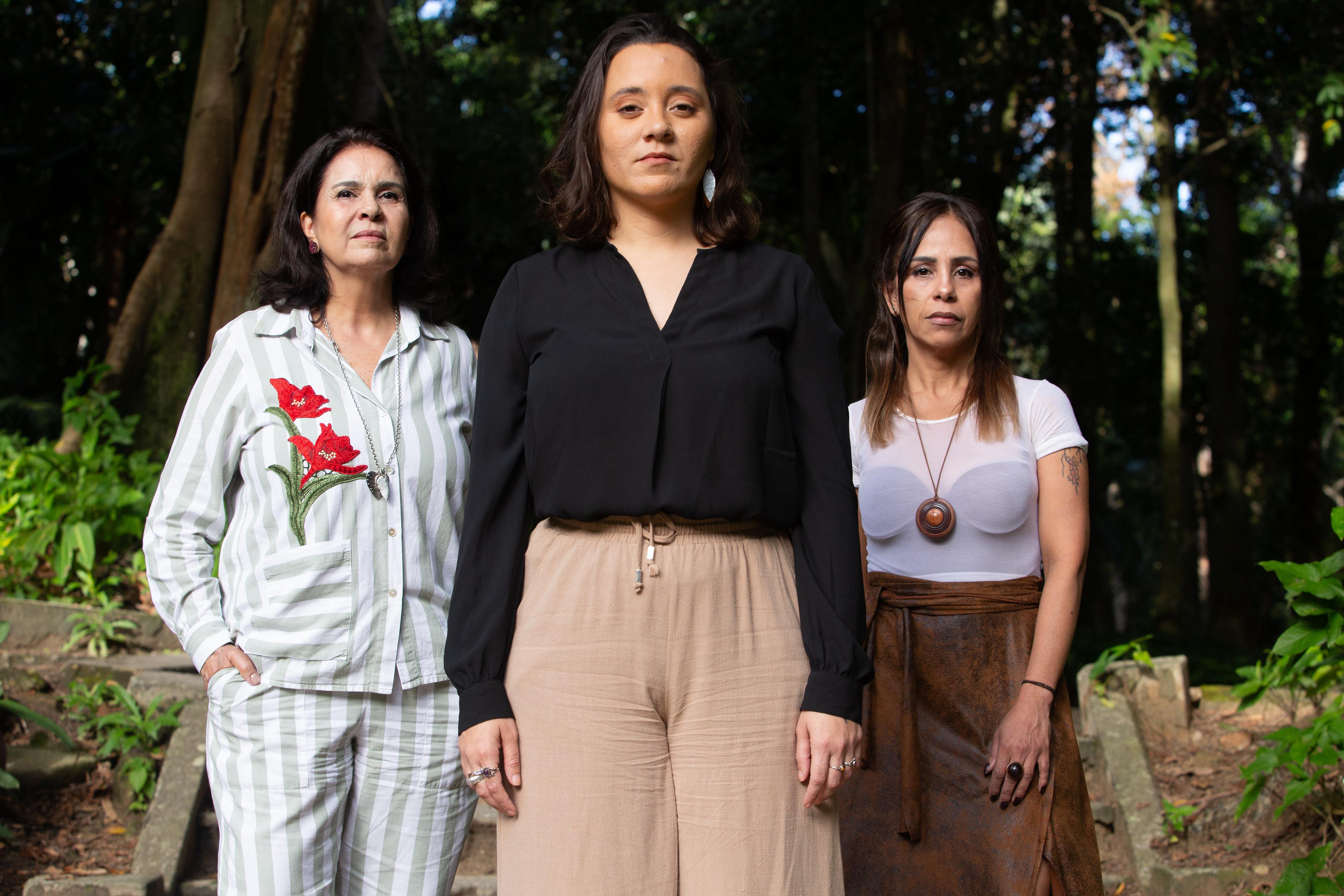
Religious leader Paulo Roberto Silva e Souza, 76, founder and head of the Santo Daime Céu do Mar church in São Conrado, Rio's South Zone, had a preventive arrest warrant requested by the Rio Public Prosecutor's Office (MPRJ) on the 4th of this month. Known as Padrinho Paulo Roberto, he stands accused of sexual assault by fraud and psychological violence against Jéssica Nascimento de Sousa, a follower of the Santo Daime doctrine since 2015. Over the past year, O GLOBO followed the case, listening to Jéssica's accounts and identifying five other women who reported similar experiences. Paulo Roberto's defense declined to comment for this report. However, in the legal proceedings, they deny the accusations. The MPRJ's complaint states that between April 2022 and July 2023, the religious leader exploited his position and the admiration and respect that Jéssica had for him to engage in sexual acts. Prosecutors also suggest there may be other potential victims. One witness even claims Paulo Roberto "exerted a kind of fascination over his followers, using his religious leadership role to engage with them." — He said: "I've been practicing a therapy called bioenergetics for a long time, since my days as a psychologist. I'm going to ask you not to tell anyone because I no longer see patients, but I will do it for you. I will touch specific points to release traumas. You can cry, you can scream, but here you are safe. I will guide you through it" — Jéssica details. Jéssica told O GLOBO she was invited in 2020 to be Paulo Roberto's personal assistant when he proposed spiritual sessions, requesting confidentiality. According to the case files, he led her to believe the sexual acts were part of a "spiritual healing process." The first approach allegedly occurred in April 2022. Her then-boss suggested a confidential meeting under the guise of a "bioenergetic therapy" to unlock traumas from past abuse she had suffered. Jéssica says she initially hesitated, but the religious leader insisted it was the right time, as he needed to travel. — I agreed to do it... He placed a chair facing another, sat in front of me, and instructed me to close my eyes. He started by touching my hand, asking me to speak up if I felt anything. But I couldn't feel anything. He touched the side of my chest. I said, "No. Stop. I'm fine now." He replied, "It's important for you to express what you're feeling now." I said, "Look, I don't know what I'm feeling. I need some time." He tried to hug me when I was leaving — she recounts. According to Jéssica, the sessions escalated to more intimate acts and eventually sexual intercourse. On some occasions, she maintains, the acts took place under the influence of "narcotic substances," which the accused claimed aided in the "healing treatment." She also recounts that whenever she expressed a desire to stop the alleged treatment, the religious leader, leveraging her emotional vulnerability, manipulated her into believing the practices were essential for healing or that she was under "spiritual attack" to divert her from her mission. — Once, he asked me for a kiss. Then it happened. He took me to a room, to the couch (...) He was the padrinho, my padrinho, and would say: "I see you as a daughter, as a woman." It wasn't a romantic relationship; it was something without a name. It was like: "We're doing something others think is wrong, but we're healing ourselves" — Jéssica continues. According to the victim, Paulo Roberto's therapies spanned eight months. — It lasted a long time, from April 2022 to December 2022, but not consistently, as he traveled a lot. It was in seasons. When he was in Rio, I had to work and still stay there (at the church). I'd say "no." He insisted, and I told him I was scared. He laughed, saying he only feared God. But truthfully, he's a big coward — she confides. — He said I needed strength, that it was a mission, that I had to follow through. Paulo Roberto Silva e Souza, known as Padrinho Paulo Roberto, founder and leader of the Santo Daime church Céu do Mar Screenshot/YouTube Regarding Jéssica's accusation, Paulo Roberto's defense argues in the case that the victim "maintained a loving, extramarital relationship" with the religious leader. They add that when his wife "discovered the affair, he chose to try to repair the marriage." Jéssica was then expelled from Céu do Mar by Paulo Roberto's wife. From that point, the church founder's lawyers claim Jéssica began making accusations. The case is under confidential proceedings in the 11th Criminal Court of the Capital, awaiting a decision from Judge Renata Travassos Medina de Macedo. The information about the preventive arrest request was confirmed to O GLOBO by sources closely following the case. Over the past 12 months, the newspaper also interviewed other attendees of the Céu do Mar church. Of the five women who reported experiences similar to Jéssica's, two did not wish to be identified but recounted the same pattern of harassment by the religious leader. Besides Jéssica, Isabela Maria Augusto De Lima, Fernanda Lin, and American Maria del Castilho agreed to provide their testimonies to O GLOBO. All these followers claim to have interacted with Paulo Roberto over different periods of his life. These interactions, they say, occurred both inside and outside Brazil, as he has significant influence in the church branches in the United States, Canada, and Mexico. In a letter obtained by O GLOBO, Maria del Castilho described the trauma she allegedly suffered when she visited Brazil in 2007. The American stated that on October 15 of that year, after her last work in Brazil for Céu do Mar, the religious leader asked to speak with her privately in his office. The daimista says she was surprised because it was late, but she didn't want to miss the chance to receive more guidance from the man she admired and respected as a spiritual teacher. "In his office, he took me to the balcony, where it was very dark. During our conversation, I asked who he was and what the role of a padrinho was. He said he couldn't explain it in words and would have to show me. I felt uncomfortable with it but didn't want to distrust someone everyone clearly trusted. So, I allowed him to continue. He then pulled me closer until our bodies were touching. He held me tightly by the upper body, hugging me and rubbing my back, with his face touching the side of my face and neck," she writes, reporting that she began to feel "very uncomfortable." Paulo Roberto Silva e Souza, known as Padrinho Paulo Roberto, founder and leader of the Santo Daime church Céu do Mar Screenshot/YouTube Crime marketing: gangs use social media to promote themselves and recruit young people According to the American, she didn't want to doubt Paulo Roberto's intentions: — He pulled away. I felt disturbed and turned my back to him, holding onto the balcony railing to balance myself. He then started massaging my back and shoulders. This made me extremely uncomfortable, and I told him so. We returned inside, to the office, and he said I didn't understand what he was doing. He seemed disappointed in me. I said I was sorry, but that I was having trouble trusting him and felt really uncomfortable. He said he was only trying to send me love, which I could take home with me. He wanted me to learn to love myself. Back in the United States, that same year, Maria says she reported the incident with Paulo Roberto to the Conselho Brasileiro de Padrinhos do Centro Eclético de Fluente Luz Universal Rita Gregório de Melo — América Norte (Ceflurgem-AN) and to the Centro Eclético da Luz Universal Fluente Madrinha Rita Gregorio de Melo – Conselho de Anciãos da América do Norte, of which Paulo Roberto is a member. As a result of the complaint, the religious leader faced restrictive measures in December 2007. Another investigation by Ceflurgem-AN resulted in a report concluding there was "an appearance of sexual misconduct" and could infer "abusive behavior." The document highlighted the power imbalance in the relationship under investigation, stating that the follower's vulnerability "nullifies even consensual sexual activities." In light of other reports, the report concluded there was a pattern of abuse that could not be tolerated. However, this initial suspension had limited effect, and Paulo Roberto resumed leading ceremonies and receiving donations in the U.S. Beforehand, he admitted his excesses in a letter emailed to Maria Del Castilho, offering "sincere apologies for crossing any personal boundaries." "I want to express my sincere regret for anything I may have said or done that hurt you, and I ask for your forgiveness. Forgive my ignorance and lack of vigilance. Exhausted, I was blinded by my anxiety and urgency to help you. You were leaving the next day, and I was deeply concerned for you. For me, as a Padrinho, helping someone is not an option. It is a mission I must fulfill with love and truth. I deeply regret any misunderstanding I may have caused and only wish to bring a healthy and complete closure to this incident. I felt your pain and confusion, and I hope this acknowledgment brings you some comfort. I have also suffered greatly, living in great torment," reads part of the letter. In the proceedings, however, the defense has argued that Maria's accounts are untrue and that "the alleged criminal acts that occurred decades ago" would be "extinguished by the statute of limitations" in the case. Isabela Maria Augusto de Lima: "Since I was 14, I had a therapist, so I said, 'Look, I'm not liking this approach.'" It seems like you've provided a name, "Júlia Aguiar." If you have a specific text or context involving Júlia Aguiar that you would like translated into American English, please provide the full text, and I'll be happy to assist with the translation following the guidelines you've outlined. Other women interviewed by O GLOBO report abuses at different times. Isabela Maria Augusto de Lima says she was introduced to Céu do Mar through a mutual friend in 1984 when she was 24. Isabela sought out the church because she had learned about Santo Daime and was interested. After becoming a fardada, which means entering the Daime ritual, he invited her to individual spiritual sessions. — He invited me to a therapy session, where he began touching my body a lot. I was 24. But I was used to psychological therapy. Since I was 14, I had a therapist, so I said: "Look, I don't like this approach." And he said: "It's important for you to release your energies, even your demons" — she recounts, now 64. Fernanda Vieira, on the other hand, says she was under 18 when she experienced an abuse situation by Paulo Roberto. She was a friend of one of the religious leader's daughters and was at his house when everything happened, she reports: — I lived in a condominium near Céu do Mar, very close. I was 17 at the time, and he called saying he wanted me to do some work. He said he noticed I was excited about computing and invited me. When I arrived, he asked me to come in, inquired about school. Out of nowhere, he said it was 4:30 p.m. and asked me to apply a remedy on him. Everything was already awkward, but he was my friend's father talking about health and asking me to apply the remedy. When applying the medication, he said: "Apply this remedy properly! Lie down, and I'll show you how to do it!" According to Fernanda, Paulo Roberto didn't stop there: — He started touching me, and I saw he was losing control. I thought that if I didn't put a stop to it, it would get worse. I said: "Stop!" He left, went to the bathroom. I was in shock, unable to move. He left the room. She said she left in shock and, over time, realized what had happened to her. Over the years, other memories emerged while many people tried to defend him, claiming he must have been drugged. Both Isabela and Fernanda testified in Jéssica's case. The complainant received legal guidance from two attorneys, Thayná Silveira and Deborah Rabay, who state that their client sought religion for support. "In 2015, the complainant experienced an acute depression crisis, and like many others affected by this disorder," the victim sought religious aid and comfort, they assert. Isabela Maria Augusto de Lima: "Since I was 14, I had a therapist, so I said, 'Look, I'm not liking this approach.'" It seems like you've provided a name, "Júlia Aguiar." If you have a specific text or context involving Júlia Aguiar that you would like translated into American English, please provide the full text, and I'll be happy to assist with the translation following the guidelines you've outlined.