


 Business Recorder
 KCR revival can change economy, political dynamics of city: PDP
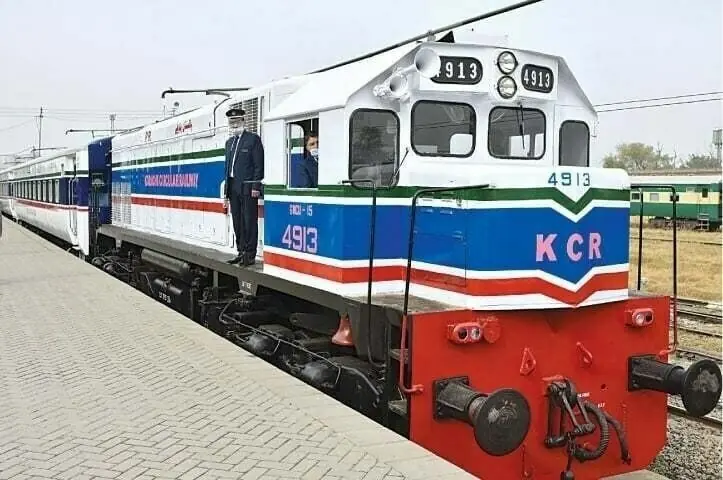
KARACHI: The revival of Karachi Circular Railway (KCR) is deliberately put on the back burner because it will not only reshape the economy of the megacity but also redefine its socio-political dynamics, kicking out traditional political actors, said Pasban Democratic Party (PDP) Chairman Altaf Shakoor here Sunday. He said upgrading public transport systems always change social, economic and political mindset of voters, bringing in a sea change to whole socio-political dynamics. He said revival of KCR would ignite this process; that is why the vested interests are delaying it year after year. He said improving commuting is not merely a transport upgrade; it represents a structural economic reform for Pakistan’s largest city; it is also a deeply political intervention. A functioning KCR would reshape Karachi’s economy while simultaneously altering its socio-political balance by weakening entrenched intermediaries who thrive on transport chaos, informality, and fragmented urban governance. This dual impact helps explain why the project is repeatedly pushed to the back burner. Shakoor said that megacity’s economy absorbs enormous hidden losses due to unreliable and time-consuming commuting. Workers spend hours reaching workplaces, arriving tired and mentally drained, reducing efficiency across offices, factories, ports, and markets. A functional KCR would introduce predictable and faster cross-city travel, reduce absenteeism, and improve punctuality. He said the megacity suffers an estimated loss of one billion rupees due to its poor transport system, and even a modest improvement could raise effective productivity by 10 to 20 percent without any increase in wages, making KCR economically justifiable on productivity grounds alone. He said a reliable rail transport would also expand Karachi’s labour market by shrinking economic distance within the megacity. Workers would gain access to better employment opportunities beyond their immediate neighbourhoods, while employers could recruit from a much larger talent pool. Safe and dependable rail services would particularly support higher female labour participation. The combined effect would be higher employment, stronger household incomes, increased consumption, and sustained growth in urban GDP. He said as Pakistan’s primary port city and industrial hub, Karachi’s competitiveness depends on the daily movement of people. Chronic road congestion disrupts industrial schedules and raises the cost of doing business. KCR would improve access to industrial zones, reduce dependence on road commuting, and enhance operational efficiency, strengthening investor confidence and reinforcing Karachi’s role as the country’s economic engine. PDP Chairman said urban rail systems also create city-level value through better land use. KCR stations would develop into economic nodes, encouraging higher density commercial and residential activity, new retail clusters, and more efficient land utilization. A revived KCR would support gradual formalization of Karachi’s large informal economy. He emphasized that the benefits extend beyond income and output. Reduced congestion would lower air pollution, accidents, and stress-related illness, cutting healthcare costs and productivity losses. Rail transport is also more energy efficient per passenger/kilometre and easier to electrify, reducing fuel imports and pressure on foreign exchange reserves. He stressed that a visible and reliable urban rail system would also signal governance capacity and long-term planning, improving Karachi’s image and attracting higher-value investment. The experience of Indian cities highlights what Karachi lacks, he said, adding the systems such as the Delhi Metro and Mumbai Suburban Railway form the backbone of daily economic life, move millions reliably, and shape urban growth around rail corridors. Despite delays or cost overruns, they continue to expand because their economic value is widely recognized. The lesson for Karachi is clear, he said, sustained political commitment, institutional continuity. What stands in the way is not a lack of technical feasibility but the political discomfort of change. He said Karachi’s politics continues to operate under the shadow of a feudal and rural style of power, despite being a fully urban megacity. Electoral influence is often organized through fragmented, locality-based vote pockets that function less like modern urban constituencies and more like controlled territories. These structures depend on informality, weak service delivery, and the mediation of daily survival needs—especially transport. In such an environment, mobility itself becomes political capital, reinforcing patronage networks and bloc-based voting patterns inherited from rural political culture rather than urban citizenship. He said a genuinely integrated urban commuting system like the KCR would quietly but decisively disrupt this model. By enabling citizens to move freely across the city for work, education, and services, it would weaken the grip of localized intermediaries over livelihoods and daily routines. Over time, this would encourage issue-based, citywide political engagement rather than identity- or territory-based mobilization. He said improved mobility would help Karachi behave politically like a true megacity rather than an aggregation of controlled enclaves, creating space for new, genuinely urban political actors focused on governance, productivity, and quality of life rather than gate-keeping and survival politics. Copyright Business Recorder, 2025