


 Dawn.com
 When the CIA ‘lost’ a nuclear device in the Himalayas
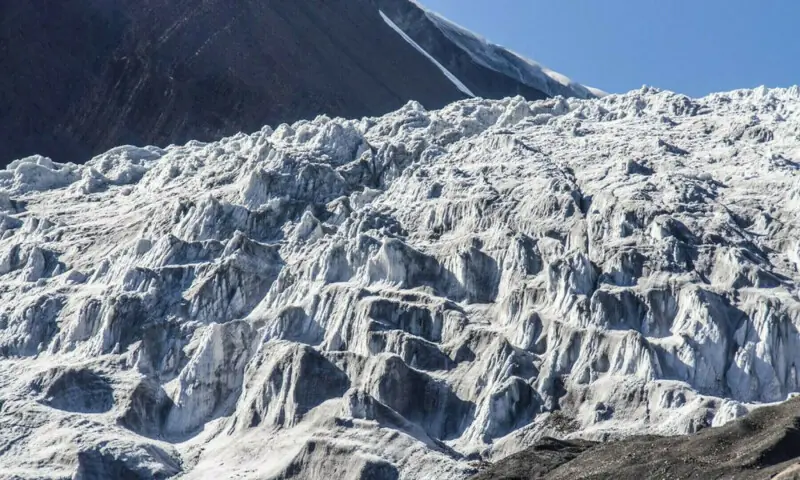
AT THE height of the Cold War, a covert CIA mission in the Indian Himalayas ended with a startling failure: the disappearance of a plutonium-powered nuclear device on one of the world’s highest mountains. Nearly 60 years later, the US government still refuses to publicly acknowledge what happened — even as fears persist that the device could pose environmental and security risks to millions of people whose water supply depends on the Ganges river basin, according to a New York Times report . The operation, kept secret for more than a decade, involved American and Indian climbers scaling Nanda Devi — India’s second-highest peak — to install a nuclear-powered surveillance station designed to spy on China’s missile programme. The generator, known as a SNAP-19C, was fuelled by highly radioactive plutonium and intended to power an antenna capable of intercepting telemetry from Chinese nuclear tests. Containing Pu-239 — an isotope used in the atomic bomb dropped on Nagasaki — similar generators were used by Nasa to power satellites such as Voyager I. Designed to power spy equipment to track Chinese N-tests, the generator was abandoned atop Nanda Devi during a blizzard. According to NYT, it has never been recovered In 1965, as the climbers neared the summit, a violent storm forced a retreat. Acting to save lives, the expedition leader ordered the team to secure the equipment near the top and descend immediately. The generator, weighing about 50 pounds, was left behind. When climbers returned the following spring, it was gone. An avalanche had torn away the ledge where it was stored. Despite multiple search missions using radiation detectors and metal sensors, the generator was never found. The loss triggered alarm inside the CIA and anxiety in both Washington and New Delhi, sparking a decades long cover-up that was continued by the likes of president Jimmy Carter. The plutonium-powered device is still believed to be buried somewhere beneath glaciers that feed the Ganges River, a lifeline for hundreds of millions of people. While scientific studies conducted in the 1970s found no evidence of contamination and concluded the risk was low, concerns have never fully subsided — especially as Himalayan glaciers melt faster due to climate change. The episode became public in 1978 after an investigative reporter blew the lid off the mission, sparking outrage in India. Lawmakers accused the government of allowing the CIA to operate secretly on Indian soil, while protesters warned that the agency had endangered the headwaters of India’s most sacred river. Declassified diplomatic cables show that President Carter and then-Indian prime minister Morarji Desai worked quietly to contain the fallout. Today, the mystery continues to linger. Indian politicians, environmental activists and villagers living near Nanda Devi have renewed calls for the device to be located and removed. Some fear that a warming climate could eventually expose the generator, or that its radioactive material could be misused if it is discovered. Published in Dawn, December 15th, 2025