


 Dawn.com
 THE ‘FAR-FLUNG AREA’ LOCATED MERE HOURS FROM QUETTA
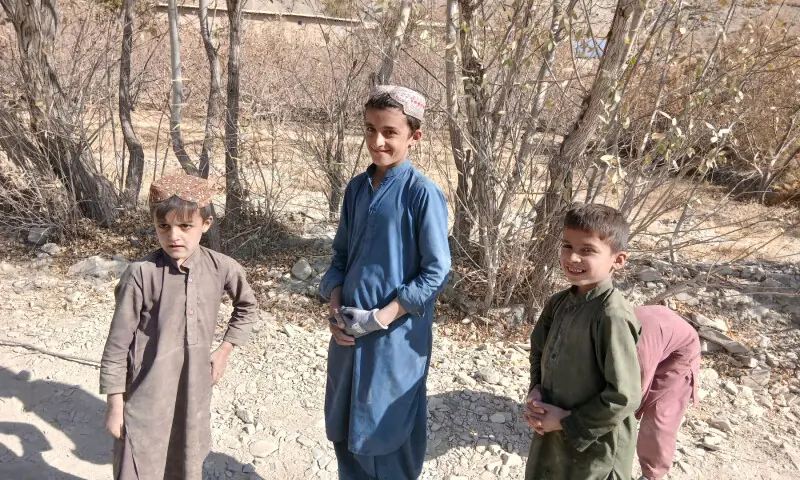
Around three hours north of Quetta lies the Sanzala Pass, which connects several villages located in Hurramzai Tehsil to the border with Afghanistan. Most cars cannot reach this area, because the dusty mountain path that winds its way through the pass was never paved. I make my way there riding pillion on a motorbike, because anything else would get a puncture. The path that we take only exists because smugglers use the route to haul their ‘wares’ from Afghanistan into Balochistan, locals tell me after I reach the village. At first glace, it seems like we’ve returned to medieval times: there is no electricity, healthcare, road infrastructure, or any other basic facility, for that matter. The cold weather also brings to mind the absence of natural gas, which remains a pipe-dream for many parts of Balochistan. Once, Pishin used to be governed from Quetta, and was only granted the status of a district in January 1975. But the change of administration has not changed the lives of those who inhabit this difficult terrain. During our visit, we spot only two cars in the entire settlement. These, we learn, are mostly used to ferry pregnant women to hospitals for childbirth. Most other residents use motorbikes, like we did, to travel to other villages en route to the border, or southward to Quetta. An abandoned school building in Sanzalla, Pishin. — photo by author The sight of an abandoned school building catches our eye — it has no doors or windows, and is filled with dry hay for cattle to feast on. As we approach the abandoned school, a man from the nearby village, who we later discover is one of the local notables, approaches us. First he warns us not to approach the school building, as there is a ferocious dog about. When that fails to dissuade us, he becomes more straight-forward: “You cannot take photographs of the school,” he says in Pashto. An abandoned school building in Sanzalla, Pishin. — photo by author An abandoned school building in Sanzalla, Pishin. — photo by author Named after another local notable, Daru Khan, the school in Inzargai village is one of the three in Sanzala Pass that never opened since construction finished around a decade ago. This is why most of the children we meet in the area work instead of studying. Due to a lack of economic opportunities, dozens of youths from Sanzala can be found working in ubiquitous ‘Quetta tea hotels’ across the entire country. Our Pashtun Achakzai hosts welcome us at lunchtime. After our meal, I ask them, “Do your children go to school?” An elderly farmer laughs along with his nephews: “Where are the schools in our village?” he asks in response. Sattar, the farmer, has five children of his own. Ameen has six, while his younger brother Saeedo has three, and Faizullah, the elder brother, has nine children. They themselves are nine siblings. I do the math: this means around 30 family members, mostly children, in one joint family that are out of school. Besides, there are several other villages in the pass, stretching right up to the border. This means that potentially hundreds of children of school-going age are falling by the wayside. Children in Sanzalla, Pishin. — photo by author Talking to Dawn , Faizullah Kakar, the local district education officer (DEO), claimed only two schools in the area were closed due to the non-availability of teachers and community disputes, while three were functional. However, he called the area — located just over 40km from Quetta — a ‘far-flung area’ of the district, vowing that all schools would be reopened by March 2026, when bus services would be provided to teachers who cannot go there on their own. “The MPAs only think of us during election time, and we have to travel all the way to Pishin town on bikes to cast our votes,” Sattar regrets, adding that soon after the elections, “they forget all about us and our issues”. Published in Dawn, December 15th, 2025