


 Dawn.com
 Victory for medicinal plant highly prized for its resin
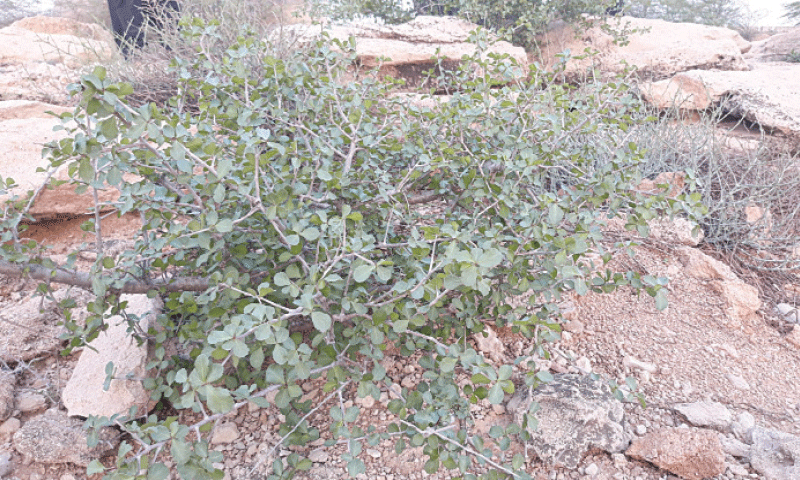
KARACHI: Gughar — a high value medicinal plant which has been declared protected under the Sindh Wildlife Protection Act 2020 — has now also been listed in the Appendix II of Convention on International Trade in Endangered Species of Wild Flora and Fauna (CITES). According to officials, the decision was taken at the 20th meeting of Conference of the Parties (CoP), CITES, recently held in Samarkand, Uzbekistan. The development, sources said, followed effective lobbying efforts of the Pakistani delegation that put up a revised plea before the global forum to consider the plant for inclusion in the CITES. The initial proposal put up by Germany and supported by EU countries couldn’t get the two-third majority. Describing the development as a major success for Pakistan on the international forum, officials said that the status would help tackle the growing threat of the plant’s illegal trade. Gughar, native to Karoonjar Hills, now listed on CITES; the status will help tackle growing threat to plant’s illegal trade “This decision will help promote global traceability of the plant’s trade,” said Sindh Wildlife Conservator Javed Ahmed Mahar, adding that while the CITES Appendix 11 didn’t place a ban on the plant’s trade, it called upon on the member states to set up a mechanism to make the trade transparent and traceable. “The CITES Appendix II creates a strict science-based control system that only allows international trade when specimens are legally acquired and sustainably sourced. Every shipment is required to carry standardised CITES permit, creating a fully traceable chain of custody that can be verified at any border,” Mr Mahar explained. Sources said plant’s illegal trade from Pakistan had increased dramatically in recent years following complete ban by India on its extraction from the species’ native population growing in Rajasthan. The plant’s resin, they said, was in high demand across the world. In 2024, the wildlife department in collaboration with anti-narcotics force had confiscated two major illegal shipments containing high-value plant materials, including that of gughar, which was declared protected the same year. The decision came in light of Sindh High Court’s last year’s order placing a complete ban on mining and excavation activities at Nagarparkar’s Karoonjar hills, a key habitat of the plant. Precious plant A perennial shrub, gughar (Commiphora Wightii) is found in parts of Tharparkar, Sindh, and Balochistan in Pakistan, India and Oman. The plant is targeted for its dense oily resin known as guggulu or guggul. This substance, expert say, is widely used in traditional medicines for the treatment of various disorders. Scientific evidences show the shrub to be profoundly effective against diverse chronic diseases such as inflammatory bowel disease, Alzheimer’s disease, cancer, arthritis, pancreatitis, dermatitis, diabetes, infectious diseases, intestinal metaplasia, otitis media, respiratory diseases, asthma, psoriasis, and gingivitis. Besides, according to experts, it also exerts hepatoprotective, neuroprotective, anti-inflammatory, anti-oxidant, cardio-protective, hypolipidemia, and thyroid stimulatory effects by targeting multiple signalling pathways. “C.wightii is vulnerable to overexploitation, both because of its life history characteristics as well as the higher yields produced when destructive methods are used to harvest its gum. The species is slow growing with a poor germination rate and harvest is focused on mature individuals that are at least five years old (and 8-10 years old in India). Unregulated commercial exploitation is therefore expected to impact the recruitment and regeneration capacity of C.wightii, which is already heavily depleted,” says the proposal read out by Dr David Harter of Germany at the conference. It calls for urgent regulation to control its international trade and promote the recovery of the remaining population of the species. Published in Dawn, December 15th, 2025