


 Business Recorder
 Govt taking steps to cut cost of doing business: Kayani
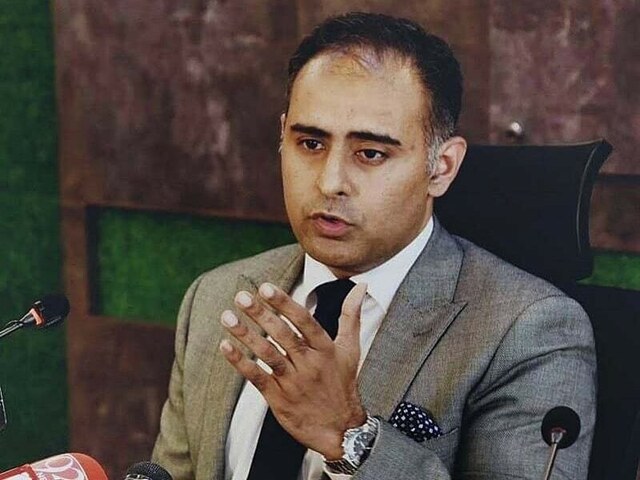
ISLAMABAD: Acknowledging the high cost of doing business in the country, Minister of State for Finance Bilal Azhar Kayani on Monday said the government is prioritising measures to lower production and raw material costs, strengthen economic competitiveness, and drive sustainable, export-led growth. “The government is focused on reducing the cost of doing business— particularly taxes, energy prices, and raw material costs— within the available fiscal space,” Kayani said while addressing a press conference here on Monday. Reaffirming the government’s commitment to steering the country toward sustainable economic growth, the Minister stated that the country has achieved economic stability despite the negative politics by certain elements. He assured that concerns of the industrial sector are being addressed through policy measures. The Federal Board of Revenue (FBR) achieved a 26 percent growth in tax revenue last year, said the minister, adding that the government aims to maintain primary balance and fiscal discipline this year, as well. The minister said the next major goal is sustainable economic growth, noting that the National Tariff Policy has been announced, which will provide relief and facilitation to industrial sectors. “Economic improvement and sustainability will continue,” he added. Kayani said the government stabilised the economy within one and a half years, despite inheriting severe challenges. He highlighted that foreign exchange reserves have improved, inflation dropped from 22 percent to a single digit, the tax-to-GDP ratio increased from 8.8 percent to 10.3 percent, the FBR revenue rose by 26 percent, and economic targets have been achieved without mini-budgets. He further said that International Monetary Fund (IMF) reviews were completed and approved by the IMF Board, while international rating agencies upgraded Pakistan’s outlook. He said the prime minister had formed nine working groups, several of which have already presented recommendations, while five more groups will submit proposals next week. Based on these suggestions, the government has already abolished a 0.25 percent export surcharge. Kayani said Pakistan’s future economic model will be driven by the private sector, with the government acting as a facilitator. He added that improved foreign exchange reserves and macroeconomic stability will also benefit vulnerable segments of society. After achieving stabilisation, the government is now focused on long-term, sustainable economic growth under the IMF program, emphasising discipline, reforms, and continuity in policies, he added. Kayani regretted the campaign of PTI against the armed forces. “Our security forces are rendering sacrifices in the war on terrorism. Pakistan also came out victorious in the May conflict with India, mentioning the increase in the stature of Pakistan at the global level”, said Kayani, adding that targeting the state institutions, the economy, and the diplomacy under the garb of politics is unacceptable. He said that the Constitution provides an option to impose Governor’s Rule, though it is not considered a preferred course of action. Governor’s Rule is generally avoided, but if the situation demands it, the option becomes necessary, he added. Commenting on the Faiz Hameed case, Kayani stated that if evidence points towards action against any other individual, it should be taken after a thorough review of facts and proof. He termed accountability as a process of natural consequence, stating that the punishment awarded to Faiz Hameed after a 15-month legal process reflects self-accountability within the armed forces. He said the accused was given the right to a defense before being convicted. He criticised PTI leadership, alleging that the former prime minister used Faiz Hameed as a ‘police officer’ against political opponents, including Nawaz Sharif and PML-N leaders. Praising the armed forces, Kayani said the military has won wars and continues to make sacrifices, with officers and soldiers laying down their lives for the country. The minister accused PTI of continuing an “anti-state narrative,” claiming that its leadership avoids Parliament and uses the National Assembly platform only for what he termed anti-national rhetoric. He alleged that Indian Prime Minister Narendra Modi echoed statements made by KP Chief Minister Ali Amin Gandapur, and said abusive language was used against the armed forces. Kayani further claimed that despite repeated offers for dialogue, PTI refused talks, including after the Jaffar Express attack. He also accused PTI of harming Pakistan’s economy and diplomacy, saying that letters were written to the IMF pushing the country toward default. “For the sake of grabbing power, Pakistan’s default was sought, and its diplomatic relations were endangered,” he said. Copyright Business Recorder, 2025