


 Business Recorder
 Kiwi dollar extends losing streak, bonds rally as markets wager on steady rates
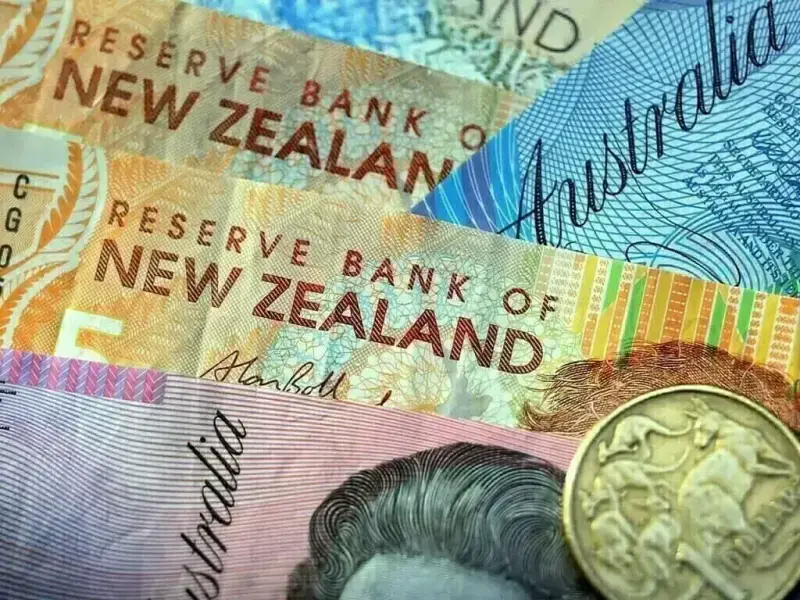
The kiwi dollar was under pressure on Tuesday and bonds rallied as markets pared back bets on rate increases next year, with the government’s mid-year budget revealing a small reduction in a near-term bond issuance programme. The kiwi slipped 0.3% to $0.5764 after falling 0.4% overnight to be well off its two-month peak of $0.5831. That marked its fourth straight declining session, though it has some support at $0.5757. Two-year swap rates, a key benchmark for lenders setting mortgage rates, fell another 5 basis points to 2.9565%, moving further away from a five-month top of 3.1072%, after New Zealand’s central bank chief warned that financial market conditions have tightened too much since November. Swaps now imply that rates will remain on hold until the second half of the next year, with a hike not fully priced in until October - compared with September a day earlier. Government bonds drew some support after New Zealand said it would reduce its near-term bond issuance plan. The country’s two-year government bond yields fell another 10 basis points to 3.225% after a 7-bp fall the day earlier. The half-year budget update from the New Zealand government showed a slightly bigger deficit for the current financial year and a return to surplus is not expected in the next five years. “The implied fiscal impulse track has a different shape than that last presented and the near-term impulse is stronger than previously portrayed,” said Stephen Toplis, head of research at BNZ Markets. “At face value, this could put upward pressure on the cash rate, but given everything else that is going on it will pale into insignificance.” Across the Tasman Sea, the Australian dollar slipped 0.1% to $0.6631 after easing 0.2% overnight. It is also down for four straight sessions to move away from a three-month top of $0.6685. The Aussie could be bracing for more upsides after economists at the Commonwealth Bank of Australia and the National Australia Bank, two of the country’s four major lenders, said they expected a rate hike in February 2026. NAB is even calling for a second hike from the Reserve Bank of Australia in May to leave a cash rate of 4.1%. Also on Tuesday, a survey from Westpac showed that consumer sentiment slid in December on renewed angst over inflation and interest rates.