


 Business Recorder
 Amnesty urges halt of forced deportations to Afghanistan
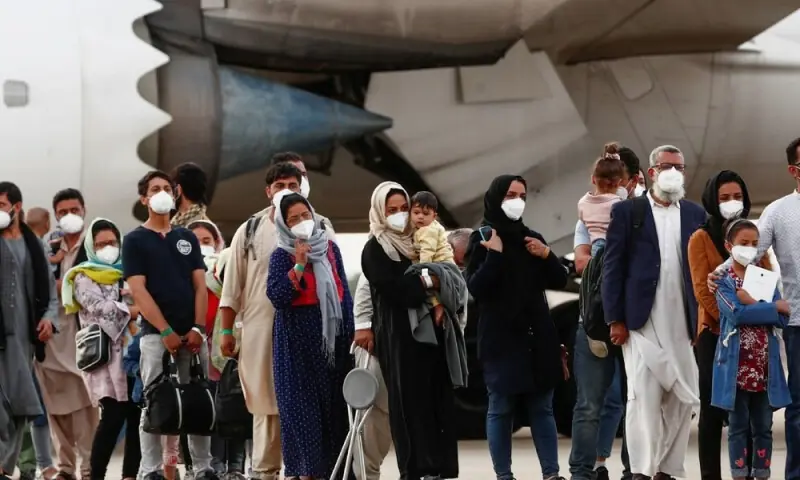
PARIS: Amnesty International on Tuesday called on countries to stop forcibly returning people to Afghanistan, saying they are being “unlawfully” deported by Pakistan and Iran as well as some European countries. So far this year around 2.5 million Afghans have returned to the country, the UN’s special representative Georgette Gagnon told a Security Council briefing in New York last week. That represents “a six percent population increase, compounding the deep-rooted economic, climate and humanitarian crises the country already faces,” she said. Citing Afghanistan’s “deepening humanitarian crisis”, Amnesty said there is an increased “real risk of serious harm for returnees”. The organisation said that nations must comply with international law that “prohibits the forcible return of anyone to a place where they face a real risk of grave human rights violations”. Thousands of Afghans returning to home under mounting pressure Generations of Afghans have fled to neighbouring Pakistan and Iran over decades of successive wars, meaning that many young people have never lived in the country. But Pakistan and Iran began forcing them to leave in recent years, with Islamabad alleging the population includes “terrorists and criminals”. Amnesty also cited media reports that “Germany, Austria, and the European Union are in negotiations with the de facto Taliban authorities to facilitate forced returns”. Many of the newcomers to Afghanistan are shunned and unable to find jobs, while women and girls face severe restrictions under the Taliban authorities’ strict interpretation of Islam. UK govt under scrutiny over soaring migrant arrivals “This rush to forcibly return people to Afghanistan ignores why they fled in the first place and the serious dangers they face if sent back,” said Smriti Singh, Amnesty’s South Asia director. Huge cuts in foreign aid have compounded the difficulties for the Afghan government, with the UN, NGOs and Taliban officials calling for more funding to support the returnees. UN warns 17mn risk food insecurity in Afghanistan The number of people facing acute food insecurity in Afghanistan this winter is on the rise, and now stands at more than 17 million, the United Nations warned Tuesday. “The situation is getting worse, and we need to act now as Afghanistan is entering the winter period where needs are highest,” said Jean-Martin Bauer, director of food security and nutrition analysis at the UN’s World Food Programme. More than 17 million people are facing acute food insecurity: “three million more than last year”, he told a press briefing in Geneva. Furthermore, “there are almost four million children in a situation of acute malnutrition”, he said. Speaking from WFP’s Rome headquarters, Bauer said the situation was down to a combination of factors, including drought affecting crops and livestock, earthquakes that have plunged many families into poverty, and cuts in international aid. Added to this, the forced return of more than 2.5 million Afghans from Iran and Pakistan this year “is putting stress on very limited resources” and the “very limited infrastructure in the country”. WFP expects a similar number of people to return to Afghanistan in 2026. The organisation currently has only 12 percent of the funds needed for its programmes in the country. Bauer indicated that due to lack of money, WFP is unable to undertake its usual winter preparations, such as pre-positioning food resources in vulnerable communities. He urged donors to step forward to avert “the most extreme impact” in Afghanistan. “What we need is $570 million over the next six months to provide essential assistance to about six million people in Afghanistan,” he said. “We need to make sure that the country remains in the headlines…because of the very high levels of vulnerability,” he added.