


 Dawn.com
 Indonesia welcomes first panda born in the country
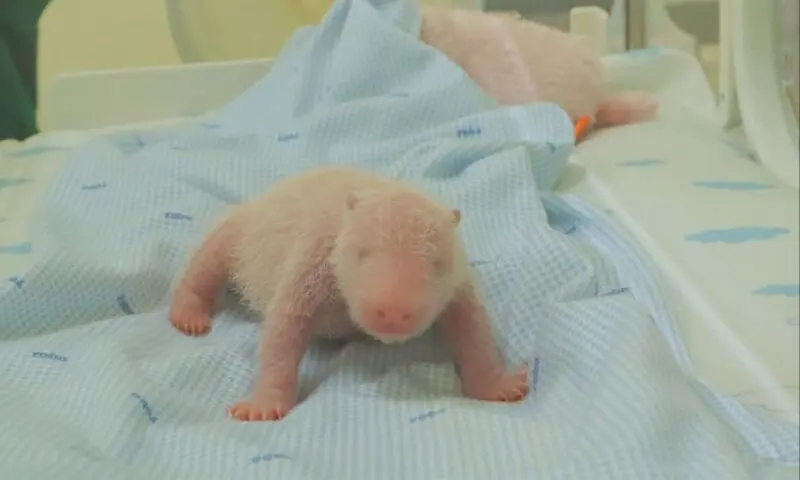
Indonesia has welcomed the arrival of the first giant panda born in the country, marking a significant milestone after years of efforts to breed the vulnerable species. The cub was born on Nov. 27 at the Taman Safari Indonesia wildlife park in Bogor, West Java, to giant panda pair Cai Tao and Hu Chun. Both pandas arrived in the park in 2017, under a 10-year joint research programme and as a symbol of the friendship between Indonesia and China. Taman Safari Indonesia’s Corporate Communication Manager Trully Erlynda said the birth is the culmination of a decade-long international collaboration. “We welcome the panda cub’s birth with gratitude and joy. It is a proud year-end milestone for Indonesia and a sign of advancing international conservation cooperation,” Trully said on Monday. In August, the veterinary team at Taman Safari Indonesia, working with the Leibniz Institute for Zoo and Wildlife Research (IZW) in Berlin, performed an artificial insemination procedure on giant pandas Cai Tao and Hu Chun in an effort to achieve the first panda birth in Indonesia. Reproducing giant pandas is considered one of the greatest challenges in wildlife conservation. Female pandas are fertile only once a year, and their receptive window lasts just two to three days. The egg remains viable for only a few hours, making natural breeding success rates extremely low. Taman Safari has pursued artificial insemination to breed giant pandas since 2022, but previous attempts did not produce a successful birth. In 2024, the program reached a milestone when fertilisation was confirmed 40 days after the procedure, although the embryo failed to fully develop. Trully of Taman Safari said the latest insemination effort involved “highly precise hormone monitoring, strict behavioural observation and the implementation of international animal welfare standards” to maximise the chances of success. After fertilisation was confirmed, she said, Chinese experts monitored female panda Hu Chun through her pregnancy and delivery. Trully added that on Nov. 30, nursery specialists from China’s Panda Centre and the China Conservation and Research Centre for the Giant Panda (CCRCGP) arrived to assist with the cub’s early care during this crucial stage. She noted that experts from the CCRCGP remain on site to provide ongoing technical support. “This success reflects the effectiveness of the science-based reproductive program developed by Taman Safari Indonesia, supported by continuous technical guidance from Chinese experts,” she said. Trully said the panda cub is in stable condition and is being monitored around the clock by Taman Safari Indonesia’s Life Science team. The cub has shown strong early developmental indicators, including healthy vocalisation, effective nursing and consistent weight gain. Over the next 30-60 days, the cub is expected to undergo significant development, such as improved temperature regulation, fur growth, the opening of its eyes and the emergence of early motor skills. Trully said that at this early stage, the panda cub is not yet accessible to the public. “Our team will continue to prioritise the health and well-being of both the mother and her cub,” she said. On Dec. 4, President Prabowo Subianto officially named the panda cub Satrio Wiratama, meaning “a noble, brave and virtuous warrior”, and gave him the nickname Rio. During a meeting that same day with Wang Huning, chairman of the National Committee of the Chinese People’s Political Consultative Conference (CPPCC), President Prabowo also shared photos of the newborn cub, highlighting the significance of the successful breeding effort. In a statement, the Presidential Palace said Rio’s birth is expected to further strengthen Indonesia-China relations while raising public awareness about the importance of protecting endangered species. The statement added that the breeding efforts underscore the government’s commitment to environmental sustainability as a key pillar of national development. With the birth of Rio, Indonesia joins Singapore, Malaysia and Thailand as the only Southeast Asian nations to have successfully bred a giant panda through artificial insemination. According to the IUCN Red List of Threatened Species, the giant panda is classified as vulnerable. Data from the National Giant Panda Conservation and Research Centre estimate that only about 1,860 individuals remain in the wild, with a further 700 living in managed care facilities around the world. This story was originally published on The Jakarta Post , an ANN partner of Dawn.