


 Business Recorder
 Religious discourse and national unity
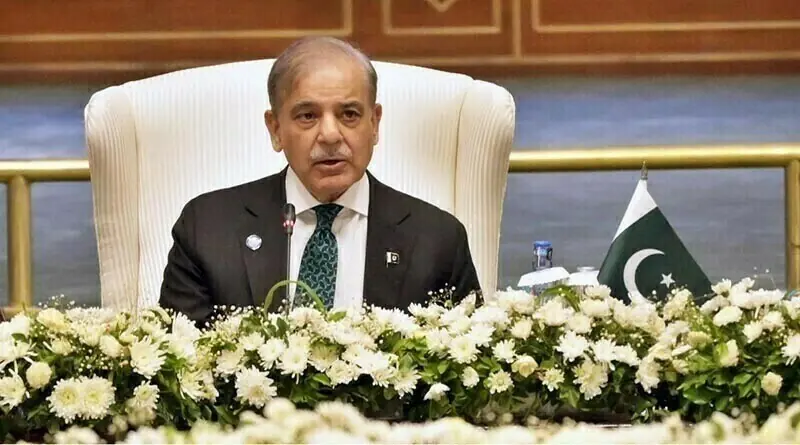
EDITORIAL: The recent National Ulema Conference, held at a time of mounting social and security challenges, provided an important opportunity to reaffirm the need for unity and restraint in religious discourse. Addressing the gathering, Prime Minister Shehbaz Sharif urged religious scholars to play a proactive role in discouraging sectarianism and promoting harmony and brotherhood among all schools of religious thought. His emphasis on national cohesion as a prerequisite for prosperity and future progress underscores a critical reality: divisions within society weaken the state and impede socio-economic development. As matters stand, Pakistan’s social fabric is deeply influenced by religious identity, and disagreements along sectarian lines have, over time, contributed to social fragmentation and a growing intolerance of difference—both within the faith and towards other religious communities. In this context, the Prime Minister’s call for moderation and unity assumes special significance. By encouraging mutual respect and dialogue, religious discourse can help reinforce shared values and strengthen social cohesion. At a time when polarisation increasingly dominates public life, such messages carry added weight. These concerns were also echoed by Army Chief and Chief of the Defence Forces, Field Marshal Syed Asim Munir, who linked national unity with long-term stability and security in his address to the conference. His appeal to the ulema to help broaden the vision of the people highlighted the powerful role ideas play in shaping social behaviour. Most notably, his assertion that in an Islamic state only the state has the authority to declare jihad addressed one of the most pressing challenges confronting Pakistan today: the exploitation of religion by violent extremist groups to advance self-serving agendas. There is little dispute that non-state actors who seek to justify violence through distorted interpretations of jihad do grave disservice to Islam. Their actions have resulted in the deaths of tens of thousands of fellow Muslims and have persistently challenged the writ of the state. By drawing a clear distinction between faith and militancy, the conference reinforced the moral position that waging of jihad has no legitimacy outside the authority of the state. Equally significant was the Field Marshal’s emphasis on education and knowledge. His observation that a nation which abandons knowledge becomes vulnerable to chaos highlights a fundamental truth. The erosion of educational standards and intellectual engagement creates fertile ground for intolerance and extremism to take root. Education grounded in critical thinking and ethical awareness remains among the most effective tools for countering radicalisation and fostering social responsibility. It is encouraging that the conference highlighted the need for a coordinated national approach to addressing religious extremism—one that extends beyond security operations to encompass intellectual, educational and social dimensions. While state institutions must enforce the law, lasting peace and stability depend on nurturing an informed and cohesive society where differences are managed amicably rather than exploited. If these commitments are translated into consistent action, Pakistan can move towards a future where religious diversity is addressed through respect rather than conflict, and where unity becomes a source of strength rather than a mere slogan—laying a firmer foundation for peace, progress and national cohesion. Copyright Business Recorder, 2025