


 RTHK English
 HK unveils Chinese medicine development blueprint
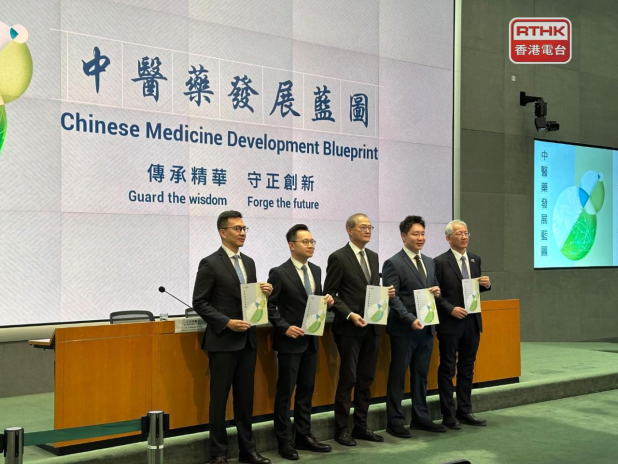
Hong Kong on Thursday unveiled its first blueprint for Chinese medicine development, aimed at enhancing healthcare quality and establishing the SAR as a "global bridgehead" for the field. The blueprint outlines a vision across five key domains, setting eight goals and 20 actions to promote high-quality development. Health officials said a central focus is the creation of clinical practice guidelines that blend modern research with traditional Chinese medicine theories. "We are synthesising all the good clinical research that has been conducted in the past two or three decades on Chinese herbal medicine, acupuncture and other related therapies," said Vincent Chung, commissioner for Chinese medicine development. "Quantitative data with good quality outcome will actually inform what should be the best practice for delivering the services." The development process, Chung added, will involve Hong Kong’s new Chinese medicine hospital, the city’s three universities that offer Chinese medicine programmes, the Hospital Authority and professional societies from Hong Kong and the mainland. In all, he said the resulting guidelines will help shape training programmes to improve practitioner standards. The plan also emphasises the use of technology, including the digitalisation of healthcare information and supporting clinical big-data research to advance integrative medicine. Regarding manpower in the sector, officials expressed confidence that there will not be a shortage, citing steady local graduation rates and students returning from mainland universities. Chung added that the new Chinese medicine hospital is also expected to create expanded career pathways. He said building a more comprehensive Chinese medicine talent cultivation system is on the agenda. Another major goal is enhancing the quality and safety of Chinese medicine, with authorities planning to fully implement a good manufacturing practice (GMP) for all proprietary Chinese medicine and introduce a robust regulatory regime for single-dispensed granules. "We will rebuild the definition of proprietary Chinese medicines, and we will include these products into the regulation regime of Chinese medicines," said Edmund Fong, assistant director of health in Chinese medicine. "We'll be able to improve the safety, quality, as well as the effectiveness to guarantee these parameters of these products to safeguard the quality and also the safety of these medicines for the public," he said. Additional objectives include driving research and industry innovation, promoting Chinese medicine culture and globalising Chinese medicine to benefit people worldwide.