


 The Huffington Post
 David Lammy Must Re-Think Plans To Remove 'Long-Held Rights' To Jury Trials, Says Former Judge
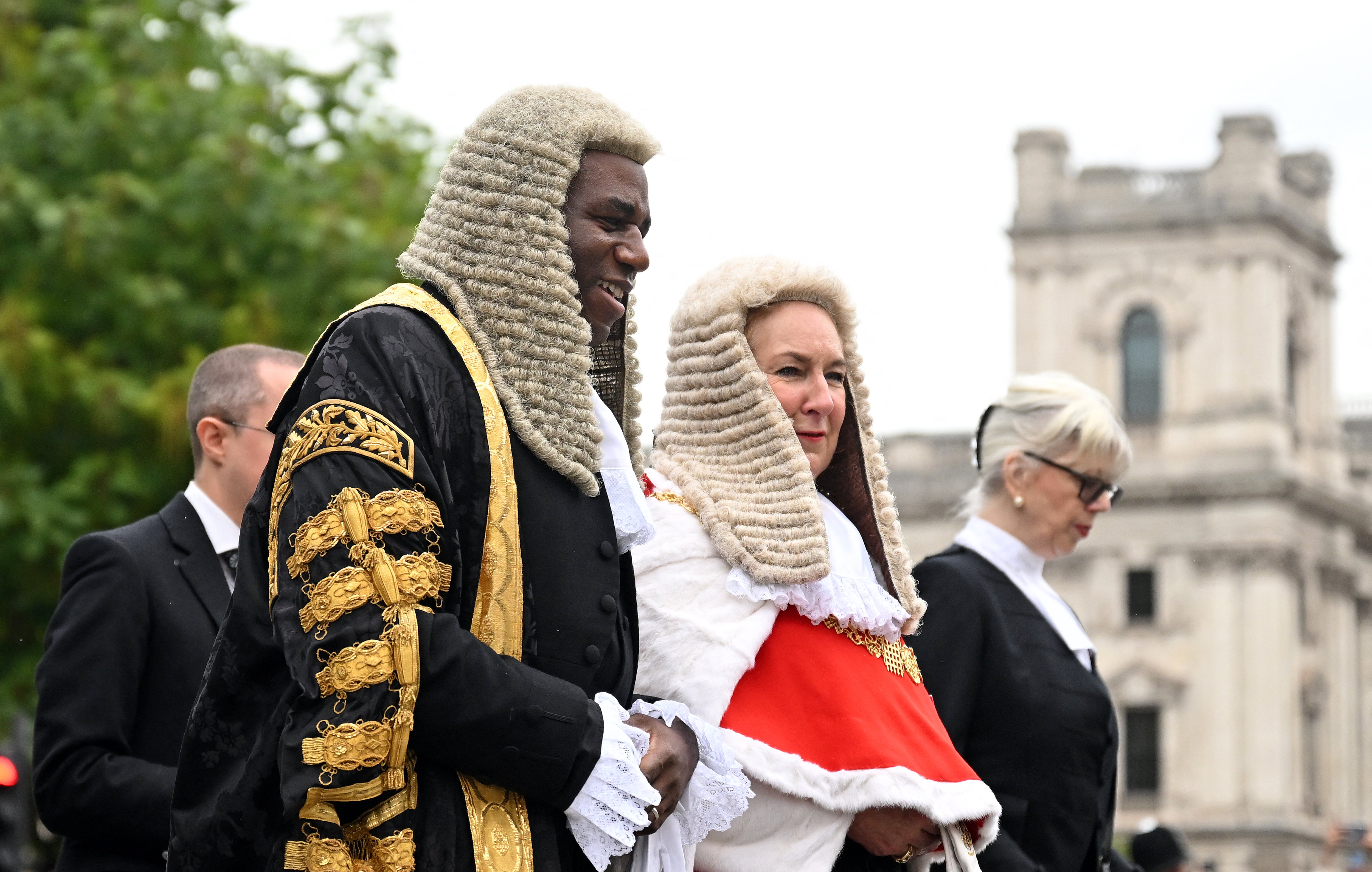
Justice secretary and deputy PM David Lammy walks with Lady Chief Justice of England and Wales, Sue Carr. Ministers and MPs with legal qualifications have been trotting out the line that the Lammy reforms restricting right to jury trial are bold and essential. “To restore trust. To prevent collapse. To uphold the rule of law,” as Alex McIntyre put it last week . Those who oppose the reforms are characterised as traditionalists who cannot be allowed to stand in the way of doing what is right. Given my 11 years as a Resident Judge at a busy London court, I hope I know a bit about managing a crown court list. For me, the government argument falls short both on evidence and analysis. It also deliberately and cynically ignores practical answers that would do much more to “restore trust” and “prevent collapse.” Public trust lies at the heart of the government’s argument, yet juries remain one of the most trusted elements of the criminal justice system at a time when confidence in public institutions is in short supply. Removing the responsibility for deciding verdicts from juries in a large category of cases risks undermining that trust. Despite ministerial rhetoric, the reforms would not be confined to minor offending but would extend to burglary, most offences of assault occasioning actual bodily harm, and even cases involving death or serious injury caused by careless driving. Transferring these decisions to judges may be described as “bold” but it is unlikely to strengthen confidence in the system. The claim that the reforms are essential is also questionable. The Leveson Review suggested that judge-only trials might reduce trial length by up to 20 per cent, but acknowledged that such projections are inherently uncertain. That optimism may underestimate the time judges will need to produce reasoned decisions clear to everyone involved and capable of surviving scrutiny in the Court of Appeal criminal division. During that period, courtrooms would lie empty rather than being used for other trials. Any marginal saving in time is unlikely to make a significant impact on the backlog. If we are to sweep away a substantial part of the jury system which has provided the crucial and unique link between the courts and the communities they serve, then a far more compelling and rigorous justification is required. The government argument falls short both on evidence and analysis A more credible solution lies in supporting judges, court staff and advocates who already work within the crown courts. After the pandemic, these professionals demonstrated that, with determination and cooperation, they could keep the system functioning even under extreme conditions. With adequate resources, they can do so again. The experience of Woolwich Crown Court provides a clear illustration. By October 2022, the backlog at Woolwich had reached around 1,200 cases. To operate efficiently, the court needed a “reservoir” of roughly 750 to 800 cases to keep its 12 courtrooms fully listed. Once the total exceeded 1,000, it became increasingly difficult to list cases within a year. The post-pandemic surge therefore required urgent intervention. Judges and staff devised an intensive case-management strategy aimed at eliminating weak cases and reducing the number of trials that collapsed on the day they were due to begin. Every case was listed for a mandatory pre-trial review four weeks before trial. One or two courts each week were devoted to reviewing up to ten cases at a time, with all parties required to attend in person. Judges rigorously tested the prosecution and defence on the viability of their cases and their readiness for trial. The process was demanding and often unpopular. Advocates had to take time away from other work or ensure substitutes were fully briefed, often for limited remuneration. The administrative burden on the list office was significant and the workload on those conducting the reviews was heavy. Judges had to prepare each case in depth, to a level at least matching that of the advocates. Nevertheless, the results were immediate and striking. Fundamentally flawed cases were resolved early, compromise pleas were negotiated, and defendants were encouraged to plead guilty by the prospect of a final, meaningful sentence discount. Trial dates were also adjusted to accommodate advocates’ availability, improving efficiency. Over seven months, the backlog steadily reduced. By May 2023, outstanding cases had fallen below 1,000 and there was genuine optimism that acceptable levels could be restored within a year. Progress stalled only when two judges moved to other courts and were not replaced, making it impossible to sustain the effort. Of course that is only one court, but with proper funding for courts and advocates, the dedicated teams working in the crown courts could manage a short term offensive that would make huge inroads into the existing backlog. Looking to the long term, there needs to be a sensible discussion about categorisation. Governments have the right to determine where the line should be drawn between summary trial and trial by jury. The irony is that successive governments have spent the last 30 years expanding the range of offences which should carry a right to elect trial while simultaneously reducing court capacity. The Leveson Review lists many of these cases. Consultation on a sensible approach to recategorisation would identify suitable cases without threatening long-held rights to jury trial. Related... 'Lammy Must Ditch Plan To Scrap Jury Trials Or Face Embarrassing Defeat', Warns Senior Labour MP Exclusive: Labour Rebels Believe They Can Defeat Starmer's Plan To Scrap Jury Trials No, David Lammy Is Not Scrapping All Jury Trials