


 Dawn.com
 Gender gap among voters shrinks to 7.1pc from 11.8pc in 2018
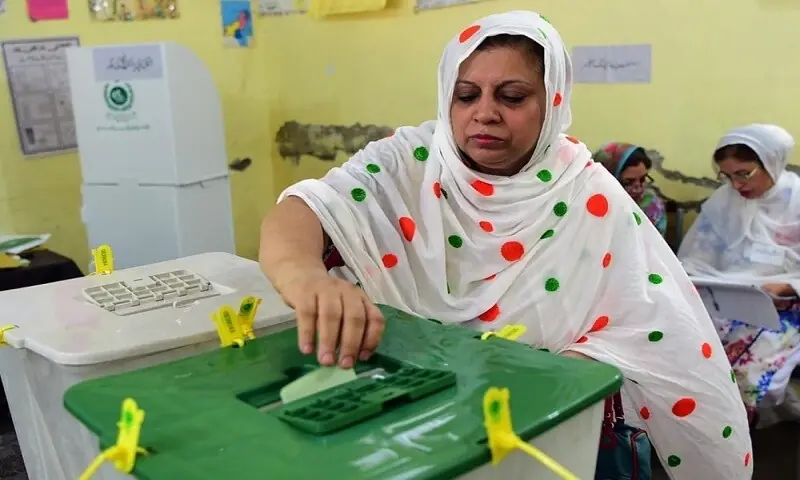
Gender gap among Pakistan’s voters reduced from 11.8 per cent in 2018 to 7.1pc in 2025, the Election Commission of Pakistan’s (ECP) Secretary Omar Hamid Khan said on Thursday. According to the Human Rights Watch, for the February 8, 2024, elections, which saw the registration of 127 million voters, there were 10 million more men than women, showing a large gender gap in a country in which women make up 49pc of the population. Khan shared the numbers at a board review meeting of the Pakistan Legislative, Electoral, Digital Governance and Empowerment (Pledge) project. “Women voter registration has outpaced men’s over the past five years, with a 27pc increase in female voters as compared to 17pc for males,” Khan shared with the members of the meeting. United Nations Development Programme (UNDP) Resident Representative Dr Samuel Rizk, Ministry of Economic Affairs Joint Secretary Mahmood Khan and representatives from the British High Commission and European Union were in attendance. “The progress is attributed to a targeted campaign, comprised of four phases, for registration of women’s national identity card numbers and enrollment of voters,” he said, adding the fifth phase was ongoing in 62 districts where the gap exceeded 10pc. Citing a Free and Fair Election Network (Fafen) report , Khan said the ECP “adds around 7,599 new voters daily”, according to district-wise data published on its website, “with women leading the numbers”. The UNDP would launch activities in 15 districts to support the fifth phase of the women-led voter registration campaign, starting from January 2026, through which 25,000 women would be facilitated to get their national identity cards, he said. “This would automatically enrol them as voters.” After consultation with the stakeholders, the commission introduced the Gender Mainstreaming and Social Inclusion Framework ( GMSIF ), under which the ECP joined the ranks of the region’s “prominent” electoral institutions, he said. Citing the ECP’s spokesman, Khan said the meeting took a detailed review of the progress of various projects initiated during the last year, while the proposed strategy and priorities for the year 2026 were also considered. With the support of the UNDP, an election monitoring and control centre, equipped with modern technology, was established, where a gender desk was also active, facilitating the affected communities, he said. An effective presence on social media was ensured for public awareness and prevention of fake news and misinformation, while informational videos in Braille, 3D content and sign language were introduced for the specially-abled, Khan said, adding an important project was launched on the role of Artificial Intelligence in the electoral process. He further said the turnout of young voters in the 2024 general elections increased significantly as a result of thousands of awareness sessions organised across the country to involve the youth in the electoral process. UNDP Resident Representative presented the Pledge project’s 2025 report and lauded the efforts of the ECP, saying the UNDP considered the partnership with the commission to be of utmost importance. Under the Pledge project, the UNDP would continue its technical assistance to the commission from 2025 to 2029, he said.