


 Dawn.com
 Islamic State Khorasan Province spokesperson arrested by Pakistani authorities: UN
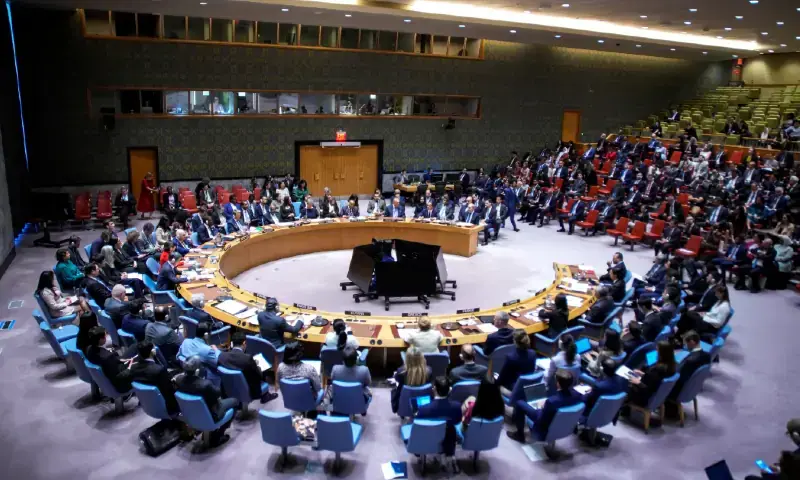
Sultan Aziz Azzam, a spokesperson for Islamic State Khorasan Province (IS-K), was arrested by Pakistani authorities this year, according to a UN report released on Wednesday. IS-K is a branch of the Islamic State terrorist organisation active in Central and South Asia, according to the US-based Centre for Strategic and International Studies think tank. The United Nations’ 16th report of the Analytical Support and Sanctions Monitoring Team noted that IS-K’s ability to operate in the region had been degraded as a result of high-profile arrests by Pakistan, such as that of Azzam from the border region this May. “Overall, the capability of [IS-K] has been degraded as a result of counter-terrorism operations,” the report read. “Key [IS-K] commanders and ideologues have been neutralised, and the numbers of [IS-K] fighters have likely been reduced. Several plotted attacks have been disrupted.” It further noted that IS-K’s capability to operate freely on both sides of the border has been disrupted, but acknowledged that Kabul’s claims of no terrorist groups operating in or from their soil are “not credible”. “The Taliban contend that no terrorist groups operate in or from Afghanistan,” the report read. “Member state reporting, however, indicates that a range of terrorist groups still operate in the country, with varying degrees of autonomy and oversight from Taliban authorities.” It added: “In North Afghanistan and areas close to the Pakistani borders, [IS-K] is reported to have indoctrinated children in madressahs, establishing a suicide training course for minors around 14 years of age.” In a December 8 letter, Pakistan’s Permanent Representative to the UN, Asim Iftikhar Ahmed, requested that the report be brought to the attention of the UN Security Council (UNSC). Who is Azam? The UNSC says that Azzam held the position of IS-K spokesperson since the group first established itself in Afghanistan in 2015. Islamabad-based platform The Khorasan Diary stated that he is the group’s second-in-command, while the European Council says he operated their media branch, Al-Azaim Media . Shan A Zain wrote for Jamestown Foundation’s Militant Leadership Monitor journal that Azzam was born in Afghanistan’s Nangarhar province and, before becoming IS-K’s chief propagandist, worked for at least three local radio stations and wrote books and poetry. His major work, Travelers of the Maze , tells the purported stories of IS fighters living in the Spin Ghar mountains, according to Zain. Excerpts were shared over Telegram by would-be recruits. “Sultan Aziz Azzam has been credited with recruiting IS members to carry out high-profile attacks in Afghanistan,” Zain wrote. “He has written several books and articles narrating stories about [fighters] in order to inspire people to join IS ranks.” “As [IS-K’s] spokesperson, Azam has played an instrumental role in spreading ISIL’s violent … ideology, glorifying and justifying terrorist acts,” the UNSC’s website reads. “Building on his former experience as an Afghan journalist, his activity as [IS-K’s] spokesperson has increased [IS-K’s] visibility and influence among its followers.” Azzam claimed responsibility on behalf of IK-K for an August 26, 2021, suicide attack near Hamid Karzai International Airport in Kabul and circulated messages from the group following the assassination of three female journalists on March 2, 2021 and a prison attack in Jalalabad on August 3, 2020. Previous action against IS-K in Pakistan In June this year, then-United States Central Command (Centcom) commander Army General Michael Kurilla praised Pakistan as a “phenomenal partner in the world of counter-terrorism, citing the nation’s struggle against IS-K among other actors. “Through a relationship we have with them and providing intelligence, they have captured at least five ISIS Khorasan high-value individuals,” Kurilla said. “They have extradited back Jaffar, who was one of the key individuals behind the Abbey Gate bombing ,” he added, referring to IS-K operative Mohammad Sharifullah, an Afghan national who was arrested by Pakistan earlier this year. In November, a key IS-K commander was killed in Khyber Pakhtunkhwa’s Karak in a late-evening police operation, sources told Dawn. Sources said that acting on an intelligence tip-off, police raided a hideout in Ambari village in Karak district. An exchange of fire ensued, resulting in the death of Nisar Hakim, a key IS-K commander.