


 Business Recorder
 Humiliation as spectacle
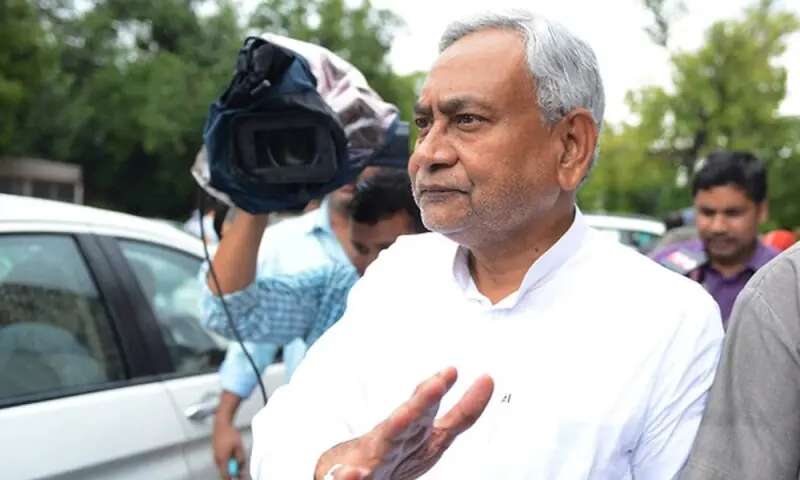
EDITORIAL: The incident involving Bihar Chief Minister Nitish Kumar pulling off a woman doctor’s hijab at a public graduation ceremony is deeply disturbing because of the act itself, and also because of what it symbolises in contemporary India. Such behaviour would be unacceptable in any civilised society; it is especially jarring in a country that routinely proclaims its constitutional commitment to secularism, pluralism, and respect for individual dignity. That it occurred at a formal academic event, in full public view and in the presence of senior officials on stage, only compounds the gravity of the offence. At the most basic level, the episode represents a gross violation of personal dignity and a woman’s sense of modesty. A woman’s attire—religious or otherwise—is not open to arbitrary intervention by any authority, much less physical interference. For many Muslim women the hijab is a deeply held religious and moral obligation. To forcibly remove it, even momentarily, is not only humiliating but profoundly disrespectful of her faith. In the present instance, the woman’s visibly shocked reaction underscores the abusive nature of the act: a senior male politician exercising unchecked power over a younger professional Muslim woman in a public setting. Equally troubling is the response—or lack thereof—of those around him. The half-hearted attempts by a couple of men to intervene, contrasted with the laughter and amusement displayed by others on stage, appeared to normalise the incident as a spectacle rather than reprove it as an affront to human dignity. This reaction reflects a wider socio-political malaise in which the humiliation of minorities is increasingly trivialised, dismissed as eccentricity or a “momentary lapse of judgement.” Viewed in isolation, the incident is shocking; viewed in context, it becomes even more alarming. Over the past decade, India has witnessed a steady erosion of sensitivity toward Muslim identity in public life—from the hijab ban imposed on Muslim students in Karnataka in 2022 to the routine targeting of religious symbols, dietary practices, and cultural expressions. The contrast is stark when one considers that prominent political leaders, such as Uttar Pradesh Chief Minister Yogi Adityanath, openly display overt religious symbolism through saffron attire without attracting controversy. The issue, therefore, is not one of principle, but of selective policies that target Muslims. Whether Nitish Kumar acted deliberately or whether, as some have suggested, the incident reflects “erratic” behaviour possibly linked to his declining health is ultimately secondary. Intent does not negate impact. For millions of Indian Muslims, the episode reinforces a growing sense of vulnerability and exclusion, demonstrating that even education and professional achievement offer no protection against public humiliation. This incident should serve as a wake-up call for all Indians who cherish the secular foundations of their country. Silence or minimisation will only embolden further transgressions. An unequivocal public apology from the Bihar Chief Minister is the minimum required—not only to acknowledge the wrong done to the woman involved, but to reaffirm the principle that no citizen’s faith or dignity is subject to ridicule or coercion. Upholding this standard is essential if India is to be governed by constitutional morality rather than Hindu majoritarian impulse. Copyright Business Recorder, 2025