


 The Better India
 How Everyday Customers Helped 50000 Children Sleep Warm This Winter
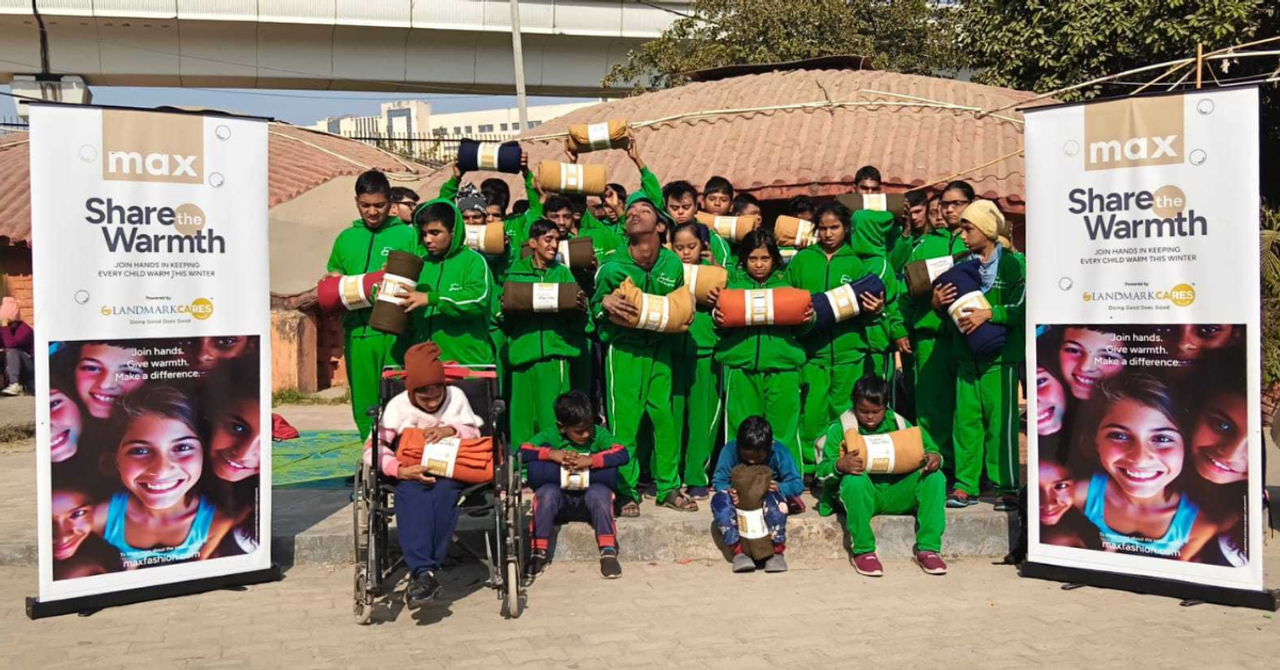
This article has been sponsored by Max Fashion India. For thousands of children, winter doesn’t arrive with a date on the calendar. It begins with the cold that wakes them before dawn, and it lingers until someone steps in to change it. Fog hangs low over narrow lanes, wrapping homes in a chill that seeps through thin walls and into bone. Across parts of North , Central and East India, mornings begin at 2–4°C and for many children, there is little shelter from it. Twelve-year-old Vanshika steps outside her home in Delhi’s Sanjay Colony, barefoot. The cement stings her soles. She cups a steel tumbler of tea in her hands, watching her breath rise in pale clouds, hoping the warmth lasts a few seconds longer. Inside small, overcrowded rooms, nights are the hardest. Thin blankets offer little defence against winds that creep through gaps in doors and windows. “Nights are the most difficult. Our hands and feet turn extremely cold, and it becomes hard to sleep. The cold keeps waking us up, even when we are very tired,” Vanshika tells The Better India. Sleep comes in short, broken stretches. For children, this is daily risk. Coughs linger, fevers take longer to fade, and school mornings begin with exhaustion already etched on young faces. Tara, a resident of Sanjay Colony and a mother of three, lives with this worry every winter. “Extreme cold makes me anxious about my children falling sick. Coughs, colds and fever take a real toll on their health,” she says. Here, winter is not simply a season to endure. It shapes routines, limits movement, and quietly compromises health. And for thousands of children across underserved communities, the question each night is not how cold it will get, but whether they will have enough warmth to get through it. When Max Fashion chose warmth over waiting When winter turns into a nightly question of survival, staying silent is not an option. For children already battling cold, fatigue and illness, warmth goes beyond comfort and offers protection . The difference between broken sleep and rest, between falling sick again and being well enough to attend school the next morning. An act of giving, wrapped in dignity and warmth. Photograph: ( Parkmed Healthcare ) It is in this fragile space that Max Fashion chose to act, not alone, but by creating a way for customers to respond alongside the brand. “Our intent was to move beyond charity and create participation with purpose. We wanted customers to feel they were directly changing a child’s life, not just contributing money. By involving them in the act of giving warmth, we created an emotional connection and a shared sense of responsibility and fulfilment," shares Pallavi Pandey, the vice president and head of marketing at Max Fashion India. Through Share the Warmth, Max Fashion and Landmark Cares came together with a clear purpose, creating a way for customers and communities to collectively shield children from winter vulnerability, while drawing attention to the health risks posed by cold exposure in underserved communities. Prolonged cold can quietly weaken immunity, turn minor coughs into chronic illness, and slow recovery for children with limited access to healthcare. The initiative recognised a simple truth that prevention often begins with warmth. Running from 14 November to 20 December, 2025, beginning on Children’s Day to place young lives at the heart of the initiative, Share the Warmth unfolded across 70 Max stores in North, Central and East India, creating a shared space for customers to respond to winter vulnerability together. Within stores, customers chose a blanket, added a note of care, and placed it into a collection box, a small but intentional act that connected everyday shopping moments to a larger, collective purpose. The response reflected how deeply people resonated with the intent behind the effort. At Max’s Kamla Nagar store in Delhi, manager Deepak says the campaign stood out in his 10 years with the brand. “ Nearly 95 percent of our customers chose to be part of the initiative , and many came with their children. It felt special to see parents using the moment to teach their kids what giving really means,” he shares. Building a chain of care The initiative was strengthened by partners including Kreate Foundation, Samarthanam Trust for the Disabled, and Parkmed Healthcare, ensuring a focus on inclusion, resilience and preventive health. Through this network, blankets reached children in government schools , orphanages and some of the most affected communities. To complete the circle, customers received videos showing how the warmth they helped pass along reached children who needed it most. At its heart, Share the Warmth was an invitation. Every blanket carried compassion. It was a simple gesture, multiplied many times over. The journey of a blanket: From shelf to safe haven It begins collaboratively, inside a Max store. A customer lifts a folded blanket from the shelf, not as a donation, but as a decision to be part of a larger chain of care. At the counter, store teams take over. Each blanket is scanned, folded, tagged, and prepared, with store teams acting as facilitators in a process customers have chosen to be part of. “The blankets arrive from our regional warehouse in boxes of 50,” says Deepak, store manager at Max Fashion, Delhi. “Customers donate them here. Once we collect 50 again, we pack and send them back to the distribution centre for onward delivery.” Sharing warmth at Deepalaya Learning Centre, Sanjay Colony, Delhi. Photograph: ( Parkmed Healthcare ) Some customers leave handwritten notes. Others come with their children, turning the moment into a quiet lesson in empathy. “December in Delhi can be bitterly cold,” shares Chetan Awana, a customer from Delhi. “Knowing how many children sleep without warmth is heartbreaking. This felt like a simple way to be part of something meaningful.” When the collection period ends, the blankets move again, sealed, stacked, and sent back to regional hubs. From there, partner NGOs carry them forward, driving through narrow lanes, remote settlements, and community-run schools. For organisations on the ground, the effort feels deeply collective. “What stood out was how everyone was involved, customers, store teams, and NGOs,” says Gayatri, founder of Kreate Foundation. “The focus on protecting young children made it even more meaningful.” Finally, the journey ends where it matters most. A blanket is placed around a child’s shoulders. What began on a store shelf becomes warmth, safety, and a softer night’s sleep, carried there by many hands, together. Turning intent into impact In early December, intent turned into action, shaped by thousands of customers across cities choosing to respond to winter together. On 4 and 5 December, Max Fashion and Landmark Cares distributed warm blankets to children in Delhi and Kolkata, marking the first milestones of a much larger journey. The initiative began at the Deepalaya Learning Centre in Sanjay Colony which is one of Delhi’s most underserved neighbourhoods, reaching socio-economically disadvantaged children and children with special needs. “I received the blanket two weeks ago, and it has been so warm and comforting. It not only protects me from the extreme cold in Delhi, but also helps me sleep peacefully and wake up feeling fresh for school the next morning,” adds Vanshika. For Vanshika, the warmth carried the knowledge that people beyond her neighbourhood had chosen to care. In Kolkata, the blankets reached students at Helen Keller Bhaidya Vidhyalaya, a special school for deaf and speech-impaired children, in partnership with Samarthanam Trust for the Disabled. Travelling miles to reach small hands, these blankets carried more than warmth. They became a comforting promise of restful nights, of care that crossed distance, and of children being reminded that they are seen. “I could see my children sleeping peacefully. They were comfortable and their health was fine. Seeing them happy gave me a sense of peace,” shares Tara. A collective win, carried forward As winter set in, Share the Warmth showed what collective intent can achieve when customers, communities, and organisations come together to protect children from the cold. What began at store counters moved through cities and communities, carried by customers , store teams, volunteers, and NGO partners who believed that shared warmth could become a form of care. For store teams, the impact was visible every day. Customers paused, reflected, and turned routine shopping moments into moments of shared care. For many customers, participation felt instinctive. “We stay warm inside our homes during winter. By shopping at Max, this felt like the least we could do for those who don’t have that comfort. It felt like our way of standing alongside children who face winter without protection,” says Ankita Gopala, a customer from Lucknow. As a partner in the drive, Venkatesh Murthy, founder of Youth for Seva, highlighted the link between health and education, noting that learning cannot flourish when children are unwell and that lasting solutions must address both together. “It’s a meaningful initiative,” he adds. “By inviting everyday customers into the process, the stores created a shared pathway where small choices collectively became protection for children.” At the centre of it all were the children. For them, a blanket meant comfort through the night and the reassurance that someone, somewhere, was looking out for them. For every child here, warmth meant being held through winter. Photograph: ( Parkmed Healthcare ) “We are deeply thankful to everyone who gave us this warmth through the blankets, protecting us from the harsh winter and allowing us to sleep peacefully,” says Vanshika. “We look forward to continuing Share the Warmth and building more such purpose-led collaborations where customers and communities come together around health, wellbeing, and meaningful impact,” says Pallavi. As winter continues to test endurance across underserved communities, these small acts of care remind us that protection does not always arrive loudly. Sometimes, it arrives folded, passed hand to hand, and wrapped gently around a child, making the night a little kinder.