


 RTHK English
 Enthusiasm brews strong at Chinese medicine hospital
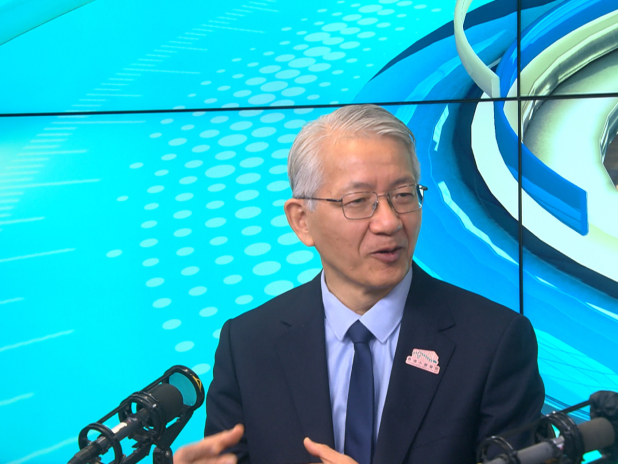
The chief executive of Hong Kong's first traditional Chinese medicine hospital said on Saturday it had been receiving a very enthusiastic response from patients since opening its doors in Tseung Kwan O on December 11. Speaking on an RTHK radio programme, Bian Zhaoxiang said its subsidised general clinic was fully booked up to February 10 and that only limited time slots were available for specialist and private clinics. “The specialist clinic is nearly 90 percent full…We see an average of about 200 patients a day. On our first day of operation 219 patients received consultations,” he said. “Generally speaking, in the first phase we are in the break-in period. Doctors of different teams need to adapt to each other. This also applies to doctors and nurses, as well as traditional Chinese medicine and western medicine.” Bian said the hospital would gradually increase its manpower and service quota, adding that it will also provide training places for students from the three Chinese medicine schools at local universities. Commissioner for Chinese Medicine Development Vincent Chung said on the same programme that his department hoped to promote the use of Chinese medicine to more people. Under the newly unveiled blueprint for Chinese medicine development, the government will formulate a list of ailments for which Chinese medicine “demonstrates distinct advantages”. Chung said the Hospital Authority had already been integrating traditional Chinese and western medicine in certain areas. “We need to guide the public on when they should seek help from traditional Chinese medicine and when it is better to consult western medicine,” he said. “If we do not create this list, we will not know how to explain it to the public.” The blueprint also aims to promote the use of eHealth – a government-developed system that allows doctors to access patients’ health records – among Chinese medicine practitioners. Chung said only 9 percent of the city’s 10,000 Chinese medicine practitioners were currently using the eHealth system. He added that the Health Bureau planned to subsidise doctors who were using their own electronic medical record systems so they could connect to eHealth.