


 Ruptly
 'New genus and species' - Colombian palaeontologists reveal fossils of marine reptiles never before seen in South America
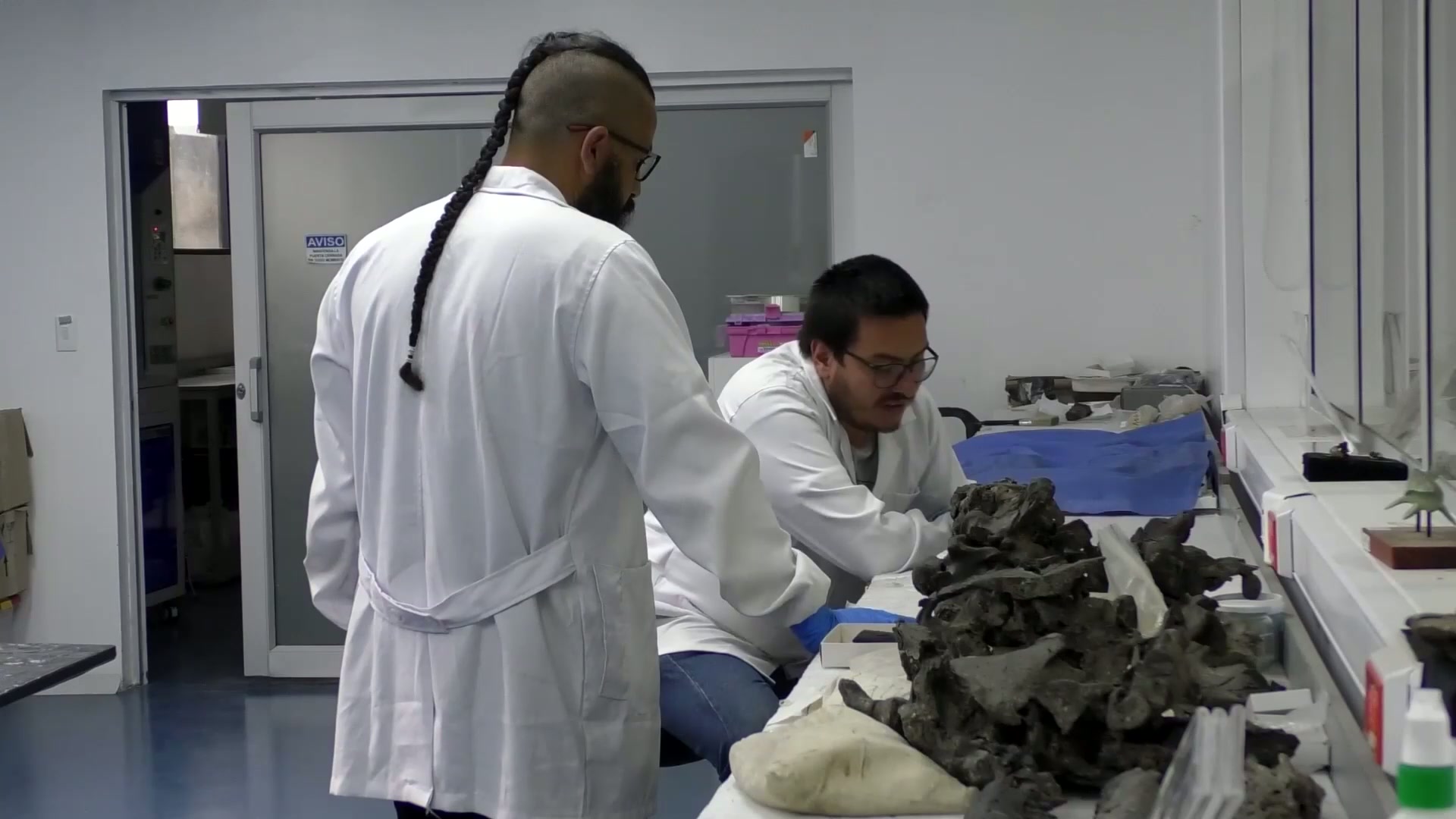
"Colombian researchers have discovered fossils of three marine reptiles from the Cretaceous period in the departments of Boyaca, Santander and Cundinamarca, in the centre of the country, all dated between 110 and 89 million years ago, during a time when what is now Colombian territory formed part of a vast inland sea. The discovery includes an exceptionally well-preserved mosasaur found in Lebrija, Santander, identified as 'Oneirosaurus caballeroi', a new genus and species of mosasaur whose name means 'dream reptile'. "It is a new species, a new genus and species. In other words, it was not known anywhere in the world," says Cristian David Benavides-Cabra, a geologist and palaeontologist and the head of the National Geological Museum in Bogota. According to scientists, this mosasaur displays a combination of features never before recorded in its group, including a unique configuration of openings in the skull through which major nerves passed. "It has structures in the middle of its head that would be equivalent for us humans to cartilage, for example, that of the nose, which is cartilage located between the eyes," explains Benavides Cabra, whose family discovered the fossil and later donated it to the Colombian Geological Service (SGC) for scientific analysis. Also among the discoveries is a new species of long-snouted pliosaur (Plesiosauria, Pliosauridae), scientifically named 'Boyacasaurus sumercei'. In addition, a large ichthyosaur dating back around 110 million years was found in the bed of the Siquima River, in Cundinamarca. This specimen represents the first record of a 'thunnosaurian ichthyosaur' (Thunnosauria) from the Upper Albian period in both Colombia and South America. Biologist Daniel Pomar explains that the marine reptiles were known to have existed because they had been found in other parts of the world, adding, "But in South America they had not been discovered in rocks of the age we are talking about, the Albian, which dates to around 110 million years ago. This helps us to understand the evolutionary history of these animals.""