


 Dawn.com
 Tehreek-i-Insaf leaders shouldn’t use protective bails to join protests: PHC
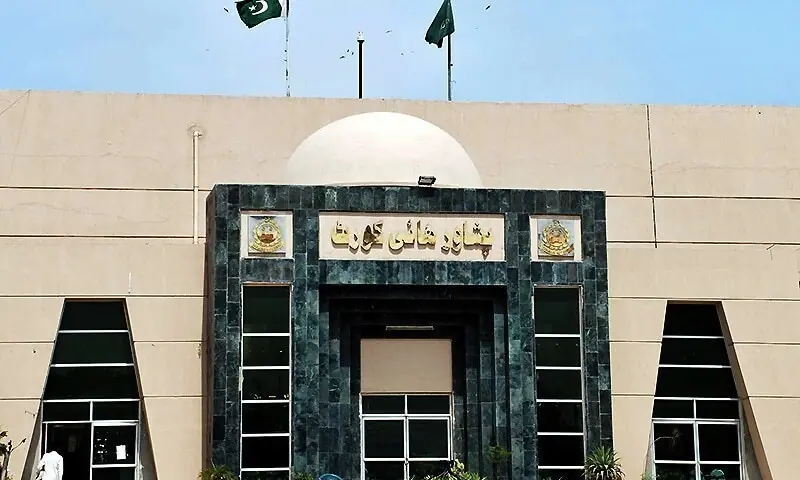
PESHAWAR: The Peshawar High Court has declared that the protective bails, granted to scores of the Pakistan Tehreek-i-Insaf’s lawmakers and leaders, including Khyber Pakhtunkhwa Chief Minister Sohail Afridi, were meant to facilitate their appearance before the relevant courts, so the relief shouldn’t be used for participating in protests or anti-state activities. “This interim relief shall not, under any circumstances, be construed, interpreted, invoked or relied upon by the petitioner(s) as a shield, protection, justification, or safeguard for any purpose other than facilitating their appearance before the competent court. For abundant caution, it is further clarified that this order shall not be used, directly or indirectly, to enable, justify or facilitate the petitioner(s) participation in any protest, demonstration, anti-state activity, or any event of a similar nature,” reads a ruling by a bench consisting of Justice Syed Arshad Ali and Justice Mohammad Faheem Wali in multiple cases. It declared that any misuse, abuse or attempt to extend the scope of that order beyond the limited purpose for which it had been granted would expose the petitioner(s) to appropriate legal consequences, including, but not limited to, proceedings in accordance with the law. The court issued these directives in a four-page detailed decision on the petition of former National Assembly speaker and current MNA Asad Qaiser and other PTI leaders. Bench declares that relief granted only for approaching relevant courts Qaiser had sought details of the cases registered against him by law-enforcement agencies and the grant of protective bail in those cases. The other petitions were filed by MPAs Sohail Afridi and former chief minister Ali Amin Gandapur, MNAs Sheikh Waqas Akram, Naseem Shah, Faisal Amin Khan, Shandana Gulzar, Noorul Haq Qadri and Yousaf Ali, Senator Khurram Zeeshan and several other PTI leaders. On the plea of Islamabad’s chief commissioner, the bench had referred all these connected petitions to the chief justice on Dec 9for constituting a larger bench for hearing. The bench ruled that since certain crucial issues, as identified by the federal prosecutor general as well as other counsel, were involved in this matter, the office was directed to place the matter before the chief justice of this court for the formation of a larger bench. In the detailed order, the bench directed the Islamabad chief commissioner to act as focal person between the petitioners and the law-enforcement agencies at federal level as well as within Islamabad. It declared: “The petitioner(s) in the present case, as well as in the connected cases, shall approach the said office through an application, either directly or through an advocate, seeking information regarding their involvement in criminal cases within three days of the receipt of this order.” “Upon receipt of such application, the worthy Chief Commissioner, Islamabad, shall procure the record of all criminal cases in which the arrest of the petitioner(s) is required from the law enforcing agencies at the federal level and within the Capital Territory of Islamabad. The said record shall be provided to the petitioner(s) at the earliest, but not later than seven days from the date of the application,” it declared. The court added that once the records were provided to the petitioner(s), he should approach or surrender within three days before the appropriate court for bail or any other legal remedy, if available. The high court later clubbed petitions of several other lawmakers with those of Senator Mashal Azam and MNAs Atif Khan and Shahid Khattak. In these cases, federal prosecutor general Ghulam Sarwar Nehung had represented the chief commissioner and contended that the petitioner (Asad Qaiser) had filed repeated petitions for the same relief without disclosing the fate of the earlier adjudications. His main concern was that the present petitioner as well as those in connected matters, obtained protective orders from the court (high court) but, pursuant to such orders, failed to approach or surrender before the appropriate forum. Consequently, he claimed, they remained on bail before arrest for a considerable period of time without joining the investigation agencies in other provinces. He submitted that there was no uniform policy of this court regarding the grant of omnibus bail (bail in all cases orders or protective bail, and petitions filed by the same petitioner for bail before arrest or omnibus bail were placed before different benches, therefore such practice was contrary to the law laid down by the Supreme Court in one of its cases (PLD 1986 SC 173). Contrary to his claims, the lawyers representing the petitioners had insisted that despite directions of the court, the respondents had failed to provide details of all required FIRs. They added that the conduct of the respondents had caused the matter to be delayed. Published in Dawn, December 21st, 2025