


 Business Recorder
 Govt accused of steering country towards chaos
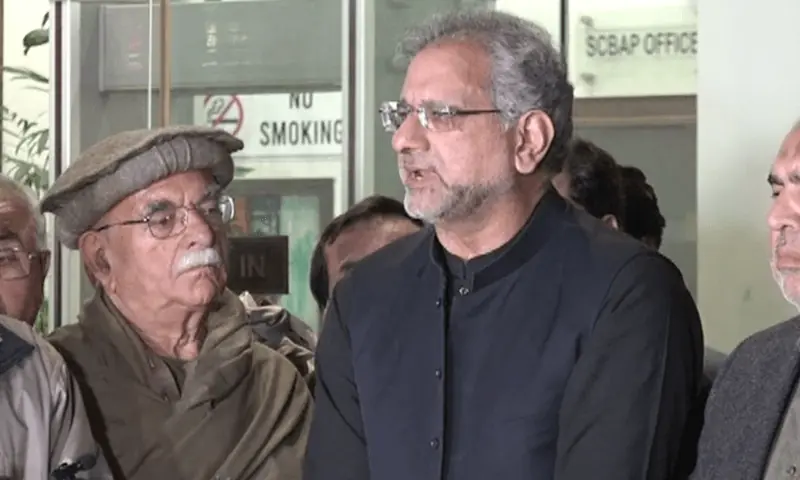
ISLAMABAD: Opposition politicians, lawyers, civil society leaders, and journalists sharply criticised the ruling coalition and military on Sunday, accusing them of steering the country towards political chaos amid worsening economic turmoil and mounting public discontent. At the conclusion of a two-day multi-party conference organised by Tehreek Tahaffuz-e-Aain-e-Pakistan (TTAP), an alliance of opposition parties, former prime minister Shahid Khaqan Abbasi accused the judiciary of losing its independence following recent constitutional amendments. “We no longer have a forum for justice,” he said, referring to the controversial 26th and 27th amendments. Abbasi also launched a blistering critique of the current military leadership, specifically targeting the army’s top brass. “The DG ISPR imposed on our armed forces is shameful. This is a government of fraudsters, backed by the unchecked power of Field Marshal Asim Munir.” “While our forces have historically responded robustly to Indian aggression, recent operations have been led entirely by Pakistan Air Force. Yet all credit has gone to Asim Munir, who has leveraged it for personal gain. Today, it is effectively Asim Munir’s government in Pakistan – he does as he pleases,” he added. Achakzai for ‘forgive and forget’ approach to defuse political tensions The remarks were echoed by 97-year-old Brigadier Mahmood (retd), who expressed grave concerns about Pakistan’s spiralling debt crisis. “The country is now Rs80 trillion in debt, including Rs36 trillion in foreign loans linked to the dollar rate,” he warned. He further highlighted that 70 percent of foreign reserves stem from aid from the IMF, World Bank, and allied nations, adding that if international creditors demanded repayment, the country’s artificially stabilised currency could collapse. Economic concerns were also highlighted by finance experts at the conference. Economic analyst Tariq Shirazi revealed that Pakistan’s growth rate had fallen to a historic low of 1.7 percent, poverty had surged to 45 percent, and unemployment stood at 22 percent. He criticized the ruling elite for imposing heavy taxes on citizens while concentrating wealth within their own ranks. “Over the past three years, Rs50 trillion in taxes were levied on the public – equal to what was collected in the previous seventeen years combined. Yet much of this money has been spent on the privileges of those in power,” he noted. Meanwhile, Khyber Pakhtunkhwa Chief Minister Sohail Afridi accused the federal government of mismanaging security and political affairs. He condemned recent decisions made in “closed rooms in London,” which he claimed were made without consulting local stakeholders. He argued that these decisions had directly contributed to terrorism and instability in the province. He also criticised the ongoing imprisonment of political figures, calling it politically motivated and unsupported by law. His statements referenced the recent “Aman Jirga” (peace council) convened in Khyber Pakhtunkhwa, aimed at including diverse political and religious groups in decision-making. Afridi alleged that attempts to sabotage the forum had resulted in the abduction of participants linked to the Pashtun Tahafuz Movement (PTM) and sparked unprecedented student protests at Peshawar University. “These decisions, made without considering ground realities, have destroyed public trust,” he said. “If these closed-rooms, regime-change decisions continue, the economy and provincial governance will remain in crisis.” The conference underscored a growing consensus among opposition figures and analysts that Pakistan faces intertwined political, security, and economic crises. With soaring debt, widespread poverty, and allegations of military overreach, they warned that the country’s future governance and stability remain uncertain.