


 Business Recorder
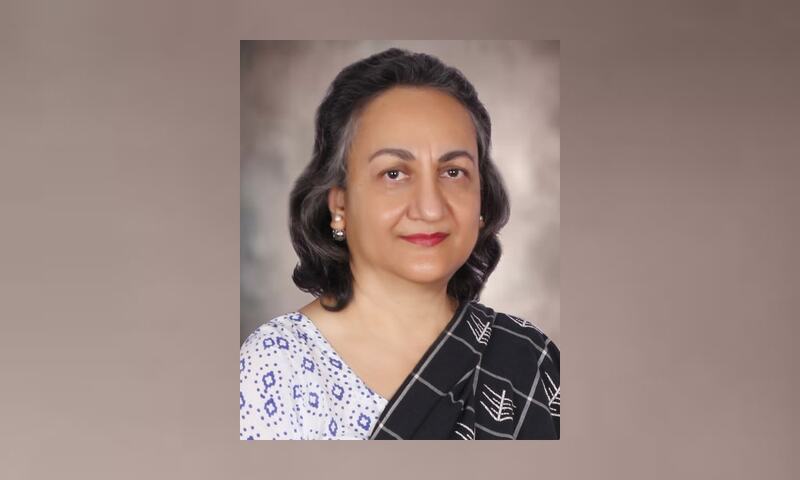
 An interview with Simi Kamal, Chairperson and CEO Hisaar Foundation: Water used for private profit must bear the full cost of its externalities
Simi Kamal is among Pakistan’s most authoritative voices on water governance, climate adaptation, and livelihoods, with over four decades of experience spanning policy design, institutional reform, and large-scale program delivery. Educated at the University of Cambridge, she has worked across the full ecological and administrative spectrum of Pakistan’s water sector. From glacial systems in the north to coastal and urban water challenges in the south, Simi is widely regarded internationally for her expertise in water policy, strategy, and implementation. She is the Founder and Chairperson of the Hisaar Foundation and convener of the Think Tank on the Rational Use of Water. Her global engagements include serving on the Board of the International Water Management Institute and a nine-year tenure on the Technical Committee of the Global Water Partnership, the world’s largest multi-stakeholder platform in the water sector. In Pakistan, she has held senior institutional roles, including as Head of Grants and Programs at the Pakistan Poverty Alleviation Fund, where water interventions were integral to rural poverty alleviation, and as a member of the Karachi Water and Sewerage Board. Kamal is currently leading the establishment of the Panjwani–Hisaar Water Institute at NED University, Karachi, envisioned as a 21st-century interdisciplinary center for water research, policy, and training. Alongside her work on water and climate, she has played a central role in advancing gender reform and women’s empowerment, having led major USAID- and ADB-supported national programs, served on Pakistan’s National Commission on the Status of Women, and currently co-chairs the global Every Woman Treaty campaign. Pakistan’s water crisis is usually discussed in the language of shortages, dams, and climate shocks. Simi Kamal argues this framing is dangerously incomplete. In this wide-ranging conversation, she contends that water failure in Pakistan is rooted in elite capture, land relations, institutional decay, and the systematic avoidance of uncomfortable truths. This conversation took place following the 7th Karachi International Water Conference (KIWC), a biennial forum convened by the Hisaar Foundation that brings together policymakers, researchers, practitioners, and community actors to interrogate Pakistan’s water, climate, and public health challenges. The 2025 conference was held in October under the theme “Water, People, Health – Coping with Floods.” Its central outcome was the articulation of a Living Charter for Water and People, an action-oriented framework calling for water justice, institutional accountability, integration of water and health policy, community-led adaptation to floods and droughts, and the rebuilding of scientific and governance capacity across Pakistan’s water economy Below are the edited excerpts of the conversation: BR Research (BRR): The Hisar Foundation conference this year seems to have taken a noticeably sharper turn from the past. What was different this time? Simi Kamal (SK): We always try to enter territory that people are uncomfortable with. Two years ago, we deliberately pulled water back into the climate change debate because everything had become about carbon credits, markets, and offsets. People had forgotten that climate change’s most immediate and destructive impact in Pakistan is on water whetherrivers, groundwater, floods, and droughts. This time, something else surfaced very clearly. People began calling it the elephant in the room: population. But not in the crude, Malthusian sense where poor countries are blamed for having too many children. The truth is exactly the opposite. A very small proportion of humanity consumes the overwhelming share of resources. What we wanted to explore was the relationship between people, water, and health. One of the most disturbing findings was around child stunting. We assume stunting happens because children do not have access to healthy food containing sufficient nutrients and calories. But many children do have food and are still malnourished because the water they drink is contaminated with heavy metals and toxins, which prevent nutrient absorption. This is an insidious link that has barely been acknowledged in Pakistan. When we searched for serious literature connecting water quality, health, and nutrition in Pakistan, there was almost nothing. That gap forced us to rethink how we intervene. BRR: What led to the idea of a “Living Charter for Water and People”? SK: We have had enough of policies, strategies, and roadmaps. They look impressive.They circulate among ministries, and then nothing happens. We needed something living:intellectually serious, but also capable of mobilizing action, even public pressure if necessary. Our living Charter asks uncomfortable questions: who lacks water justice? why do they lack it? What are the systemic roots of that injustice? And, what principles would actually define a just water future for Pakistan? This year, we identified three core pillars: water for people, water for health and food security, and water justice. Justice matters because water inequities operate from the global level right down to villages and urban slums. We also argue that Pakistan must build pride in its hydrology and geography. As long as glaciers, rivers, and coastlines are seen only as production inputs, they will be destroyed. That is why we talk about giving legal persona to water bodies, so they have standing, protection, and enforceable safeguards. BRR: Experts in the water community frequently use phrases such as ‘dry rivers and full canals.’In your view, is it statement of fact or exaggeration for effect? SK: That statement captures everything. We have engineered a system where rivers are allowed to die so that canals can look operational on paper. Downstream of the last barrage, there is often no water. Coastlines are also receding. Meanwhile, natural floodplains are built over; and,drainage routes are blocked. We cannot dismantle existing infrastructure overnight, but we must stop building more large-scale projects. That is the first step. Then we must extract better performance from the infrastructure that already exists. This requires a fifty-year view. We must preserve food-producing land instead of converting it into luxury estates used a few weeks a year by overseas elites. We must respect agro-ecological zones rather than forcing crops where water does not exist. And we must stop ignoring barani regions, which are far more aligned with natural rhythms than our canal-obsessed imagination allows. BRR: You have argued that the global language is shifting from “water pricing” to “value of water.” Why does that matter? SK: Pricing treats water as a commodity. Value recognizes water as life-supporting. I am not saying water should not be priced. But when we talk about value, we open the discussion to water for drinking, sanitation, home-based food production, livestock, and nature itself. Every human being has a right to a minimum quantity of safe water to live with dignity. That threshold must be guaranteed. Beyond that, water used for production: especially by industry and large-scale agriculture, must be priced properly, including for the environmental externalities it creates. In Pakistan, agriculture receives water almost free of charge. Crops such as sugarcane consume vast quantities of water, generate private profit, and are often exported, while society absorbs the cost. That is indefensible. BRR: What about the private sector’s role in all this? SK: The private sector behaves exactly as we allow it to behave. Water-extracting corporations pay almost nothing, pollute freely, and generate massive plastic waste without consequence. Meanwhile, the tanker mafia steals water from public systems and sells it back to citizens at extortionate prices. At the same time, we make it impossible for legitimate businesses and NGOs to function through a chaotic tax regime and regulatory harassment. On one hand, corporations run loose with natural resources. On the other, profits cannot be repatriated, and compliance becomes punitive. I genuinely do not understand what the state is trying to achieve. This contradiction is not accidental. It reflects a system that tolerates extraction but undermines institutions that could hold power accountable. BRR: Floods have become more destructive as they also become more frequent, often occurring along the same region as before. Yet, communities continue to be displaced each time as if the disaster was unprecedented. What must change? SK: Because exposure is structurally enforced. Many people have no choice. Sharecroppers do not own land. They live where landlords permit them to live: often on flood-prone, marginalized lands; and they are forbidden from building permanent houses. That is why you see juggi settlements that are washed away each time. This is a colonial land system that was never dismantled. Floods become disasters not because water rises, but because governance collapses. We do not have functioning local governments. Evacuation plans are absent. NDMA operates performatively, not structurally. Bangladesh shows that flood-prone does not mean a population left to the whims of nature. But disaster management cannot be centralized. It must be local, planned, and continuous. BRR: Turning to transboundary water, is India’s posture on the Indus Waters Treaty a threat or opportunity? SK: The treaty was negotiated in an era before benefit-sharing and integrated basin management existed. It focuses only on surface water and ignores groundwater entirely. Pakistan should stop reacting every time India rattles itssabers. We should articulate our own position grounded in modern global compacts. Groundwater gradients along the Punjab border tilt from India toward Pakistan, a fact few policymakers even acknowledge. We must push for expansion, not abandonment, of the treaty, and apply the same principles internally through a fairer, integrated water balance that includes rain, snowmelt, rivers, groundwater, and even desalination where appropriate. BRR: Finally, what role does the Panjwani Hisar Water Institute play in this agenda? SK: We set it up because Pakistan lacks “person power” in water. Ten engineers cannot decide the fate of a country’s water system. We need scientists, technologists, social thinkers, and field researchers: people who can generate primary data instead of recycling projections. Today, even collecting five water samples requires multiple NOCs. Universities are being hollowed out in favour of credential factories obsessed with AI while basic sciences decay. Water is a system: ecological, economic, and social. If people do not wake up, the system will collapse beneath us. The roses are already disappearing. Concluded.