


 Business Recorder
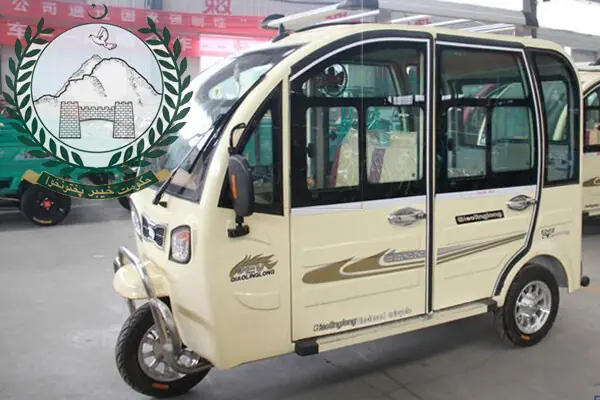
 KP Govt develops state-of-the-art electric rickshaw
PESHAWAR: The provincial government of Khyber Pakhtunkhwa under its KP Science Agenda has developed a state-of-the-art electric rickshaw. The project will help reduce dependence on fuel and lower repair and maintenance costs. Compared to conventional rickshaws, drivers will be able to earn up to twice as much income. Most importantly, electric rickshaws do not contribute to air pollution and will serve as a significant step forward in promoting green transportation. This was told during a briefing given on the occasion of a High-Technology and Product Development Exhibition was organized at the Chief Minister’s House, Peshawar, where various high-tech projects initiated by the provincial government were showcased. During the exhibition, detailed briefings were given on the manufacturing process and key features of the showcased products. The exhibition featured a range of innovative products, including artificial skin for burn care, locally developed PCR diagnostic kits for Hepatitis B and C, HIV and other diseases, an e-rickshaw project, the use of liquid oxygen in mining, e-surgical instruments, and an e-study card system for students. Chief Minister Khyber Pakhtunkhwa, Muhammad Sohail Afridi, attended the exhibition as chief guest. Expressing his views on the occasion, the Chief Minister said that the Khyber Pakhtunkhwa government is working on emerging technologies in biomedicine and advanced materials. He said that the objective of these projects is to promote value addition to natural resources through technology and to accelerate economic growth. He added that the provincial government is committed to fostering innovation-driven development and self-reliance, and that the products on display are a practical manifestation of this commitment. It was informed that the development of artificial skin and tissues has been carried out with the collaboration of Pak-Austria Fachhochschule University, Haripur. This is Pakistan’s first artificial skin project, and its local production will enable timely and affordable treatment for burn patients. Similarly, it was briefed that the PCR diagnostic kits project has been assigned to Khyber Medical University, which is expected to reduce diagnostic costs by 30 to 40 percent, while manufacturing time will be reduced from 90 days to just 15 days. The project aims to develop real-time PCR diagnostic kits for five deadly viruses, which will reduce reliance on imported kits, save foreign exchange, and enable faster testing. Moreover, the project will strengthen the country’s capacity to provide affordable, reliable, and locally manufactured molecular diagnostic solutions. Copyright Business Recorder, 2025