


 Business Recorder
 Japan prepares to restart world’s biggest nuclear plant, 15 years after Fukushima
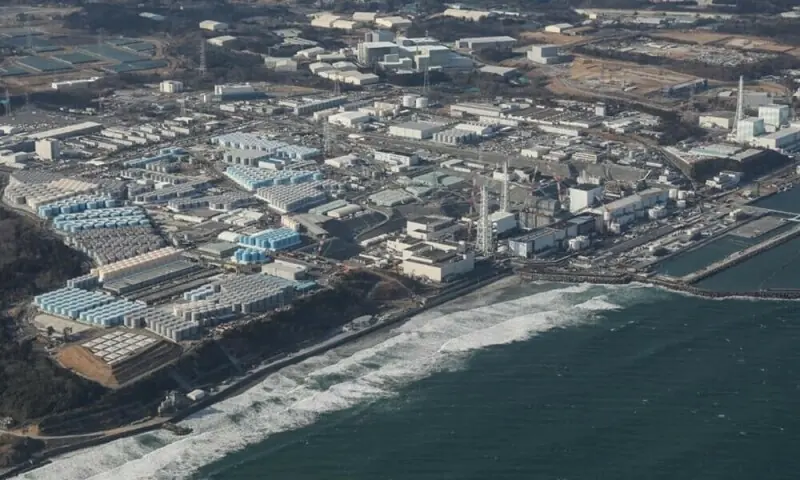
NIIGATA: Japan took the final step to allow the restart the world’s largest nuclear power plant on Monday as the region of Niigata voted to resume operations, a watershed moment in the country’s return to nuclear energy nearly 15 years after the Fukushima disaster. Kashiwazaki-Kariwa, located about 220 km (136 miles) northwest of Tokyo, was among 54 reactors shut after the 2011 earthquake and tsunami crippled the Fukushima Daiichi plant in the worst nuclear disaster since Chernobyl. Since then, Japan has restarted 14 of the 33 that remain operable, as it tries to wean itself off imported fossil fuels. Kashiwazaki-Kariwa will be the first operated by Tokyo Electric Power Co (TEPCO), which ran the doomed Fukushima plant. On Monday, Niigata prefecture’s assembly passed a vote of confidence on Niigata Governor Hideyo Hanazumi, who backed the restart last month, effectively allowing for the plant to begin operations again. Ahead of the vote, around 300 protesters, mostly older people, holding banners reading ‘No Nukes’, ‘We oppose the restart of Kashiwazaki-Kariwa’ and ‘Support Fukushima’ gathered in front of the Niigata prefecture assembly in temperatures of 6 degrees Celsius (42.8 degrees Fahrenheit). As the rally started, the mostly older crowd sang ‘Furusato’ - a national song about connection to a birthplace, meaning ‘homeland’ in Japanese. “Is TEPCO qualified to run Kashiwazaki-Kariwa?”, a protester asked into the microphone, with the crowd yelling: “No!” TEPCO is considering reactivating the first of seven reactors at the plant on January 20, public broadcaster NHK reported. “We remain firmly committed to never repeating such an accident and ensuring Niigata residents never experience anything similar,” said TEPCO spokesperson Masakatsu Takata. Takata declined to comment on timing. Reluctant residents wary of restart Tepco earlier this year pledged to inject 100 billion yen ($641 million) into the prefecture over the next 10 years as it sought to win the support of Niigata residents. But many locals remain wary. A survey published by the prefecture in October found 60% of residents did not think conditions for the restart had been met. Nearly 70% were worried about TEPCO operating the plant. Ayako Oga, 52, settled in Niigata after fleeing the area around the Fukushima plant in 2011 with 160,000 other evacuees. Her old home was inside the 20 km irradiated exclusion zone. The farmer and anti-nuclear activist has now joined protests against what she sees as a new threat on her doorstep. “We know firsthand the risk of a nuclear accident and cannot dismiss it,” said Oga, adding that she still struggles with post-traumatic stress-like symptoms from what happened at Fukushima. Even Niigata Governor Hanazumi hopes that Japan will eventually be able to reduce its reliance on nuclear power. “I want to see an era where we don’t have to rely on energy sources that cause anxiety,” he said. Strengthening energy security The Monday vote was seen as the final hurdle before TEPCO restarts the first reactor, which alone could boost electricity supply to the Tokyo area by 2%, Japan’s trade ministry has estimated. Prime Minister Sanae Takaichi , who took office two months ago, has backed nuclear restarts to strengthen energy security and to counter the cost of imported fossil fuels, which account for 60% to 70% of Japan’s electricity generation. Japan spent 10.7 trillion yen ($68 billion) last year on imported liquefied natural gas and coal, a tenth of its total import costs. Despite its shrinking population, Japan expects energy demand to rise over the coming decade due to a boom in power-hungry AI data centres. To meet those needs, and its decarbonisation commitments, it has set a target of doubling the share of nuclear power in its electricity mix to 20% by 2040. Joshua Ngu, vice chairman for Asia Pacific at consultancy Wood Mackenzie, said public acceptance of the restart of Kashiwazaki-Kariwa, would represent “a critical milestone” towards reaching those goals. In July, Kansai Electric Power, Japan’s top nuclear power operator, said it would begin conducting surveys for a reactor in western Japan, the first new unit since the Fukushima disaster. But for Oga, who also joined Monday’s protests outside the assembly chanting ‘Never forget Fukushima’s lessons!’ together with others, the nuclear revival is a terrifying reminder of the potential risks. “As a victim of the Fukushima nuclear accident , I wish that no one, whether in Japan or anywhere in the world, ever again suffers the damage of a nuclear accident,” she said.