


 Dawn.com
 Asif calls comparison of Islamabad’s action against Taliban with India’s unprovoked attacks ‘wrong and inappropriate’
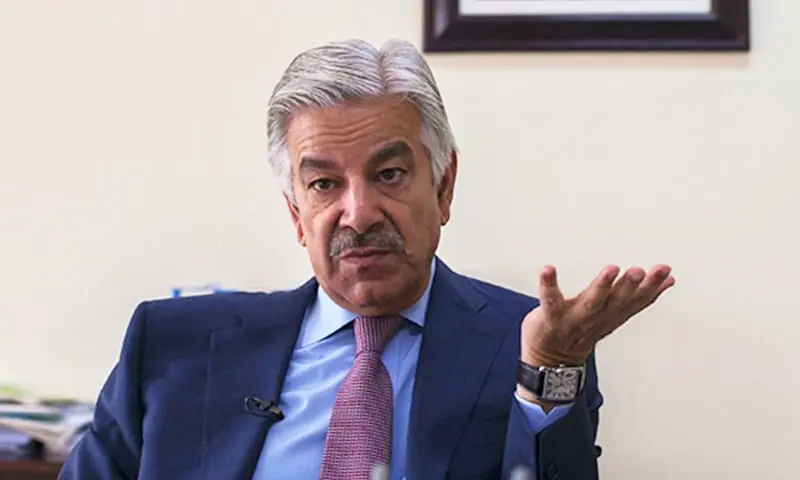
Defence Minister Khawaja Asif on Tuesday rejected the comparison between Islamabad‘s actions against the banned Tehreek-i-Taliban Pakistan (TTP) and New Delhi’s unilateral action against the country in May as “wrong and inappropriate”. The defence minister‘s remarks come a day after Jamiat Ulema-i-Islam Fazl (JUI-F) Chief Maulana Fazlur Rehman questioned Pakistan’s objection to Indian attacks when the country also allegedly conducted cross-border strikes against terrorist targets in Afghanistan. Inter-Services Public Relations (ISPR) Director General (DG) Lieutenant General Ahmed Sharif Chaudhry had refuted allegations by the Afghan Taliban that Pakistan had conducted strikes in Afghanistan. In a post on X, Asif also said that India, to date, has “not been able to provide evidence” of Pakistan’s involvement in the Pahalgam attack, despite Pakistan’s offer of “neutral investigations”. “The report issued by the United Nations also clarifies that the Indian aggression was illegal and unsubstantiated, and Pakistan’s response was fully justified,“ said the defence minister. He elaborated that the international community and the United Nations are also concerned about terrorism under the regime of the Afghan Taliban, and maintained that the presence of terrorists formations and terrorists infiltrating Pakistan “are a clear proof of this”. He further stated that “any doubts raised by India, its proxies, and sympathizers” were addressed by the country “earlier and continue to be addressed today”. Pak-Afghan relations Pakistan’s bilateral relations with Afghanistan have come under strain in recent times as the Tehreek-i-Taliban Pakistan (TTP) remains the main point of contention between the two countries. Pakistan has demanded that the rulers in Kabul take action to stop cross-border terrorism, but the Afghan Taliban deny Islamabad’s allegations of terrorists being allowed to use Afghan soil to carry out attacks in Pakistan. During a process of dialogue, which followed border clashes between the two countries in October, the two sides had met in an effort to work on mechanisms for lasting peace and stability between the two countries. On October 25, the second round of talks between the two sides began in Istanbul. Information Minister Attaullah Tarar then announced that the talks “failed to bring about any workable solution”. However, mediators Turkiye and Qatar had intervened and managed to salvage the dialogue process with an October 31 joint statement released by Ankara stating that “further modalities of the implementation will be discussed and decided” during a principal-level meeting in Istanbul in November. On November 7, however, after the third round of talks, Defence Minister Khawaja Asif said that talks addressing cross-border terrorism were “over” and “entered an indefinite phase” as negotiators failed to bridge big differences between the two sides. Following the failure of the talks, the Afghan Taliban suspended trade ties with Islamabad. Pakistan had already closed its border for trade soon after the October clashes. Subsequently, Turkiye announced that its top officials would visit Pakistan to discuss tensions between Islamabad and Kabul. Pakistan welcomed Turkiye’s and Doha’s “sincere efforts” on Nov 14, but the delegation’s arrival is still awaited, amid reports of complexities in the process.