


 Ruptly
 Hungary warns EU is 'financing war, not peace' after Budapest opts out of Ukraine loan scheme
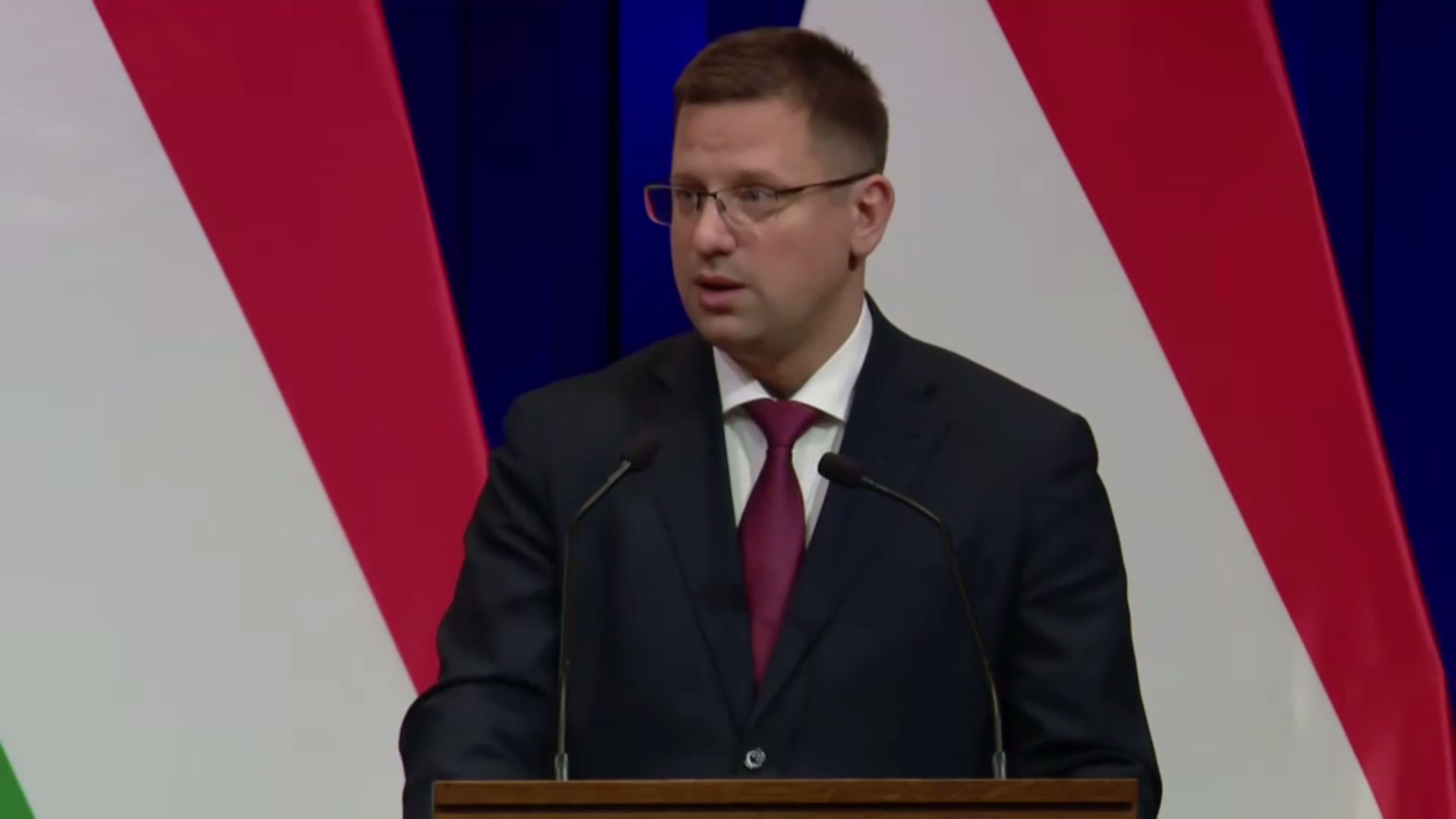
"Hungarian government officials criticised European Union policies on Ukraine financing, energy sanctions and security rhetoric during the final Government Information Conference of the year, warning that recent decisions risk fuelling escalation rather than promoting peace. Speaking after a cabinet meeting, the minister heading the Prime Minister’s Office, Gergely Gulyas, said Hungary opposed the EU’s proposed joint loan mechanism to support Ukraine, stressing that Budapest would not participate in what he claimed is funding for ongoing conflict. “Europe should not be financing war, but supporting peace,” Gulyas said, adding that Hungary, together with the Czech Republic and Slovakia, had decided to stay out of the EU loan programme, while 24 other member states proceeded under enhanced cooperation. Gulyas said the main debate at the recent EU summit centred on the proposed war loan and the possible use of frozen Russian assets. “The use of seized and frozen Russian assets would have destroyed the European capital market,” Gulyas said, arguing that European competitiveness had already suffered under current EU policies. He also commented on the ongoing US peace efforts, saying that US peace efforts offer a real, tangible opportunity for an end to the conflict on European soil. “If Europe were to stand behind these efforts, it could contribute to ending the war,” he noted. The Hungarian minister also voiced concern over statements by NATO Secretary General Mark Rutte indicating that several EU countries were prepared to send troops to Ukraine for peacekeeping purposes. “Sending troops and soldiers is definitely not appropriate at this time,” Gulyas said. Turning to energy policy, Gulyas said Hungary would challenge the European Union’s decision to stop buying Russian gas from October 2027, through the long-term contracts Hungary has agreed with Russia. “We dispute this decision and we are challenging it in court,” Gulyas said, arguing that the measure constitutes a sanction and therefore requires unanimous approval by all EU member states. The European Union has agreed to provide Ukraine with up to €50 billion in financial assistance through 2027 under a joint loan scheme backed by the EU budget, with 24 member states participating via enhanced cooperation. Hungary has repeatedly opposed the use of frozen Russian state assets, estimated at around €200 billion held in the EU, warning of legal and financial risks."