


 Ruptly
 China decries 'bullying', Russia slams 'terrorism as justification for aggression' while US steadfast over 'illegitimate' Maduro's cartel ties at UN
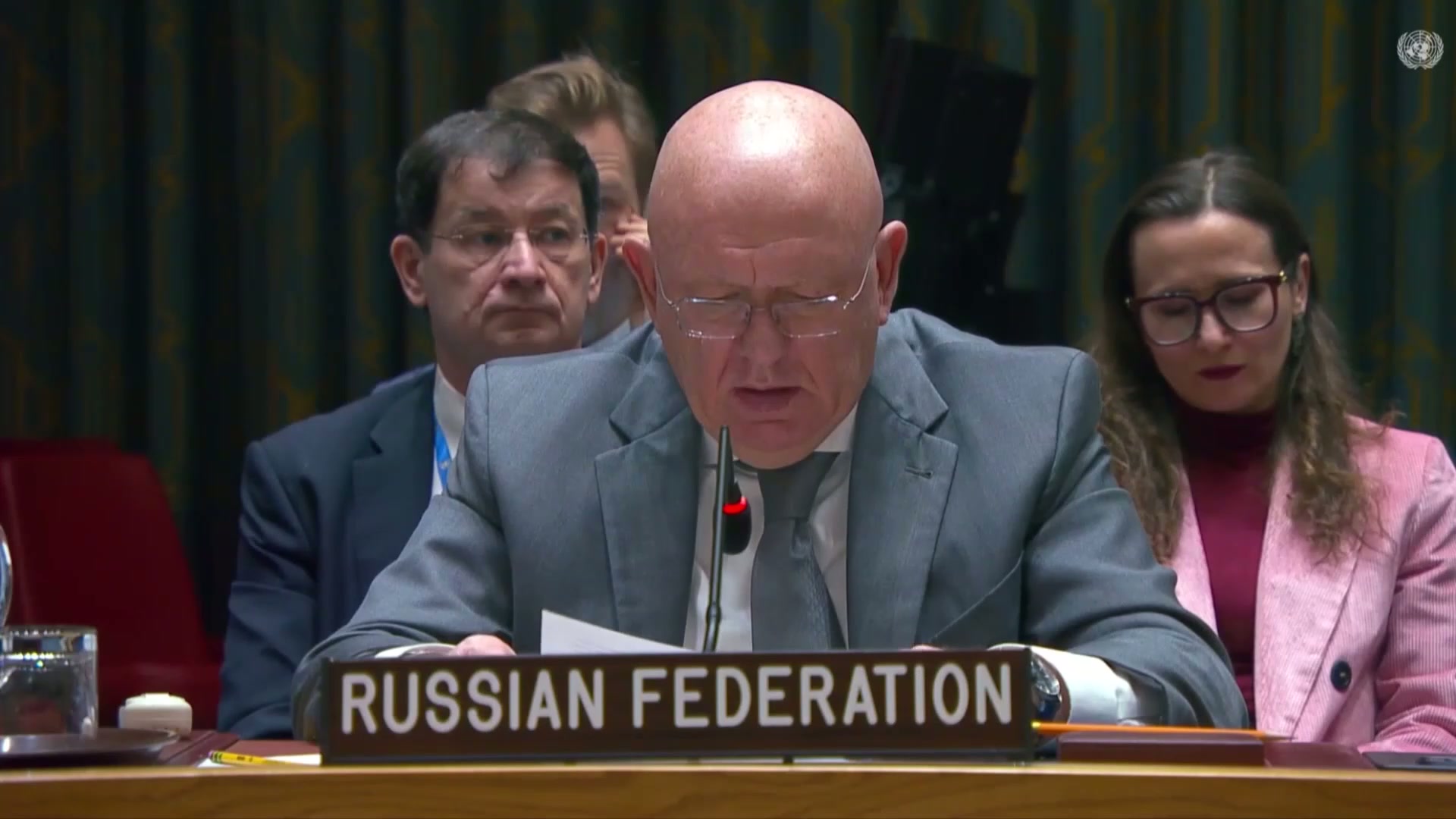
"A heated debate unfolded at the United Nations on Tuesday as representatives from Russia, China, and the United States clashed over Washington’s escalating pressure on Venezuela. The session, convened ahead of a vote on regional security and economic measures, highlighted sharply divergent views on sovereignty, sanctions, and military interventions. Russia’s Permanent Representative to the UN, Vasily Nebenzya, accused the United States of deliberately escalating tensions around Venezuela under the pretext of a terrorist threat. "The White House has decided to dust off the well-worn practice of using the need to combat terrorism as a justification for overt aggression and interference in the affairs of sovereign states," he declared. He added that Washington’s actions “violate all key norms of international law, including the UN Convention on the Law of the Sea, Security Council resolutions, and the Charter of the United Nations itself.” Nebenzya described the US-imposed naval blockade and seizure of oil tankers as “a genuine act of aggression” and warned that the current intervention could become a model for future actions in Latin America. “The US President's statement of 16 December is a direct claim to the natural resources and subsoil of another state,” Nebenzya stated. “They are trying to impose a flawed logic that a single decision by the American authorities is enough to turn a sovereign state into a criminal enterprise.” "Don't ask for whom the bell tolls. It tolls for you. We reaffirm our solidarity with the Venezuelan people," Nebenzya added. Meanwhile, China’s Deputy Permanent Representative, Geng Shuang, echoed concerns over unilateral US measures. He criticised sanctions, blockades, and military threats, urging the international community to back China's foreign policy position. "Venezuela has the right to autonomously develop mutually beneficial cooperation with other nations and to safeguard its legitimate rights and interests," he explained. "The international community should respect and support China’s opposition to all unilateral bullying practices and uphold the sovereignty and national dignity of all countries." “We oppose the use or threat of force in international relations. We oppose external forces interfering in Venezuela’s internal affairs under any pretext. We oppose illegal unilateral sanctions,” Geng said, calling on the US to 'immediately cease relevant actions and avoid further escalation of tensions.' The US Ambassador to the UN, Mike Waltz, strongly defended Washington’s policies, portraying Venezuelan President Nicolas Maduro and his inner circle as an 'illegitimate', and 'criminal', 'socialist dictatorship'. “Nicolas Maduro is a fugitive from American justice and the head of the foreign terrorist organisation Cartel de los Soles,” Waltz said, stressing that Venezuela is a key drug trafficking route into the United States and Europe, citing the UN Office on Drugs and Crime’s 2025 World Drug Report. Waltz said targeted oil tankers are Maduro's “primary economic lifeline” and warned that the US is committed to enforcing sanctions to cut off the resources that Washington alleged are used to fund the narco-terrorist groups. "These cartels are sophisticated, very technically capable, well-financed, and are wreaking havoc in our region," he noted. "The people of Venezuela, frankly, deserve better," he added. This comes after President Trump announced a blockade of 'sanctioned oil tankers' entering or leaving the country, arguing that the government of Nicolas Maduro uses them to "finance drug trafficking, terrorism and human trafficking"."