


 The Better India
 Best of 2025: Meet the 10 Indians Who Took Personal Risks to Save Wildlife Across India
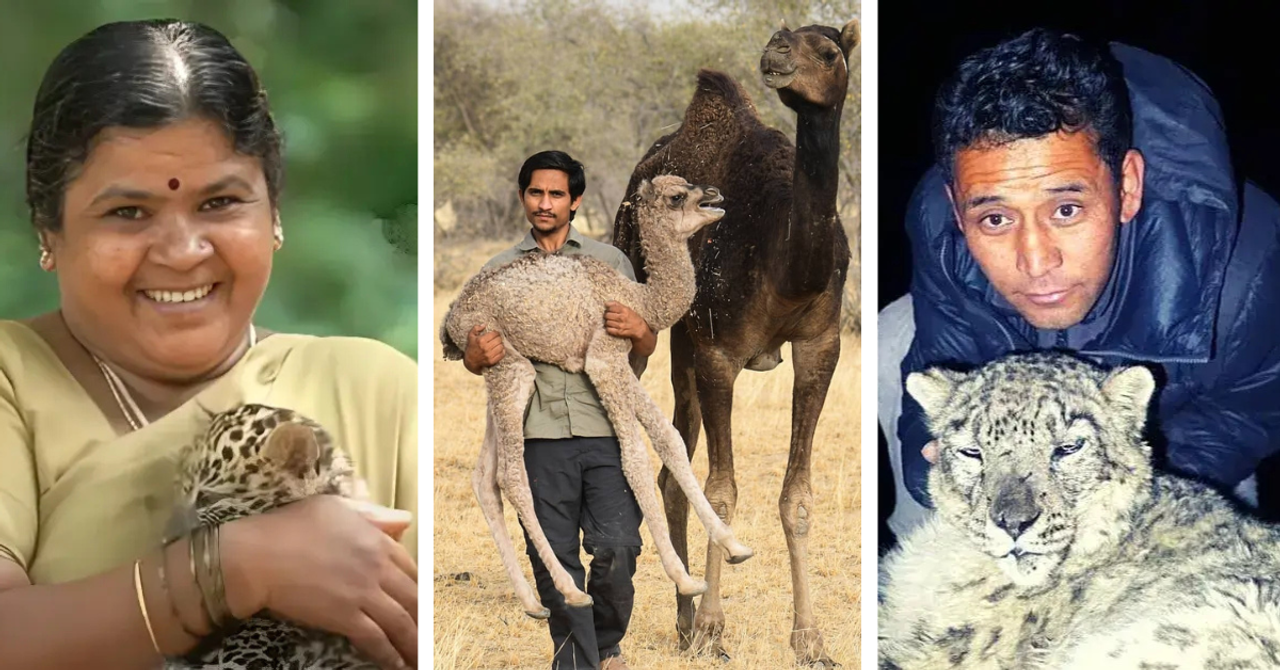
Conservation goes beyond saving species; it also means preserving the delicate balance between humans and the natural world. Through the stories we’ve told in 2025, The Better India has attempted to bring to you wildlife heroes who went beyond passion to create real impact on the ground. Here are 10 stellar individuals. From forests and coastlines to grasslands and wetlands across India, they have safeguarded endangered species, restored fragile ecosystems, and inspired communities to coexist with nature. 1. Bhera Ram Bishnoi: Safeguarding the wilderness of Rajasthan Fondly known as Bheru, Bhera Ram Bishnoi, a forest guard at Rajasthan’s Kumbhalgarh Wildlife Sanctuary, has become an integral presence in the forest. When he first joined in 2013, he recalls the sanctuary feeling empty. Over the years, Bheru patrolled 15 km daily, learnt through trial and error, and mastered the installation of camera traps to monitor illegal activity. Bhera Ram Bishnoi is a forest guard at Rajasthan's Kumbhalgarh Wildlife Sanctuary. Photograph: (Bhera Ram Bishnoi) Gradually, leopards, sloth bears, and hyenas began appearing on camera, deepening his bond with the wild. Read their full journey here . 2. Sharvan Patel: Turning the desert into an oasis Sharvan Patel couldn’t bear to watch the blackbucks and mongooses struggle for water near a dried-up waterhole at Rajasthan’s Tal Chhapar Sanctuary. Realising that survival in the desert hinged on access to water, Sharvan started building traditional ponds using local materials and simple innovations, documenting their impact through camera traps and social media. The successful proliferation of these ponds has led to the revival of local ecosystems, allowing animals to thrive. Photograph: (Sharvan) What started as a small experiment grew into a community-led movement, funded by microdonations. Today, Sharvan has helped build over 30 ponds and inspired 80 more across Rajasthan, reviving habitats and giving wildlife a lifeline in the desert. Read their full journey here . 3. Khenrab Phuntsog: Rescuing snow leopards Khenrab Phuntsog’s lifelong bond with snow leopards began in his childhood in Chilling village. A close encounter at the age of 12, when he watched one hunt in the wild, left a lasting impression that inspired him to protect the elusive predator. He joined the Wildlife Protection Department as a guard, mastering tracking techniques, installing camera traps, leading risky rescue missions, and training local eco-guides to promote coexistence and conservation. Khenrab has received global recognition for his conservation efforts. Photograph: (Khenrab) Over two decades, Khenrab has rescued over 50 snow leopards, contributed to population monitoring in Ladakh, reduced retaliatory killings, and helped transform community attitudes, playing a key role in safeguarding India’s snow leopard population. Currently, Khenrab works in Ladakh’s Changthang Wildlife Sanctuary. Read their full journey here . 4. R Gurusamy: Creating a safe haven for deer Tamil Nadu-based R Gurusamy’s journey began in 1998 when he noticed three spotted deer grazing peacefully alongside his cattle on his farmland in Pudupalayam. Witnessing their struggle for water and safety during prolonged droughts sparked his resolve to protect them. He gradually gave up nearly 50 acres of his land, allowed native vegetation to flourish, built ponds for water, and worked with forest officials to prevent poaching and human–wildlife conflict. R Gurusamy, a farmer from Tamil Nadu, gave 50 acres of his ancestral land to care for deer Photograph: (R Gurusamy) Over two decades, the deer population grew from three to over 1,800, turning his farm into a rare wildlife refuge. Read their full journey here . 5. Dr Sarita & Dr PV Subramaniam: Helping the wild quench their thirst Dr Sarita Subramaniam’s mission began in 2017 when she spotted a young tigress struggling to drink from a drying puddle in Kanha Tiger Reserve. Witnessing wildlife suffer from water scarcity inspired her to find a sustainable solution that could benefit entire ecosystems. Dr Sarita and Dr PV Subramaniam have devoted themselves to providing water for wildlife using solar pumps. Photograph: (Dr Sarita) Alongside her husband, Dr PV Subramaniam, she founded the Earth’s Brigade Foundation and installed 196 solar-powered water pumps across 29 forests in eight states. These pumps draw water from borewells or perennial sources and distribute it to multiple water bodies, supporting animals and vegetation while reducing human–wildlife conflict . Their work has ensured year-round water for wildlife, improved biodiversity, reduced carbon emissions, aided forest staff, and strengthened habitat resilience, transforming dry forests into thriving ecosystems. Read their full journey here . 6. Savitri Amma: The cub whisperer of Bannerghatta For over two decades, Savitri Amma has nurtured orphaned lions, leopards, and tigers at Bannerghatta Biological Park. From playing with them to feeding them and watching over them, her bond exemplifies deep trust and care between humans and animals. It isn’t without its challenges; Savitri often has to brave sharp claws and emotional farewells, but her passion for the wild pales everything else in comparison. This bond that she shares with the wild has earned her the title ‘cub whisperer’. Savitri Amma’s life is a testament to compassion, motherhood, and the transformative power of kindness. 7. Radheshyam Pemani Bishnoi: Guarding the Great Indian Bustard Radheshyam Pemani Bishnoi’s passion for wildlife conservation stemmed from his childhood in the Bishnoi community of Rajasthan, which reveres the wild, particularly the Great Indian Bustard (GIB) . He spearheaded the creation of water reservoirs in arid regions, offering relief to wildlife during scorching summers. Along with this, Radheshyam was known for supporting forest officials in detecting and initiating anti-poaching cases, rescuing injured animals and providing immediate care. A young Radheshyam rescuing one of the injured desert animals. Photograph: ( Desert National Park Safari ) In recognition of his extraordinary service, he was honoured with the Sanctuary Wildlife Service Award in 2021. Radheshyam passed away in May 2025 following a tragic road accident. 8. Vedhapriya Ganesan: Saving Tamil Nadu’s snakes Vedhapriya Ganesan’s journey in wildlife rescue began at the age of three when she saved a newborn shrew. Soon after, she developed a deep fascination with reptiles, sparked by a school trip to a snake park. Vedhapriya now spreads awareness among children and communities on the ecological importance of snakes. Photograph: (Vedhapriya) Now in her role as Chief Coordinator for the Western Ghats Wildlife Conservation Trust, she rescues and rehabilitates snakes, monkeys, birds, and other wildlife. She also conducts awareness programs and trains officials in handling wildlife-human conflicts. Read their full journey here . 9. Dr Panjit Basumatary: Giving wildlife a second chance Dr Panjit Basumatary’s passion for wildlife stems from growing up in Kokrajhar, Assam, surrounded by the foothills of the Himalayas and being exposed to the rich biodiversity near Manas National Park. Unlike many of his peers who focused on domestic animals, he chose the unconventional path of wildlife care, driven by curiosity and a desire to protect India’s wild species. Over the years, he has rescued over 3,000 animals across 250 species, including rhinos, clouded leopards, elephants, and bears. He leads India’s only Asiatic black bear rehabilitation centre in Arunachal Pradesh and has handled complex rescues. Dr Basumatary’s work has not only saved countless lives but also advanced the field of wildlife rehabilitation in India. His contributions earned him recognition from the IFAW (International Fund for Animal Welfare), and his research has added scientific insight into wildlife care and release. 10. Professor Rajib Tariang: Transforming hunters into wildlife protectors Saraipung village in Assam once relied on hunting monkeys, squirrels, and birds for survival. Today, thanks to zoology professor Rajib Tariang, the community has become protectors of their forest. Living among villagers, he used visual education and awareness programmes to teach conservation, empowering locals to embrace eco-tourism. Rajib's educational approach was key in changing the villagers' perspective on wildlife. Photograph: (Prof Rajib) Saraipung now demonstrates that education, empathy, and opportunity can transform communities, blending conservation with sustainable livelihoods. Read their full journey here . Sources Radheshyam Pemani Bishnoi 'Savitri Amma Biography – The Cub Whisperer of Bannerghatta' : by Rashmeet Kaur Chawla, Published on 13 July 2025. 'Dr Panjit Basumatary' , Published by Santuary Asia in April 2025.