


 Business Recorder
 Underperforming port infrastructure: PM unveils ‘package of reforms’
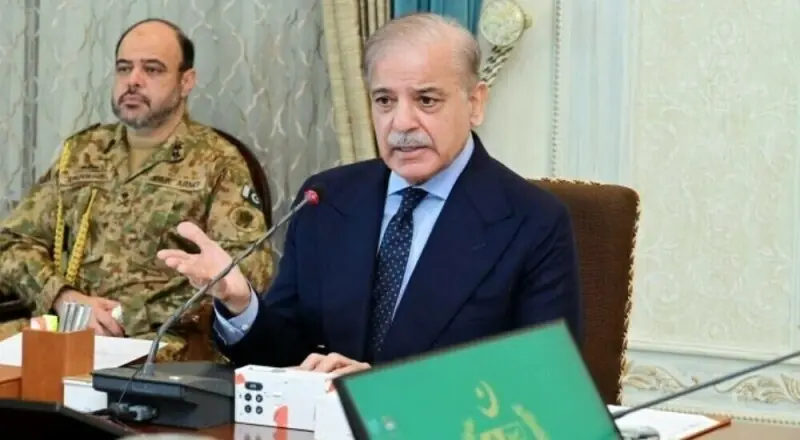
ISLAMABAD: In a bid to revitalise the country’s underperforming port infrastructure, Prime Minister Shehbaz Sharif on Wednesday unveiled an ambitious package of reforms designed to overhaul Pakistan’s ports, with a focus on reducing cargo delays, cutting business costs, and stimulating economic growth. The reforms, covering coordination, infrastructure, and transparency, are designed to streamline the nation’s trade logistics and enhance its competitiveness on the global stage. The announcement came after a meeting of a private-sector working group tasked with formulating recommendations for port-related reforms, chaired by the prime minister. ‘Climate resilience’: govt cuts export cargo handling charges by 50% at Karachi Port In his address, PM Sharif emphasised the crucial role of efficient ports in driving economic success, noting that the nation’s prosperity is intricately linked to the effectiveness of its ports, which handle vital imports and exports. “Our ports are the bedrock of our business expansion and economic development,” he stated, as per a press release from his office. Sharif directed relevant authorities to boost cooperation among port agencies with the goal of reducing cargo dwell time – the period cargo remains at ports awaiting clearance – and further slashing port charges to ease the financial burden on businesses. During the meeting, the PM was presented with a series of recommendations aimed at improving port facilities and implementing reforms to benefit the business community. “The role of our ports is pivotal in driving business and fostering economic growth,” Sharif remarked, emphasising the need for better coordination between various port-related agencies to streamline operations. He stressed that collaboration among these entities must be enhanced to expedite cargo processing. In line with this, Sharif instructed that port charges be further reduced to alleviate costs for the business sector. He also called for the implementation of a transparent system for the auctioning of abandoned cargo at ports. Additionally, the PM recommended the establishment of designated yards for obsolete cargo at key ports, suggesting the involvement of globally renowned companies to oversee these operations. He further proposed the creation of preliminary testing labs at ports for cargo inspections and advocated for the elimination of unnecessary laboratory tests to expedite processing. The PM also urged the acceleration of dredging and expansion works at all of Pakistan’s ports to accommodate larger vessels. He directed that rail connectivity to ports be enhanced to improve the efficiency of domestic cargo transport. The working group, led by Ziad Bashir, was praised by the PM for its diligent work and constructive proposals. Bashir highlighted that the transparent privatisation of Pakistan International Airlines (PIA) had significantly boosted business confidence in the country. A detailed briefing was provided on the rapid progress of the National Ports Master Plan, with particular emphasis on the recently operationalised Port Community System and reductions in various port fees, including a 50 percent cut in Bulk Cargo fees at Port Qasim. Investment in port infrastructure was cited as a key factor in boosting operational efficiency, with the introduction of an E-Bidding system for abandoned cargo auctions set to allow nationwide participation. Furthermore, tenders for the expansion and dredging of Karachi’s ports have already been awarded, with work scheduled to commence soon. The meeting was attended by federal ministers Ahsan Iqbal, Ahad Cheema, Muhammad Junaid Anwar Chaudhry, Musadik Malik, Minister of State Bilal Azhar Kiani, Special Assistant to the Prime Minister on Industries Haroon Akhtar, and senior government officials. Copyright Business Recorder, 2025