


 Dawn.com
 Govt moves to phase out state-led power purchases
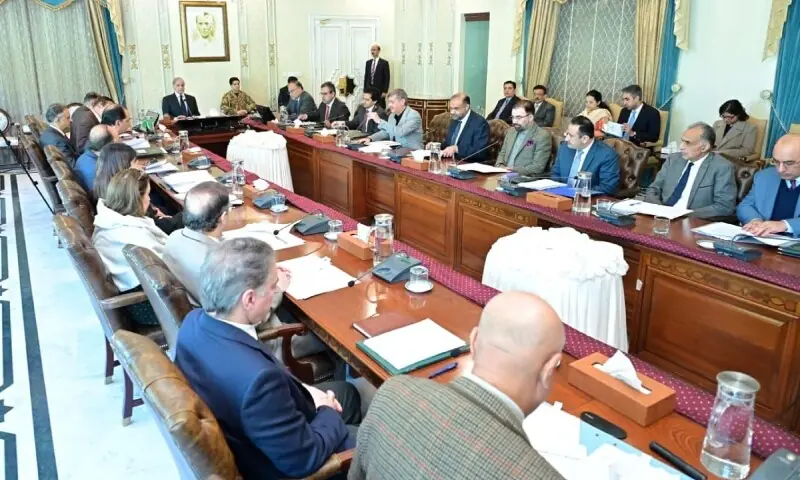
• CCoE approves pilot wheeling auction under Competitive Trading Bilateral Contract Model • 800MW to be auctioned for five years; volumes may rise after trial phase • Indicative wheeling charge put at Rs12.55 per unit; industry objects to cost impact • 18-member steering committee formed for integrated energy planning ISLAMABAD: The government has approved a pilot electricity auction that will allow power to be bought and sold through competition, while also endorsing steps towards integrated energy planning across the country to end fragmented decision-making. In this regard, the Cabinet Committee on Energy on Wednesday approved framework guidelines for a “wheeling” auction of 800-megawatt of electricity under the Competitive Trading Bilateral Contract Model (CTBCM). Wheeling refers to the use of the national electricity grid to deliver power from a generator to a buyer. Big factories or companies may buy electricity directly from a producer, but they still need the grid wires to get it. The fee they pay for using those wires is called wheeling and grid charges. The meeting, presided over by Prime Minister Shehbaz Sharif, also decided to end future procurement of power generation capacity in the public sector and constituted an 18-member steering committee of federal and provincial bureaucrats to lead integrated energy planning (IEP) — a push to bring electricity, oil, gas and other energy planning under a single coordinated national approach. Under the framework guidelines, 800MW of generation capacity would be sold through a competitive auction for five years. The quantum would gradually increase after the initial trial, subject to government approval. The auction is being developed under CTBCM, a system in which power producers and buyers deal directly with each other, rather than the government acting as the main middleman. In plain words, electricity is bought and sold like a market, not fully controlled by the government. The National Electric Power Regulatory Authority (Nepra) would determine the wheeling and grid charges for bulk power consumers upon a uniform petition to be filed by the distribution companies under the guidance of the power division. An indicative wheeling charge of about Rs12.55 per unit may come into force, although industrial consumers are contesting it as too high and rendering their products uncompetitive. The guidelines require the Independent System and Market Operator (ISMO) — a new entity created under the Power Division — to issue the auction process with Nepra’s approval. ISMO will issue an auction calendar and detailed procedures. The framework does not allow a minimum or maximum limit on bid prices (no “cap” or “floor”), and the bid price is to remain fixed for one year. The guidelines also delineate the roles and responsibilities for the implementing agencies, including Nepra, ISMO and auction participants, and govern the entire structure of the CTBCM. Under the timelines agreed with the IMF, approval of these guidelines for auction was targeted for December and approval of uniform wheeling charges by Nepra in January 2026. An official statement said the resident committee of the top civil-military forum — the Special Investment Facilitation Council — had decided to have an integrated energy plan through federal and provincial coordination under the umbrella of the Power Division of the Ministry of Energy. “A consequential determination has been reached regarding electricity wheeling within the country, thereby laying the foundation for the inception and advancement of a competitive energy market,” an official statement said, adding that approvals had been extended to the competitive bidding process, participant engagement and other pertinent aspects. This encompasses authorisation for the CTBCM framework pertaining to electricity auctions, it said, adding that “consistent with the government’s pledges, no further electricity procurement agreements shall be entered into”, formally disengaging the government from electricity procurement activities. The clearance for IEP governance by the Cabinet Committee on Energy on Wednesday would be followed by the notification of an IEP steering committee before the close of the current month. Next, the cabinet committee will approve IEP’s high-level design by February 2026, to be followed by its model workshops across the country by October 2026, leading to formal approval of the National Integrated Energy Plan (NIEP) by the committee by April 2027. The IEP steering committee, led by the power minister and co-chaired by the petroleum minister, would comprise about nine federal secretaries, four provincial chief secretaries and the chairpersons of Nepra, Ogra and Wapda. The committee would ensure wide participation of relevant stakeholders for IEP and facilitate its implementation through the resolution of inter-sectoral, federal and provincial departmental issues and align it with national development priorities, including net-zero transitions. The Cabinet Committee on Energy also directed the development and institutionalisation of the Energy Information System by the Power Division through its Power Planning and Monitoring Company (PPMC) to provide data-based decision-making support to the government, including the “IEP Ecosystem”. The EIS will cover capacity building, governance improvements, monitoring, policy formulation, integration of plans and policies, modelling and scenario-based planning. It added that planning activities would be executed in a unified manner through a single entity, PPMC. The NIEP is expected to adopt a cross-sector approach, covering oil, gas, coal, water and hydropower, minerals, natural resources and renewables on the supply side, and residential, commercial, industrial, transport and agriculture needs on the demand side. The plan is also expected to gradually incorporate an artificial intellgence-based decision-support system to create a “single source of truth” and avoid conflicting figures across institutions. Published in Dawn, December 25th, 2025