


 Dawn.com
 Jamaat-i-Islami eyes return to its populist heyday
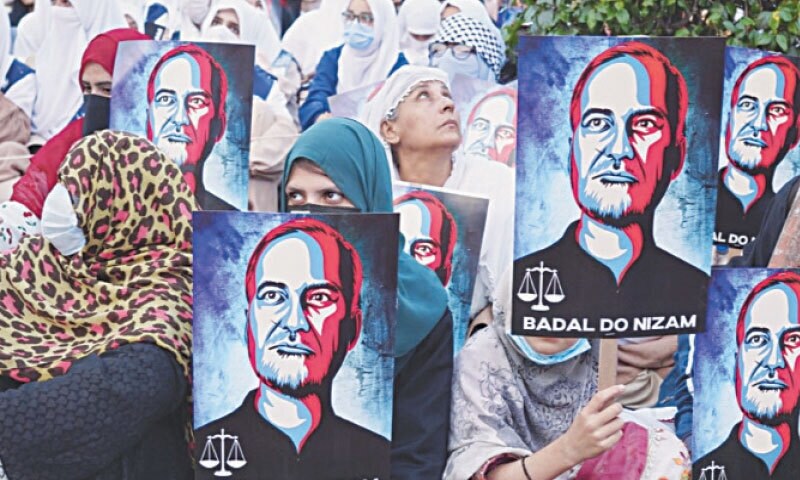
• Under Hafiz Naeem’s leadership, party seems to be cultivating personality-driven appeal, last seen under Qazi Hussain Ahmad • Observers question whether such pragmatic adaptation can really change party’s fortune TAKING its cue from the global wave of populist politics — and its rising resonance in Pakistan — the Jamaat-i-Islami appears to be charting a course to redefine its identity. It is a path first explored under the leadership of the late Qazi Hussain Ahmad and subsequently set aside during the tenures of Syed Munawar Hassan and Sirajul Haq, when organisational discipline was prioritised over personal appeal. Under the current emir, Hafiz Naeemur Rehman, that trajectory appears to be resurfacing. This is the assessment of party insiders, political analysts, and journalists observing the JI’s politics in general and its recent three-day congregation in Lahore, in particular. For many observers, the gathering served as a marker of a party testing new political registers, rather than abandoning old ones. The most striking change at the event was that a large number of participants — including young girls — were seen carrying portraits of Hafiz Naeem. For a party historically known for its collective identity and tightly controlled culture, the imagery gave the venue an uncharacteristically cultish appearance. Many read this as an indication of internal realignment, where the iconography of its leaders is beginning to occupy a more central place in the political messaging. Hafiz Naeem has reinforced this impression from the podium, declaring that the Jamaat had no fixed constituency or candidate. “All of Pakistan is our electorate, and every member is a candidate,” he told a gathering. Analysts interpreted the statement less as an organisational slogan and more as a personal — even populist — assertion. Insiders acknowledge these developments as early signs of a shift towards personality-driven politics. Some within the party see strategic value in this approach. Others remain uncertain about how far such a shift can proceed without unsettling the party’s deeply embedded organisational ethos. Old guard The party’s old guard, which occupies key positions in its layered structure, has historically resisted departures from tradition. Ex-emir Sirajul Haq faced strong internal pushback when he tried to soften the party’s stance on the veil to broaden its appeal among women voters. “Whether the current emir will be allowed to cultivate personal charisma — especially if it begins to overshadow the Jamaat itself — remains an open question,” says a senior party insider. JI Secretary General Ameerul Azeem describes the changes not as rupture but as part of a longer historical evolution that every political party must eventually undergo. In his view, the JI has consciously shifted towards a mass-movement model closer to what its founder, Maulana Abul A’la Maududi, originally envisioned. Political analyst Mudassir Rizvi of the Free and Fair Election Network (Fafen) believes Hafiz Naeem has both the experience and temperament to attempt such a transition — and that the party requires it. He points to Hafiz Naeem’s navigation of Karachi’s competitive political landscape, where the party contested against entrenched rivals such as the MQM and the PPP while still managing to expand its vote bank. However, Mr Rizvi warns that personal charisma alone will not yield lasting gains unless it translates into organisational cohesion and broader electoral presence. Political scientist Kamran Butt notes that internal assessments within the JI suggest that the establishment is unlikely to permit a near-term return of the PTI, while the Tehreek-e-Labbaik Pakistan appears to have lost momentum. He says should the PML-N or the PPP enter another cycle of political decline, the JI sees potential space to position itself as a right-of-centre alternative. Gender and minorities Alongside leadership strategy, a visible transformation is unfolding on the gender front. Long associated with conservative gender norms, the JI is cautiously recalibrating. Women’s wings have been mobilised, women in several party bodies are now elected rather than nominated, and transgender individuals are no longer actively excluded. The party’s international linkages have also encouraged greater interfaith outreach, including visits to Sikh gurdwaras and engagement with Christian communities. Yet internal realities remain complex. Journalist Suhail Warraich situates the Jamaat’s transformation within a longer arc of political contraction. As national relevance declined, he argues, the party increasingly retreated into local politics. Figures such as Hidayat-ur-Rehman in Gwadar and Hafiz Naeemur Rehman in Karachi exemplify this localisation, reinforced by the Jamaat’s extensive welfare and charity network. Veteran political scientist Rasool Bakhsh Rais also views this shift as pragmatic adaptation rather than ideological drift. Base erosion? However, senior journalist Badar Alam traces the Jamaat’s experimentation to the erosion of its traditional urban, religiously inclined middle-class base — displaced first by the MQM and later by the PTI. Without a stable core constituency, he argues, the Jamaat risks reviving an old dilemma: who comes first, the party or the individual? Whether the Jamaat’s attempt to redefine its identity matures into lasting political benefit or remains a temporary experiment will depend on how effectively it manages these internal contradictions. For now, Hafiz Naeem has set the party on a new trajectory — but whether it will benefit the party or dent it instead remains the key question. Published in Dawn, December 26th, 2025