


 The Better India
 Best of 2025: 10 IAS & IFS Officers Who Took on India’s Toughest Problems & Fixed Them
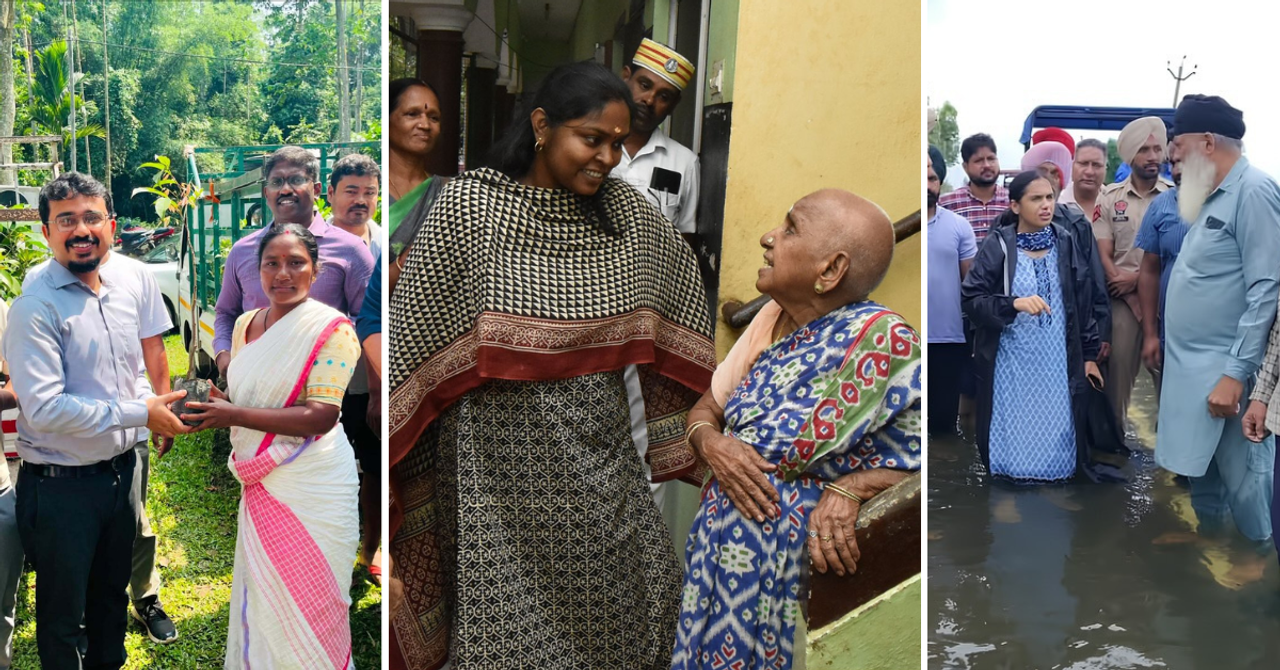
As 2025 draws to a close, some of the year’s most meaningful changes unfolded far from podiums and press conferences. They took shape in classrooms struggling with learning gaps, villages facing floods, forests at the edge of conflict, and cities buried under waste. Across India, governance found its footing where empathy met action. In this spirit, we bring you 10 IAS and IFS officers who translated policy into lived impact. From AI-powered education and wildlife protection to flood rescue and waste reform, their work touched lives across districts and states. Together, their stories show how public service can remain deeply human while solving complex challenges. 1. Saumya Jha: Fixing foundational maths with AI As District Magistrate of Tonk in Rajasthan, IAS Saumya Jha noticed a troubling contradiction. While over 90 percent of Class 10 students aspired to science-based careers, fewer than 12 percent could actually pursue the science stream. Weak foundational maths skills stood in the way. Saumya Jha used AI-led learning to strengthen maths foundations in government schools in Tonk. To bridge this gap, she launched ‘PadhaiWithAI.in’, an AI-powered personalised learning platform designed for government schools. The tool solved textbook problems in Hindi and English, generated unlimited practice questions, and adapted to each student’s pace. Teachers could focus on mentoring instead of repetitive worksheets. After a six-week intervention, Tonk’s Class 10 maths pass percentage rose to 96.4 percent in 2025, a three-point increase over the previous year. The model now offers a scalable approach for districts facing similar learning challenges. Read the full story here . 2. Siddharth Jaiswal: Curbing child marriage and teen pregnancy As district magistrate and collector of Sepahijala in Tripura, Siddharth Shiv Jaiswal encountered a crisis that demanded urgent attention. Field assessments revealed that girls as young as 13 were being pushed into marriage and early motherhood. Siddharth Shiv Jaiswal led a district mission to curb child marriage and teen pregnancy in Tripura. Drawing on his medical background, Jaiswal launched ‘Mission Sankalp’, a district-wide effort involving health officials, police, child protection units, and NGOs. The focus was prevention, rescue, and long-term monitoring. The impact was tangible. Over 100 children were rescued from early marriage, and 10 villages were declared child-marriage-free. Health facilities reporting zero deliveries among girls under 18 rose from four in December 2024 to 11 by March 2025. Jaiswal now aims to eliminate child marriage in Sepahijala by 2027. Read more about his journey here. 3. Indrajeet Singh: Making Lucknow a net-zero waste city When IAS Indrajeet Singh took charge as municipal commissioner of Lucknow in 2022, unprocessed waste lay piled at massive dumps in Ghaila and Shivari, threatening groundwater and public health. Singh began by strengthening the backbone of sanitation. Workers received fixed salaries, cleared dues, timely payments, and protective gear. Morale improved, and systems followed. Over 1,250 electric vehicles were deployed for door-to-door waste collection, covering nearly 7.5 lakh households. Indrajeet Singh transformed Lucknow’s waste systems and moved the city towards net-zero disposal. At Shivari, millions of tonnes of waste were cleared, and a treatment plant began processing 100 percent of the city’s daily garbage into compost, RDF, and recyclables. By April 2025, Lucknow rose from 44th to third in Swachh Survekshan and became Uttar Pradesh’s first net-zero waste city. Singh is currently posted at UPNEDA (Uttar Prades New and Renewable Energy Development Agency). Read the full story here . 4. Sakshi Sawhney: Leading flood rescues in Punjab In late August and early September 2025, floods submerged over 20 villages in Punjab’s Ajnala district. As deputy commissioner of Amritsar, IAS Sakshi Sawhney responded on the ground. She coordinated rescue operations with the Army, NDRF, SDRF, and the Red Cross, often wading through floodwaters herself. Within 24 hours, teams rescued over 900 people. Schools became shelters offering food and medical care, while boats and all-terrain vehicles reached families unwilling or unable to leave their homes. View this post on Instagram A post shared by The Better India (@thebetterindia) After waters receded, Sawhney ordered inspections of homes, schools, and hospitals to prevent further risks. Her hands-on leadership during the crisis left a lasting impression on residents. She now serves as chief administrator of the Greater Mohali Area Development Authority. 5. Prem Krishnan S: Getting children back to playgrounds As District Collector of Pathanamthitta in Kerala, IAS Prem Krishnan S noticed empty playgrounds and children absorbed in screens, even during summer holidays. In response, he launched the ‘Swap Your Screen for a Sport’ challenge through social media, inviting children to share photos of themselves playing outdoors. He promised to join them and followed through, meeting children on fields across the district. View this post on Instagram A post shared by The Better India (@thebetterindia) The initiative reignited the use of community playgrounds and encouraged healthier routines among children. More than a campaign, it became a shared moment of connection between the administration and young residents. 6. Varun Jain: Using AI to prevent human-elephant conflict Posted at Chhattisgarh’s Udanti–Sitanadi Tiger Reserve, IFS officer Varun Jain faced recurring human-elephant conflicts that traditional warning systems struggled to prevent. After a fatal incident in 2022, Jain partnered with a startup to develop an AI-based elephant tracking system. Foot patrol officers recorded herd movement and damage, while camera trap data fed into QGIS mapping. A 10-km alert zone triggered SMS warnings for villagers and forest officials. Varun Jain used AI-based tracking to reduce human-elephant conflict around Udanti–Sitanadi Since becoming operational in February 2023, the region has reported almost zero human fatalities for over 22 months. The data has also helped identify elephant corridors and improve wildlife movement planning. Read the full story here . 7. Dharmveer Dairu: Reviving sericulture for rural incomes In Pathankot, Punjab, IFS officer Dharmveer Dairu noticed that traditional sericulture had nearly disappeared due to lack of support and mulberry plantations. Working under the PUN CAMPA (Punjab Compensatory Afforestation Fund Management and Planning Authority) scheme, he led the plantation of 37,500 mulberry saplings across 75 hectares, built rearing houses, and organised farmer training. Sericulture expanded from five to 11 villages, involving 116 farmers. Dharmveer Dairu revived sericulture to support rural incomes and forest-linked livelihoods. Cocoon production rose from 650 kg in 2023 to 1,000 kg in 2024. Farmers now earn Rs 20,000–25,000 per season from 30–35 days of work, linking forest conservation with livelihood security. Dairu is currently a Divisional Forest Officer in Hoshiarpur. Read the full journey here . 8. Swapneel Paul: Clearing decades of legacy waste In Assam’s Tinsukia district, garbage dumps near towns like Tinsukia and Doomdooma had long posed health risks. As District Commissioner, IAS Swapneel Paul led a coordinated clean-up across five municipal boards. Beginning in March 2023, the district used bio-mining to treat 1.53 lakh metric tonnes of legacy waste. Biodegradable material was composted, while non-recyclables were converted into RDF for cement plants. By 2025, Tinsukia became the first legacy-waste-free district in Northeast India. In April 2025, Paul received the ‘Prime Minister’s Award for Excellence in Public Administration’. 9. Priyanka Balasubramanian: Leading with empathy in Thanjavur IAS Priyanka Balasubramanian, district collector of Thanjavur in Tamil Nadu, is affectionately called the ‘world’s best Collector’ by locals. View this post on Instagram A post shared by The Better India (@thebetterindia) Her approach centres on accessibility and care. She takes time to listen, engages with schoolchildren, and treats every visitor with dignity. Before joining the IAS, she studied engineering at College of Engineering, Guindy, followed by management at IIM Bangalore, choosing public service over a corporate career. Her leadership style has built trust between the administration and the community she serves. 10. Akshat Verma: Turning ritual waste into livelihoods In Varanasi, discarded clothes from the Ganga ghats often end up polluting riverbanks. IAS officer Akshat Verma saw an opportunity to address both environmental and social concerns. In December 2023, he partnered with Hope Welfare Foundation and local craftswomen to collect, clean, and upcycle these fabrics into reusable cloth bags. Over one lakh bags have been produced and distributed so far, preventing tonnes of textile waste from entering landfills and the river. View this post on Instagram A post shared by The Better India (@thebetterindia) The initiative has created steady income for over 50 women involved in stitching the bags. As of October 2025, Verma serves as special secretary in Uttar Pradesh’s planning department.