


 Dawn.com
 Afghan Taliban say doors open for talks to resolve issues
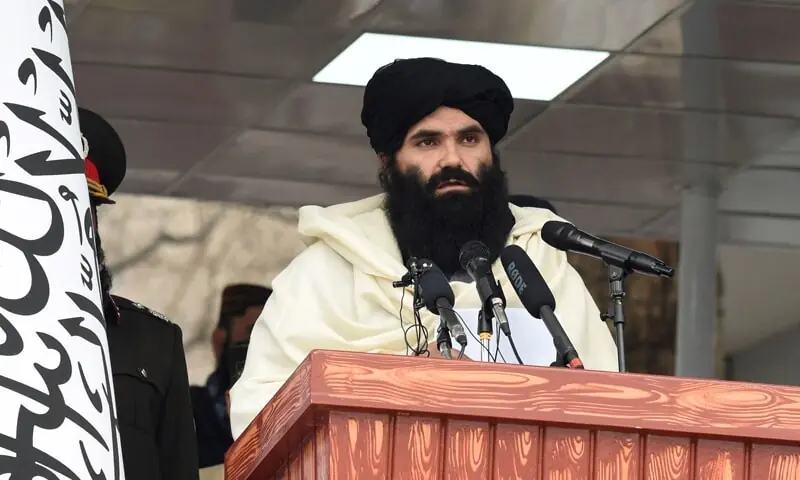
In an apparent attempt to offer an olive branch to Pakistan, the interim Afghan Taliban regime’s interior minister Sirajuddin Haqqani on Friday said that his country was not a threat to any state and that it was ready to address misunderstandings. Speaking at the graduation ceremony at the Kabul Police Academy, Haqqani announced that the doors for negotiations were open. He said that his government continues to adhere to the commitments made under the Doha Agreement, not allowing Afghanistan’s soil to be used against any country, the Afghan Taliban’s official media reported. However, despite earlier promises and the commitments made in the Doha Agreement, cross-border infiltration and attacks by militants continue in Pakistan. Haqqani said that Afghanistan posed no threat to any country or region and that the Taliban leadership continued to strive to find ways for reasonable and durable solutions to end mistrust and misunderstanding of the international community. “The doors for negotiations to resolve current issues are not closed,“ he said. Although Haqqani did not mention Pakistan by name, he appeared to refer to Pakistan’s long-standing demand from Kabul to rein in the outlawed Tehreek-i-Taliban Pakistan (TTP). Relations between the two neighbours are strained following border skirmishes, which led to the closure of borders between the two countries since October 11, 2025. Attempts by Turkiye and the UAE to broker an agreement between the two sides failed to break the ice, with Pakistan accusing Afghanistan of refusing to give a written undertaking to control the TTP, whose fighters, it says, continue to infiltrate through its 2600-km-long porous borders to launch attacks inside the country. The remarks by Haqqani are significant in that the TTP owes its allegiance to him and has been operating from areas in Afghanistan that have been under his control since long. It was precisely for this reason that Haqqani’s younger brother, Anas Haqqani, was part of the Afghan Taliban team negotiating with their Pakistani counterparts in Qatar and Turkiye.