


 Business Recorder
 Remote areas: CJP concerned over lack of required judicial infrastructure
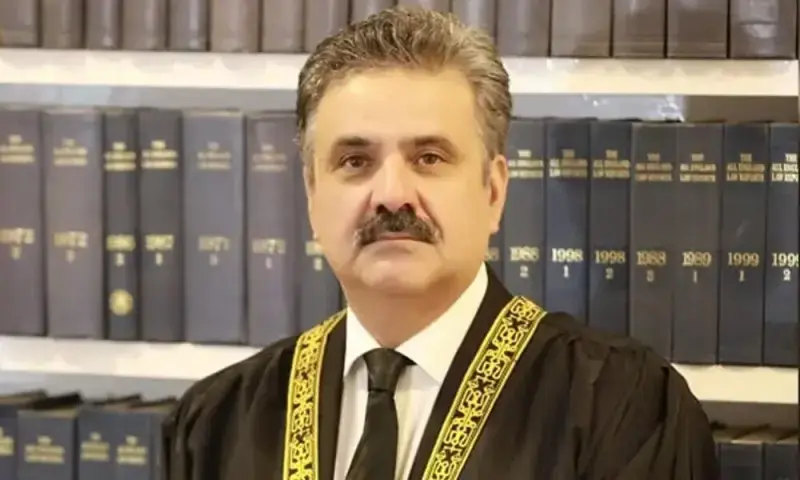
ISLAMABAD: Chief Justice of Pakistan, Justice Yahya Afridi, on Friday expressed concerns over the inadequate judicial infrastructure in remote areas and stressed the need for targeted reforms to address regional disparities in access to justice. The remarks came during a high-level review meeting in Peshawar, which was convened to discuss initiatives aimed at strengthening judicial infrastructure and improving public services, with a particular focus on underserved districts in Khyber Pakhtunkhwa. Justice Afridi, who also serves as the Chairman of the Law and Justice Commission of Pakistan (LJCP), emphasised the importance of modernising judicial facilities, including the creation of gender-responsive and women-friendly spaces. According to a statement issued by the Supreme Court of Pakistan, the meeting reviewed ongoing projects funded under the Access to Justice Development Fund (AJDF), a nationwide initiative managed by the LJCP. As part of these efforts, judicial complexes are set to receive various upgrades, including solar power installations, e-libraries, water filtration plants, and women-centric facilities, as identified through consultations with local stakeholders. The total estimated cost of upgrading judicial infrastructure across Khyber Pakhtunkhwa is Rs688 million, with the LJCP contributing Rs390 million from the AJDF and other grants. The remaining funding will be sourced from provincial support, officials said. The Peshawar High Court has pledged to fund women-focused components using its own resources, while the provincial Chief Secretary Khyber Pakhtunkhwa assured additional funding for the other facilities. The meeting also discussed the establishment of “Sukh da Vehra,” an integrated family and women facilitation centre, to be located within or near judicial complexes. The initiative aims to streamline services for families and women involved in legal proceedings. In a related development, the Chief Justice of the Peshawar High Court (PHC) briefed the forum on the establishment of family court blocks in Peshawar and Swat, proposing the expansion of similar facilities, dubbed “Da Sar Soury,” to divisional headquarters. Justice Afridi approved a pilot programme for two divisions, with financial support from the provincial government. Other topics discussed included the use of video link facilities for district administration officers in sensitive areas. Directions were given to ensure the immediate availability of such facilities where necessary. The meeting concluded with a renewed commitment from both the judiciary and the provincial government to strengthen judicial infrastructure, enhance public access to services, and ensure equitable justice in Khyber Pakhtunkhwa, in line with constitutional and national policy goals. Copyright Business Recorder, 2025