


 Dawn.com
 Conviction under child marriage law doesn’t invalidate nikah, Karachi court rules
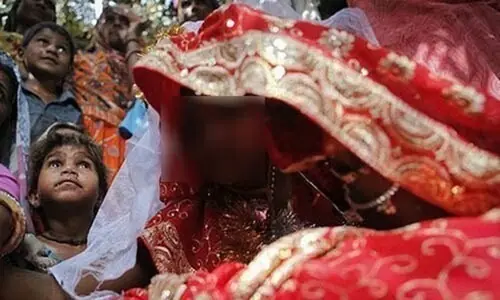
KARACHI: A sessions court has ruled that any conviction under the provision of the Sindh Child Marriage Restraint Act 2013 does not render the marriage void or invalidate the nikah. “It is making clear that any conviction under the provision of Sindh Child Marriage Restraint Act 2013 does not render the marriage void or invalidate the Nikkah from a personal law perspective. The Act is a restraint and penal statue and it does not contain provisions for annulment,” observed Additional District and Sessions Judge Zahoor Ahmed Chandio while sentencing a man to two years in prison for marrying an underage girl. “The validity of the marriage contract (Nikkah) is a separate issue to be determined by the appropriate forum under the relevant personal law or the family courts and this court’s jurisdiction is limited to determining criminal liability under the penal sections cited,” observed the judge, who is also the presiding officer of Gender-Based Violence Court (South). The court found Zulqarnain, alias Cheeko, guilty of the offence punishable under Section 3 of the Sindh Child Marriage Restraint Act, 2013 and sentenced him to two years in prison. Judge sentences man to two years in prison for marrying underage girl; observes that validity of marriage is a separate issue He also imposed a fine of Rs25,000, on default the convict would serve additional imprisonment. Regarding the co-accused, Qazi, and witnesses of the marriage, the court ruled that the file remained dormant against the absconding accused until their arrest or appearance. According to state prosecutor Irfana Qadri, the accused was charged on three counts for offences under Sections 365-B (kidnapping, abducting or inducing woman to compel for marriage etc), 376 (3) (rape with minor) and Section 3 of the Sindh Marriage Act, 2013. The prosecutor claimed that the accused had abducted the underage girl on April 26, 2023, and solemnised forcibly marriage (nikah) and then committed rape with her. However, the court exonerated the accused from two counts including abducting and raping the girl as the prosecution failed to prove charges against him. Refereeing to the cross-examination of the complainant — mother of the girl — the court noted that she had admitted that when she met her daughter at the police station she (the girl) told her that no one had kidnapped her. The girl also negated the prosecution version during her cross examination that “nobody abducted her and that her Nikkah with the accused was performed with her own will and consent, without any pressure”. The court also mentioned that the prosecution also failed to prove that the accused had committed rape with the girl as it noted that “the victim (the girl) throughout the proceedings does not inspire confidence in the prosecution story. She voluntarily went to meet the accused, remained with him, executed a Nikkah [and] produced a freewill affidavit and did not raise any allegation of force or coercion before both the investigating officers. Even before the magistrate, it was established that she moved the application for recording her statement through her own counsel. Such conduct is wholly inconsistent with the version of forcible abduction and rape. The medical evidence also does not support the allegation of rape.” Regarding the age of the girl, the court observed that she submitted that she was 18 years old while she had been married, however, as per medical evidence, the girl was between 14 to 15 years old and more towards 15 years. “This is a professional scientific evidence strongly indicates that at the time of the test in May 2023, the victim was a child under 18,” the court noted, adding that the victim’s assertion in cross examination that she was 18 or 19 years old at the time of Nikkah which contradict to the medical evidence. Published in Dawn, December 27th, 2025