


 The Huffington Post
 I Spent 48 Hours In Ukraine's Most 'Western' City Where Tourism Is Rising
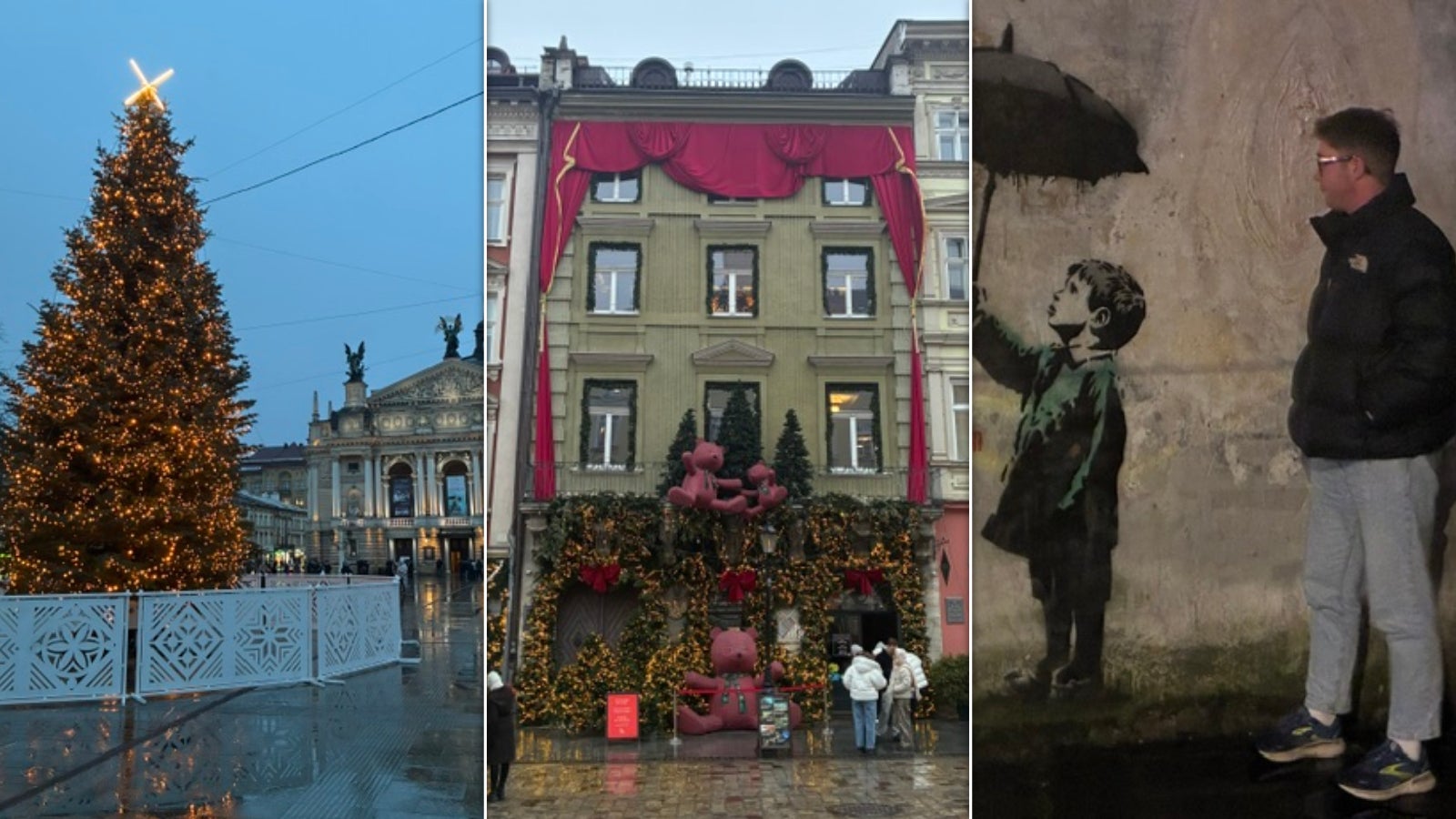
Reading the news, you might expect Ukraine to be a pretty bleak place this winter, but five minutes walking around Lviv will prove you wrong. Ukraine’s western hub and gateway to Europe has been dealing with relentless air attacks, loss, and fear for nearly four years now, but locals are determined to keep things as normal as they possibly can. Their lives have been altered more than enough already. It’s this unyielding spirit, combined with a unique blend of history, culture and food which is making the city an unlikely travel destination for people inside Ukraine and out. Visit Ukraine data shows the nation has seen tourism tax revenues rise to 27% more than pre war levels this year, with Lviv responsible for the largest contribution after Kyiv. Just an hour’s drive from Poland, the city is considered relatively safe in Ukrainian terms; it’s subject to regular aerial attacks but is over 600 miles from the front line , about the same distance as London to Berlin . It’s easily accessible from outside by car or train if you’re willing to brave the loosely organised chaos that is the border. Once you make it through the lengthy paperwork process and arrive in the outskirts of Lviv you’ll be greeted by Soviet style apartment blocks and roads which haven’t seen a second of maintenance since they were built, but the city centre is one of Europe’s hidden gems. The old town, originally built in the 1200s, is an architectural marvel blending stunning churches, narrow cobbled streets and plenty of street art and murals, many of them painted as an outlet for the grief that war has brought to this city. When I visit, every shop and restaurant sparkles with twinkly festive lights and greenery. There’s culture too. Lviv hosts a broad mix of museums, art galleries, and music venues. The most impressive of these is the 19th century opera house, the jewel in the city’s crown which imposingly bestrides its main boulevard. However appealing, you might reasonably ask how safe you can be in country at war, even when you’re far from the front line. While the chances of catastrophe are extremely low, they are not zero thanks to drone and missile attacks. Locals are extremely well versed in what to do if there’s an air alert (the modern equivalent of an air raid) and most hotels and public spaces have basement shelters in case of emergency, but attacks are largely concentrated on infrastructure and the suburbs, not the touristy centre. On the night we arrive Ukraine’s ‘Air Alert!’ app, whose map shows you which missile/plane/drone is heading your way, is putting on a festive display of red alerts across the nation, including one for a swarm of drones heading towards us. Like a sadistic Santa tracker, it fills you with so much adrenaline that you can’t look away. That night, the red zone edges forwards to within a region of Lviv, then retreats backwards quickly, a false alarm. Thankfully, we don’t have any air alerts in the region for our entire 48 hour stay, a rarity which caused anxiety among locals, who aren’t used to being allowed two peaceful nights in a row. The next morning, I visit the city’s visitor centre in the centre of Rynok Square, once Lviv’s bustling hub, and find it eerily empty. “We don’t get many visitors here,” explains the smiley English speaking receptionist, who just seems delighted to have someone to talk to. She says most of Lviv’s visitors now come from other parts of Ukraine as people seek a change of scene or respite from attacks in the more dangerous East of the country. Obvious reasons aside, it’s a tragedy there’s not more people around. Lviv has cosy French bistros, cool wine bars and top restaurants which could genuinely rival their equivalents in London or Paris at a tenth of the price and without the shameless commercialism of more touristy areas. One lunchtime, we eat in a beautiful restaurant in the middle of the city centre. Chandeliers and Christmas trees dangle from the ceiling and one wall is lined with a 15 metre tall fish tank. Another day, a grand restaurant with the vibe of a medieval castle serves me roast duck. Neither meal breaks £10. Hotels are cheap too. A decent mid range room costs around £40 a night, and even the city’s five star Grand Hotel will only set you back little more than £100 a night. This pricing is both extraordinary and guilt inducing in a city undergoing so much suffering. Locals need visitors to boost the economy, but indulging in a conflict zone often makes your stomach turn, however nice the food. At times you’d be forgiven for forgetting there’s a war on but for a few crushing tells, like the bar moved to its basement so it can continue serving during air alerts; the near empty restaurants, and the rattling generators on side streets furiously trying to keep the power on when the grid fails, whose whirr and waft of petrol fumes remind you never to relax too much. There’s also a midnight curfew, which while not strictly enforced means that most bars close at 10pm to ensure all staff and customers can get home in time. While Lviv may be down, it’s a long way from out. “Business is alive…Every time I come back so many new places open up,” says Violet Melnychuk, a local guide who lives between Portugal and Lviv because of the war. “We are not victims, which is what we want to show tourists. Please come because we welcome you.” Brits are particularly welcome, thanks to our early support after Ukraine’s invasion. On our journey to the train station to cross back to Poland, a taxi driver who calls himself Boris Johnson beams at us and shakes our hands, accepts payment in British pounds, and plays his special Chris Rea CD of “English music” in our honour. Despite what its people have been hit with, Lviv is a place with a big heart which still knows how to make you feel welcome. Related... After A 'Pessimistic, Precarious And Unproductive' 2025, What Could Next Year Look Like For Ukraine? Trump Official Contradicts Europe Over One Of Putin's Most Obvious Ukraine Goals Here's What Is Expected To Be In Ukraine's Proposed Peace Plan