


 Dawn.com
 Thailand, Cambodia agree to truce after weeks of clashes
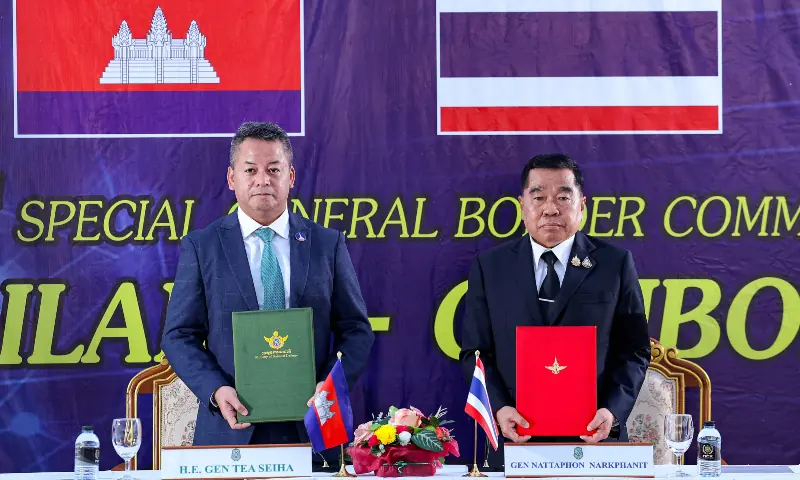
CAMBODIA’S Defence Minister Tea Seiha (left) and his Thai counterpart Nattaphon Narkphanit pose with documents during the special General Border Committee meeting.—AFP • Pact halts troop movement, promises return of captured soldiers • UN, China welcome step following breakdown of October ceasefire BANGKOK: Thailand and Cambodia agreed to an “immediate” ceasefire on Saturday, pledging in a joint statement to end heavy border clashes that have killed at least 47 people and displaced more than a million. The truce took effect after a declaration signed by the neighbours’ defense ministers at a border checkpoint on the Thai side. The agreement applies to “all types of weapons, including attacks on civilians, civilian objects and infrastructures, and military objectives of either side, in all cases and all areas”. The three weeks of fighting, which utilised artillery, tanks, drones and jets, had spread to nearly every border province. The violence shattered a previous truce brokered in October, for which US President Donald Trump had taken credit. Thai Defence Minister Nattaphon Narkphanit described the initial three-day window as an “observation period to confirm that the ceasefire is real”. “A door to a peaceful resolution,” Nattaphon called the agreement in a speech on Saturday. Under the terms of the deal, both sides agreed to freeze troop movements and allow civilians in border areas to return home. The nations also pledged to cooperate on demining efforts and combatting cybercrime. Additionally, Thailand agreed to return 18 captured Cambodian soldiers within 72 hours. UN Secretary-General Antonio Guterres welcomed the announcement “as a positive step towards alleviating the suffering of civilians … and creating an environment conducive to achieving lasting peace,” according to UN spokesman Stephane Dujarric. The conflict is rooted in a long-standing territorial dispute over the colonial-era demarcation of the 800-kilometre border, where both nations claim ancient temples based on a vague 1907 French map. Official tallies indicate at least 25 Thai soldiers and one Thai civilian were killed in the recent hostilities. Cambodia, facing a military with superior firepower, reported 21 civilian deaths. Phnom Penh has reported no military deaths, though an official Facebook post showed first lady Pich Chanmony attending a funeral for troops. This ceasefire follows three days of talks convened after a crisis meeting of foreign ministers from the Association of Southeast Asian Nations. International powers also pressed for a resolution. In Beijing, the foreign ministry stated that the ceasefire “demonstrates that dialogue and consultations are a realistic and effective way of resolving complex disputes”. China’s top diplomat, Wang Yi, is scheduled to host the Cambodian and Thai foreign ministers for talks in Yunnan province on Jan 28-29. UN human rights chief Volker Turk said he hoped the ceasefire “will pave the way for confidence building and peace”. Despite the halt in combat, the countries still must resolve the border demarcation. An earlier agreement in October, witnessed by Trump, broke down within months as each side accused the other of instigating fresh violence. Published in Dawn, December 28th, 2025