


 Ruptly
 'He knows nothing about safety!' - Ex-PM Dologuele criticises Touadera's bid for reelection as CAR president seeks third term
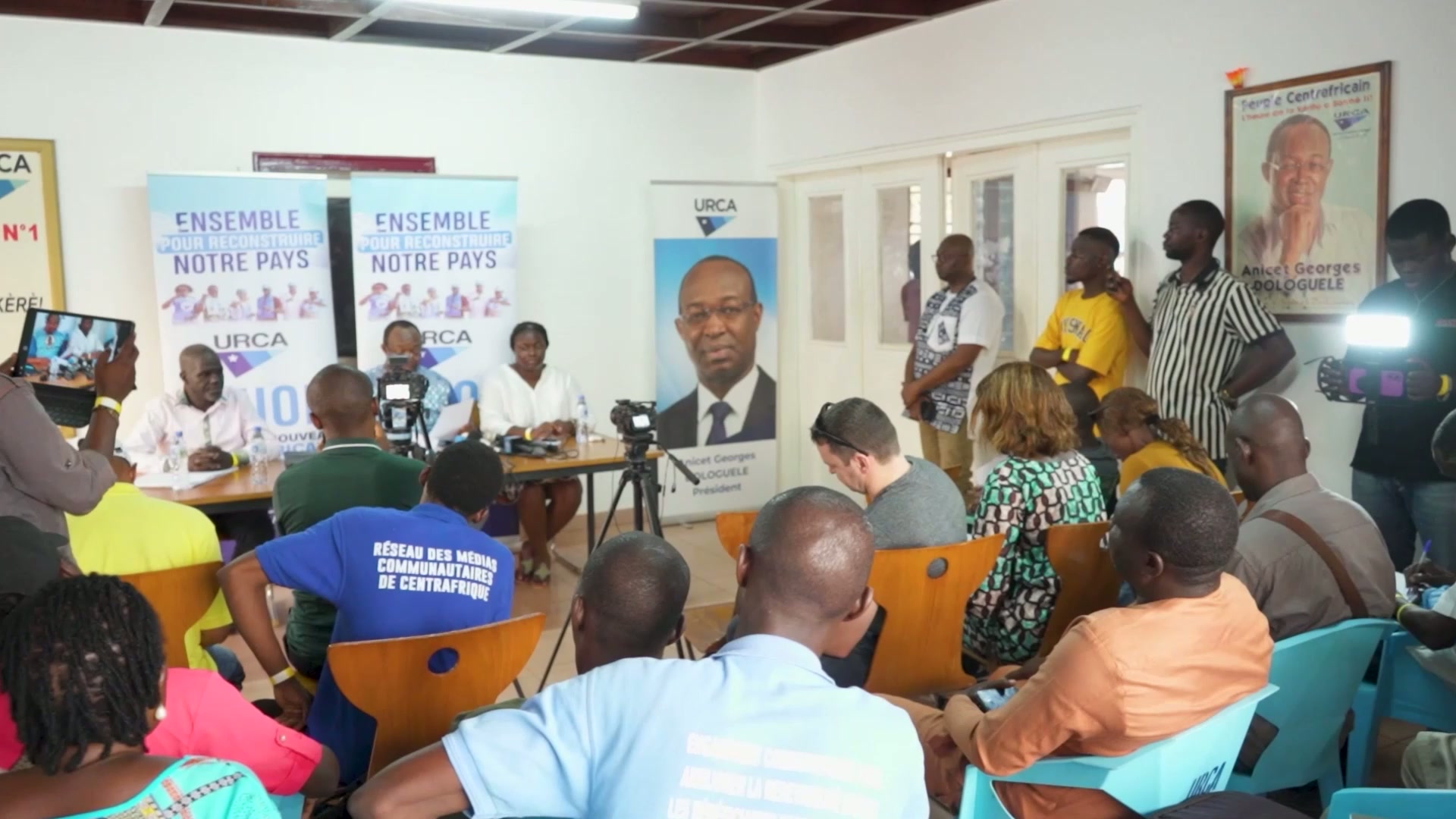
"Former prime minister and presidential candidate Anicet-Georges Dologuele on Saturday criticised President Faustin-Archange Touadera's reelection bid during a press conference in Bangui ahead of the country's general elections. "His reasoning is not logical [...] because when a head of state is there for a certain amount of time, he does what he has to do and leaves. No one is indispensable," he argued. "He knows nothing about safety. It's the foreigners who are with us, who help us, who have taken care of security," he continued. Dologuele also claimed Touadera failed to focus on economic and social progress during his two terms. "He had to talk about the economy, he had to talk about the well-being of Central Africans, he had to talk about social progress," he remarked. "But if that's the only point that justifies his staying on for another seven years, please, then he's really failed to justify the purpose of his candidacy," he added. Turning to the electoral process, Dologuele accused the government of repeatedly changing the rules to its advantage. "That means there's only one candidate among the seven who's not sure of himself, and that's Mr Touadera […] he'll do anything to fudge the results," he claimed. "In any case, I won't accept anything different from the results of the ballot box. I won't accept. It has to be clear in everyone's mind," he continued. Central African Republic (CAR) polls begin on Sunday in a controversial presidential and legislative election that may extend President Faustin-Archange Touadera's tenure beyond two terms. Touadera, who made headlines by adopting Bitcoin as a legal tender in 2022, previously pushed through a referendum to abolish term limits. Significant delays in confirming two major challengers have led some opposition groups to boycott the election, labelling it a "sham." CAR will hold local elections for the first time in nearly 40 years after a long period of political conflict, including a civil war between the Seleka rebel movement and Anti-balaka groups, displacing one million people."