


 Dawn.com
 Pressure, intimidation and violence from multiple actors has erased space for press freedom in Balochistan: report
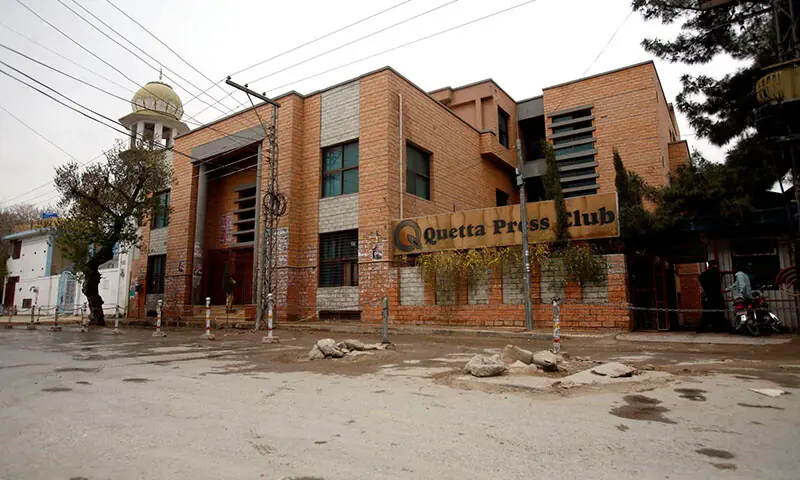
A report on journalism in Balochistan has highlighted how pressure, intimidation and violence from multiple actors have caused the space for press freedom to shrink in the province. The report, titled State of Media Freedoms, Access to Information and Safety of Journalists and Media Professionals in Balochistan – The Way Forward, was released by Freedom Network (FN) on Sunday and examines Balochistan’s overall media landscape, threat actors, service structures, gender dynamics, legal cases and challenges, including censorship, harassment, intimidation and dismissals from service. It notes that national television channels and newspapers have steadily reduced their bureau presence in Quetta, as digital distribution becomes the norm, leaving coverage outside the provincial capital sparse or non-existent. “Drawing on desk research, focus group discussions and key informant interviews, it (the report) finds a chronically constrained information environment in which local media are financially brittle, structurally peripheral to ‘national mainstream’ agendas, digitally disadvantaged, and exposed to overlapping coercive pressures from state and non-state actors,” the report stated in its executive summary. “The cumulative effect is systematic under-coverage of public-interest issues, heightened self-censorship, and a steady erosion of citizens’ right to know.” The province still lacks a terrestrial current affairs television channel. State-run outlets such as PTV and Radio Pakistan operate mainly from urban centres, and their multilingual mandate complicates both content production and audience reach. The report highlighted privately-owned TV channels based in Karachi, which have positioned themselves as 24/7 satellite channel for Balochistan audiences with national and diasporic reach. Additionally, print media is largely concentrated in Quetta and struggles with high costs, long distances and low literacy rates in rural areas. The report also traces how security conditions, governance failures, economic constraints and demographic realities have shaped the media ecosystem and journalists’ safety in Balochistan. An image of various Pakistani newspapers. — AFP/File It noted that journalists in the province face threats from separatist and militant groups, political and tribal elites and mobs, creating an environment where independent reporting is no longer possible. “Journalists face pressure from both the state and non-state actors to be on their side, while the state cannot provide them safety in a place where its writ is challenged; nor is such security desirable because it naturally makes them an easy target for the militants,” the report stated, quoting Balochistan Minister for Planning and Development Zahoor Ahmad Buledi. The report added that over two decades, “40 journalists have been killed in Balochistan; roughly 30 were targeted killings, the rest collateral to bombings/attacks“. “Journalists are frequently coerced to carry militant claims or assist security services in tracing callers; refusal or cooperation can each trigger threats,” it added. “Over the years and decades, Baloch militant organisations suspended the distribution of local and national newspapers in southern and central Balochistan, demanding coverage of their activities in media.” Additionally, the report noted that intimidation comes not just from militant groups, but also from influential tribal leaders. “Sans a few political parties that react to media coverage with restraint and patience, expressing their anger and grievances in a civil manner, others resort to tribal traits,” the report read. FN noted in the report that aside from physical threats to their safety, journalists are also at risk of facing “structural barriers to reporting”, such as closing down offices and preventing the circulation of newspapers. They also face a dearth of government or federal advertising, causing financial insecurity. Furthermore, it highlighted severe gender disparities in the media, noting that female journalists remain very few in number, largely confined to Quetta. The report said they face layered constraints, including limited mobility, hostile field conditions, newsroom sexism, pay gaps, lack of basic facilities and harassment. Editors often bar women from district assignments in the name of safety, reinforcing stereotypes while still expecting output without adequate support. As a result, many women journalists work off-camera or have their reports voiced by male colleagues. FN Executive Director Iqbal Khattak said journalism is “lost” in Balochistan, where enforced and self-imposed censorship prevail to stay safe and avoid any mishap. He expressed hope that the findings would draw the attention of all stakeholders to reverse the situation and ensure the safety of media practitioners so that citizens can access credible information.