


 Business Recorder
 Bilawal calls for political stability
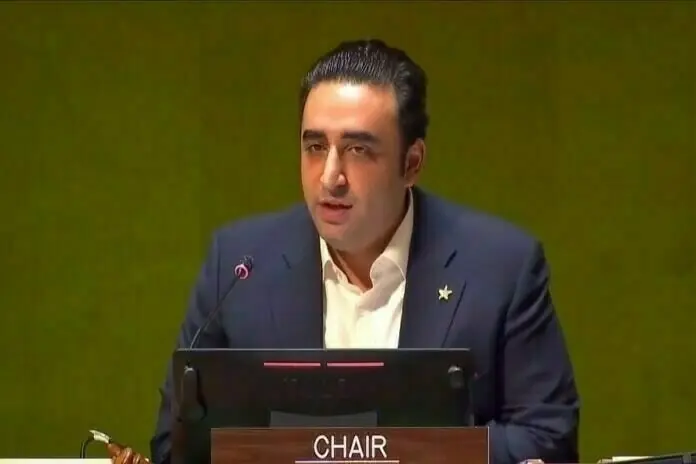
LARKANA: Urging the PTI to leave extremism, PPP Chairman Bilawal Bhutto Zardari said on Sunday that the party should not complain if action was taken against it because of its extremist politics. Speaking to reporters in Larkana, he advised the PTI to shun politics of confrontation. He further said that no single party could resolve the issues confronting the country. “For the resolution of the country’s issues, political stability is necessary.” Bilawal said that if the government wanted to end the financial crisis, it should think over public-private partnership. He thanked Prime Minister Shehbaz Sharif and the PML-N for sending a delegation on the death anniversary of late Benazir Bhutto. PPP chairman said that the provision of quality treatment facilities to people was necessary. “The Sindh government is providing 100 per cent free treatment to patients,” he added. Bilawal claimed that the death ratio in children in Sindh was the lowest in the country. He said that President Asif Ali Zardari would have to play his role for a reconciliation between the government and the opposition. He stressed the need for lowering political temperature in the country, saying if this was not done, it would do harm to the masses. Bilawal noted with concern that terrorism had increased in the country and the situation was tense on both eastern and western borders. He asserted that all political parties must play their role to ensure that free and transparent elections were held in the country. The PPP chairman called for restoring the trust of the masses in the Election Commission of Pakistan (ECP). “If tomorrow, eyebrows are again raised over the fairness of polls, it will not be good,” he said, adding that question marks were raised over the fairness of elections held in Punjab recently. Responding to a question, he said that in none of the constitutional amendments passed recently by the parliament, was there any mention of the division of Sindh. Bilawal said that there was a financial crisis in the country as salaries were not sufficient for the common man to meet his expenses. He said that despite the government’s claim that the country was progressing, the common man was not satisfied with his condition.