


 Business Recorder
 BD’s democratic renewal at a crossroads
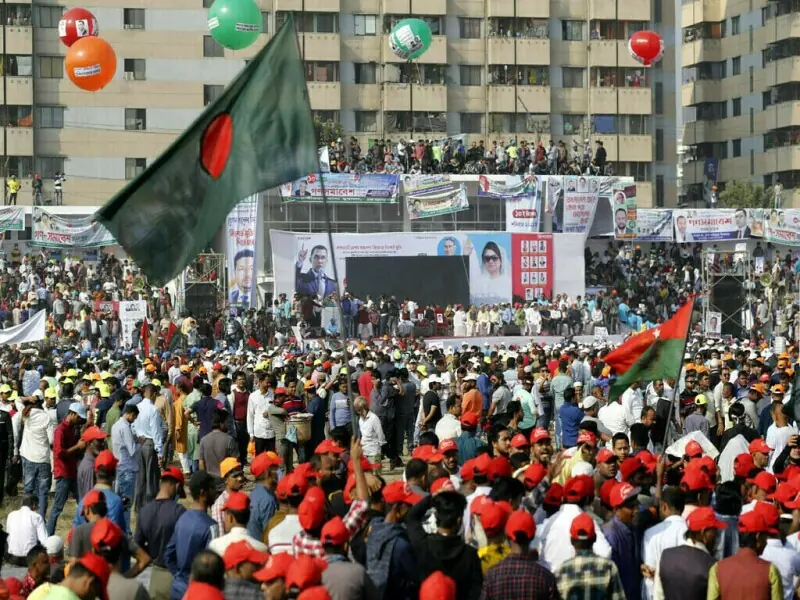
EDITORIAL: Bangladesh stands at a defining and fragile moment in its political transition, marked by both cautious hope and serious risk, as national elections are scheduled for February 12, 2026, alongside a referendum on political reforms. Following the upheaval triggered by the student-led uprising and the removal of Prime Minister Sheikh Hasina, the announcement of a clear electoral timetable offers a sense of direction to a country that has struggled to restore stability since—indeed even before—August 2024, when Hasina resigned and fled to India. Yet the broader context suggests that electoral exercise alone will not be sufficient to stabilise Bangladesh unless it is credible, inclusive, and accompanied by genuine institutional reform. Widespread protests and sporadic violence since the December 18 killing of Sharif Osman Hadi, a prominent figure in the 2024 student movement and a candidate in the upcoming elections, have cast a long shadow over the transition. Hadi’s death from gunshot wounds sustained in an assassination attempt has heightened public suspicion, deepened mistrust, and reinforced fears that external interference and entrenched power networks remain active behind the scenes. For many citizens, his murder symbolises the unresolved failures of a political system still struggling to break free from coercion and impunity. In such an environment, restoring public confidence requires more than procedural milestones; it demands accountability, transparency, and a visible commitment to justice. Chief Election Commissioner AMM Nasir Uddin’s confirmation of the election date, echoed by Chief Adviser and Nobel laureate Muhammad Yunus’s framing of the moment as a democratic milestone, reflects the interim leadership’s desire to project stability and progress. Yunus’s moral authority and international standing lend credibility to the caretaker administration, but that credibility is increasingly being tested by growing demonstrations over delays in promised political and institutional reforms. Many Bangladeshis had expected swift changes to electoral rules, governance structures, and civil-military relations following Hasina’s fall. The perception that these reforms are stalling has begun to erode the goodwill that initially greeted the interim government. The exclusion of her party, the Awami League, from the ballot is a particularly troubling feature of the current political trajectory. While the party’s record in power remains deeply blemished, barring it outright undermines the democratic principle of pluralism, which depends on peaceful competition and shared political space. History suggests that excluding a major political force rarely produces stability. Warnings from Awami League leaders about escalating unrest may be self-serving, but they should not be dismissed outright. A credible election must allow voters—not interim authorities—to determine the political future of all parties. This is a compelling task because the fortunes of the Awami League’s main rival, the Bangladesh Nationalist Party (BNP) of Khalida Zia, have received a major boost upon return of Zia’s son who had been in self-imposed exile in the UK since the last two decades. It would otherwise be seen as queering the pitch for BNP’s return to power. Democratic restoration is a process, not an event. The people of Bangladesh are not only seeking a return to the ballot box, but also economic recovery—especially in the vital garment-export sector—and a peaceful transition to accountable governance. Any deviation from the announced election schedule, or the exclusion of any opposition party, can fuel violence, communal tension, and prolonged instability. For the transition to succeed, the interim leadership must uphold the rule of law and ensure that the February 2026 polls are held on time, freely, and fairly. Copyright Business Recorder, 2025