


 Business Recorder
 Interview with Muntaqa Peracha – CEO, foodpanda Pakistan: ‘Pakistan is now foodpanda’s largest grocery market globally’
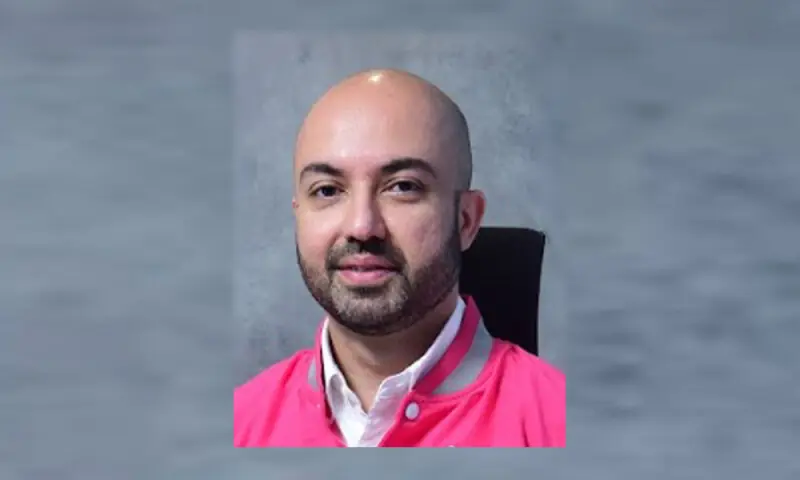
Muntaqa Peracha is the CEO of foodpanda Pakistan. A computer science graduate from the Georgia Institute of Technology, he brings over 15 years of experience in developing, deploying, managing, and commercializing large-scale digital solutions, having worked with global technology leaders such as IBM and NCR, as well as local technology conglomerates. His professional focus lies in solving complex, real-world problems—ranging from improving access to banking and healthcare for underserved populations to digitizing and optimizing last-mile delivery networks. Following are the edited excerpts of a recent conversation BR Research had with him: BR Research: How was 2025 for foodpanda in Pakistan, and how has the business evolved over the past year or two? Muntaqa Peracha: 2025 has been a good year for foodpanda in Pakistan. To put it in context, 2023 was a very tough macro year—high inflation, rising interest rates, and pressure on household incomes slowed momentum across the market. Rather than chase short-term growth, we used that period to invest heavily in operational optimisation, processes, and technology. Those investments started paying off in 2024 and really showed results in 2025. As economic stability returned and consumers gained more confidence in their disposable income, ordering behaviour normalised. What’s interesting is that our top 20 percent of customers continued ordering consistently even during the downturn, while in 2025, we’re seeing strong recovery across mid- and lower-income segments as well. Structurally, the business has evolved toward operational excellence and subscriptions. Our pandapro programme is now a core pillar of the platform and accounts for roughly 30 percent of all orders. We’ve institutionalised this with quarterly “Pro Weeks,” which remove friction around delivery fees and encourage habitual usage. BRR: How do you view the competitive landscape in Pakistan’s food delivery space, especially given that many apps have disappeared over time? MP: The competitive landscape has gone through major churn. Several well-funded players entered Pakistan over the years, but many underestimated what it really takes to build a sustainable platform at scale. You need a long investment runway, disciplined execution, and mature senior leadership—without those, it’s extremely hard to survive. Some competitors also got caught in a “race to the bottom” on pricing, offering free delivery and heavy subsidies. We took a different approach and focused on sustainability. We maintained reasonable delivery charges, because long-term trust comes from reliability, not giveaways. In groceries, competition is still active, especially in Karachi. Competitors are present, but that’s actually helped grow the category overall rather than just shifting share. Pakistan remains a unique market where food delivery existed even in the 1990s via phone orders—the modern challenge is convincing restaurants that a professional, tech-enabled platform delivers more value than managing small in-house fleets. BRR: What differentiates foodpanda from other food delivery and quick commerce platforms? MP: Reliability and trust are our biggest differentiators. At a consumer level, people want confidence that their food will arrive fresh, on time, and exactly as ordered—every single time. That standardisation is extremely hard to replicate consistently. At a business level, foodpanda has built strong Ad-Tech and data capabilities. For example, for FMCG brands, we offer measurable marketing. If a brand distributes a sample through foodpanda, we can track exactly which customer received it and whether they repurchased later. That kind of closed-loop measurement simply doesn’t exist in traditional retail sampling. So, we’re not just a logistics platform—we’re also a data-driven consumer engagement and marketing channel. BRR: Between food delivery and pandamart, which segment performs better in revenue terms? MP: Food delivery remains the foundation of the business, but Quick Commerce (pandamart) has grown rapidly. Today, groceries account for almost one-third of our total business in Pakistan, and our objective is to keep that share around this level as we scale. BRR: How important is quick commerce (pandamart) to foodpanda’s overall strategy? MP: It’s extremely important. In fact, Pakistan is currently foodpanda’s largest grocery market globally, across all 11 countries we operate in—including Singapore and Taiwan. That has really put Pakistan on the radar of global management. The opportunity exists because Pakistan lacks large, organised national retail chains. Most chains have fewer than 35 stores nationwide. We’ve stepped into that gap—today, foodpanda operates 45–50 pandamart stores, which effectively makes us the largest grocery chain in the country. BRR: Do you see any consolidation happening in the industry globally and locally? MP: Globally, consolidation is already happening. A handful of players—Delivery Hero, Uber, DoorDash—now control most markets. Pakistan, however, is still at a very early stage, especially in groceries. There is significant room to grow across the next 15 to 20 cities before consolidation becomes a dominant theme locally. For now, expansion and category building matter more than consolidation. BRR: What steps are being taken to improve rider safety, earnings, and wellbeing? MP: We fully recognise how tough the environment can be, particularly during smog and winter fog. One of our biggest contributions is financial inclusion. Every month, more than 40,000 riders work on our platform, and all payments are made through bank accounts or digital wallets—bringing riders into the formal economy. We also ensure that 100 percent of customer tips go directly to riders, with foodpanda absorbing transaction costs. This materially improves rider earnings without adding friction for customers. BRR: foodpanda operates a complex marketplace. What makes managing it unique? MP: foodpanda is a three-sided marketplace—customer, rider, and vendor—which is significantly more complex than two-sided platforms like ride-hailing. These three parties operate independently, and we don’t control any of them directly. Despite this, we’ve achieved strong reliability. Food delivery averages 24–29 minutes, while grocery delivery averages around 34 minutes. We also prioritise trust: if something goes wrong, customers receive instant wallet refunds, allowing them to reorder immediately rather than waiting days for bank reversals. BRR: How are AI and data analytics being used across the platform? MP:AI plays a role far beyond customer support. AI now acts like a co-developer. Features that once took two months to ship can now be launched in around 10 days. The app is also semi-personalised. Recommen-dations are based on user behaviour and cohort patterns—for example, suggesting adjacent categories to reduce friction to order. AI balances supply and demand across riders and vendors in real time. We constantly measure promised versus actual delivery times. Interestingly, even deliveries that are too early signal a problem—because they indicate the algorithm isn’t accurately calibrated. BRR: How important is fintech to foodpanda’s ecosystem and Pakistan’s digital economy? MP: Fintech is central to our mission of supporting a white economy. Today, around 50 percent of our GMV is processed through online payments, which is a fourfold increase over recent years. Every partner—riders, vendors, and home chefs—is required to use banking channels. This has powerful spillover effects, especially for women home chefs, many of whom earn their first documented income through foodpanda. Some top performers can earn up to Rs 300,000 to 900,000 per month in fully documented earnings. BRR: How do you manage complaints and refunds while maintaining trust and business discipline? MP: Speed and transparency matter most. That’s why we prioritise instant wallet refunds. Banking systems can take days, which frustrates customers. A wallet refund allows the customer to place another order immediately, preserving trust and platform reliability. BRR: What is your view on regulating gig economy platforms? MP: Regulation is necessary, but it needs to be thoughtful and consistent. Platforms like ours already bring workers into the documented economy through banking, payments, and traceability. Any regulation should recognise that contribution rather than overburden platforms with compliance that discourages formalisation. The regulatory picture is mixed. We’ve seen tremendous improvements from the State Bank and SECP, but taxation remains the biggest challenge. Platforms are often treated as tax collection agents, which creates huge operational burdens. Pakistan has multiple provincial tax regimes, and even small variations—like different bakery taxes in Islamabad versus Rawalpindi—create complexity when integrating into global systems used across 70 countries. There are also definition issues, where platforms risk being taxed simultaneously as aggregators, e-commerce companies, and couriers. We are actively engaging with the FBR to address these ambiguities, and the regulators have consistently been open to understanding the challenges and collaborating with us to resolve them. BRR: Can you briefly touch on foodpanda’s global presence and Pakistan’s position within it? MP: foodpanda operates across 11 markets globally. Pakistan stands out as the largest grocery market within the group and one of the strongest growth stories, particularly in quick commerce. BRR: If you had to name one biggest challenge and one biggest opportunity, what would they be? MP: The biggest challenge would be operational complexity—especially logistics. Pakistan’s hub-and-spoke model means stock often moves from Karachi to regional cities, and disruptions like trucker strikes can immediately cause shortages. The biggest opportunity is fintech and grocery expansion. Many cities and population segments are still at an early stage of adoption. BRR: What are your key growth priorities for 2026? MP: We have three clear priorities: One, scale pandamart; expand to 13 cities and cross more than 50 stores. The second is food delivery expansion; make the bottom 15 smaller cities self-sustaining. And third are some fintech launches; we plan to introduce postpaid (BNPL) options and potentially a co-branded debit or credit card with a flexible banking partner. BRR: How do you see foodpanda’s role beyond food delivery? MP:Our ambition is to become a Lifestyle App, not a generic super app. We want to go deep in high-frequency, everyday essentials—Health & Beauty, Pharmacy, Fresh Meat, and selected corporate services. The idea is simple: do fewer things, but do them exceptionally well, so foodpanda becomes part of the consumer’s daily routine.