


 Dawn.com
 More SOEs on the way out?
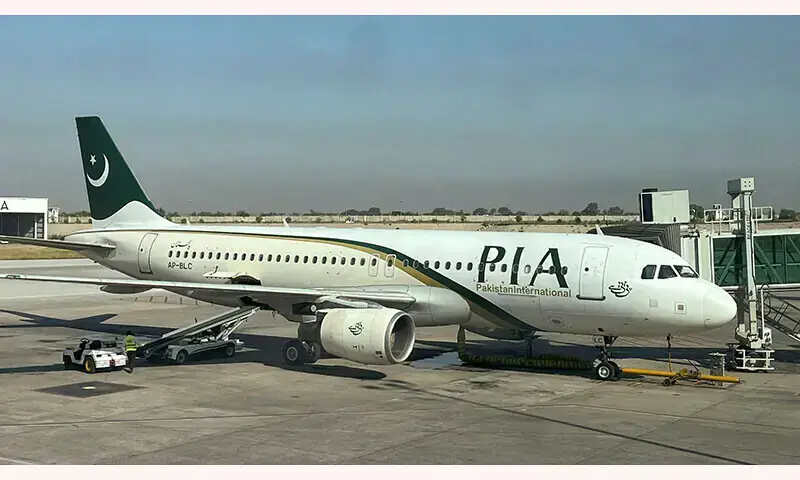
Almost two decades after the conversation first started properly, the national carrier was finally sold to Arif Habib Consortium in a publicly televised auction on Dec 23, quite similar to how things happen in the Indian Premier League. But soon after the event, a more pressing debate surfaced. Should we celebrate the Rs135 billion, the bid at which the deal was finalised? Or mourn that the government will only receive Rs10.2bn? While this entire debate will always be clouded by partisan views, it’s important to address the topic because it’s only going to resurface frequently in the near future. After all, the Pakistan International Airlines (PIA) is just one of the many state-owned assets to be sold. In August, the government unveiled an ambitious five-year roadmap targeting 24 state-owned enterprises (SOEs) across three phases. The kickoff began with First Women Bank being sold to a United Arab Emirates firm in October. In the past, handing over monopolistic businesses to the private sector didn’t eliminate the need for subsidies So, what is the real worth of these companies? And more importantly, how do you price them in the first place? Maybe the combined value of all the assets they own, whether it’s the aircraft fleet, the land, or some other machinery? Of course, the problem here is that many SOEs own less than what they owe and continue to bleed losses with every passing day. In FY24, SOEs recorded cumulative revenues of Rs13.5 trillion, doubling from FY21 levels. On the other hand, losses stood at Rs30.6bn, though improving substantially from Rs274.2bn in FY22. However, in both cases, the credit lies squarely with the oil and gas sector, which alone accounted for 60 per cent of the total revenue increase and contributed 85pc of the overall profits, largely on the back of rupee devaluation and higher prices. The privatisation pipeline This variation in performance becomes particularly relevant when examining which entities are being privatised and which are being retained. Out of the 24 entities earmarked for privatisation, 20 generated Rs3.87tr in revenues during FY24, representing 29pc of the entire SOE portfolio’s topline. Yet, the same companies posted collective losses of Rs225bn. Without them, the remaining SOE portfolio would have recorded a net profit of Rs195bn. Within the privatisation pipeline, losses are heavily concentrated in the power sector, adding up to Rs199bn FY24 and boasting four of the five biggest laggards among SOEs. The remaining fifth is, of course, none other than PIA. In fact, both transport and power sectors exhibit a highly lopsided and unattractive balance sheet composition, where the leverage ratio for both sectors stood at 0.39/0.71, respectively, whereas for the financial and manufacturing sectors, the ratio stood at 1.08/1.49, likewise as of FY24. However, the pipeline also includes profitable entities, most notably State Life Insurance and National Insurance, both of which generate significant net income while growing at healthy rates. While the story of losses is documented, what we often fail to grasp is how much it costs the government, and therefore the taxpayer, to keep our beloved SOEs afloat. In FY24, this support added up to Rs1.58tr, of which just under two-thirds was directed towards the power sector to offset tariff shortfalls and sustain distribution companies. More than Rs780bn of the support came in the form of subsidies, while another Rs367bn were grants and Rs337.5bn in loans. Basically, the government pumped Rs1.58tr, or 12pc of its budget receipts, into these entities so they could generate lucrative losses of Rs30bn; talk about return on investments. Disposing of these from the books will certainly free up some fiscal space, but it doesn’t really mean the remaining SOE portfolio will yield huge dividends. The transport sector is a great case in point. Combined, Pakistan Railways and the National Highway Authority posted losses of Rs347bn in FY24 and are going to be held for the foreseeable future. Is that a bad thing? Not necessarily. Especially in the latter’s case, the task at hand is the development of critical infrastructure, which requires heavy investments and low returns. It’s essential to provide public goods, something no private sector can or will do. Nevertheless, the privatisation drive can help delineate the state’s role better. By offloading commercial enterprises that have demonstrably failed under public management while retaining entities with public good characteristics or strategic importance, the government can move towards optimising its portfolio. Doing so is critical to ensuring fiscal operations run smoothly, but the more important question is: will the privatisation agenda set the course for the transformation of selected sectors? Or even free it from the clutches (or crutches) of the sovereign? In the past, handing over monopolistic businesses to the private sector didn’t eliminate the need for subsidies. Secondly, the private sector will also have to put its money where its mouth has always been and actually invest for growth, rather than turning to the same government for support in the form of subsidies, contracts, grants, and whatnot. The writer is the co-founder of Data Darbar and works for the Karachi School of Business and Leadership Published in Dawn, The Business and Finance Weekly, December 29th, 2025