


 Daily Finland
 Winter storm grounds flights, strands hundreds in Lapland
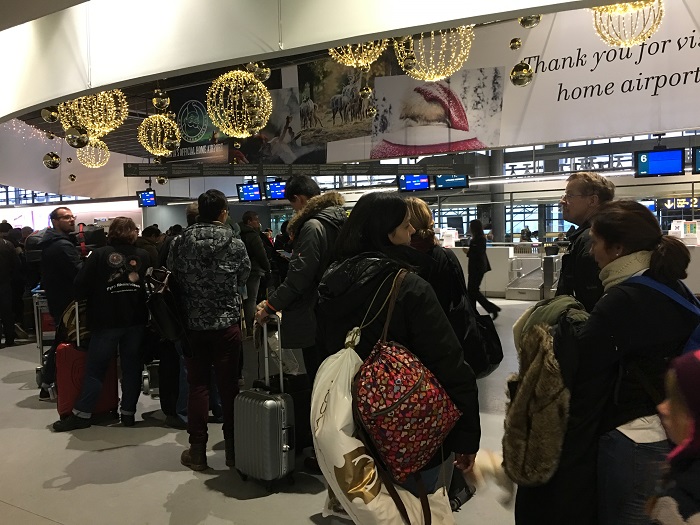
A winter storm disrupted travel in Finland's northern region of Lapland over the weekend, stranding hundreds of passengers and forcing emergency arrangements at airports as flight cancellations and delays extended into Monday, reported Xinhua. Finavia, Finland's state-owned airport operator, said about 20 flights to and from Rovaniemi, the regional capital of Lapland, were cancelled or delayed. The airports of Kittilä and Ivalo, two other major gateways for winter tourists, suspended operations for several hours due to severe weather, with flights resuming later Saturday evening. Local media reported that about 1,000 travelers were still waiting on Monday for flights out of Lapland. To ease overcrowding at Rovaniemi airport, Finavia said it reopened an older, out-of-service terminal area to provide additional space. The Finnish Red Cross supplied blankets and mattresses for passengers who had to remain at the airport overnight. With Lapland in its peak winter tourism season, hotel capacity there was limited, according to local media. Henri Hansson, Finavia's senior vice president in charge of regional airports, said airlines are responsible for arranging replacement transport and temporary accommodation when flights are disrupted. He noted that Lapland is a remote seasonal destination for many carriers, which makes it difficult to secure replacement aircraft at short notice. Lapland is a major winter tourism destination, known for its snow-covered landscapes, ski resorts, and Santa Claus-themed attractions. The disruption raised questions in local media about the region's contingency capacity during peak travel periods. Sanna Kärkkäinen, chief executive of tourism promotion agency Visit Rovaniemi, told regional daily Lapin Kansa that Lapland should strengthen preparedness for increasingly extreme weather events. The storm, named Hannes in Finland and Johannes in Sweden, also caused widespread damage to electricity networks and disrupted rail services in both countries. Power company Elenia said structural damage to electricity lines was the most severe in the past 10 years. At the height of the storm on Saturday, about 190,000 households in Finland were without power. Tens of thousands were still affected on Monday, according to Finnish media. In Sweden, power outages affected roughly 50,000 households. Finnish state railway operator VR said long-distance trains were delayed by up to seven hours, affecting around 10,000 customers. Swedish media reported three deaths in separate incidents involving falling trees. No similar fatalities were reported in Finland.