


 Business Recorder
 Sindh govt, private sector establish 1,420 new NFE centers
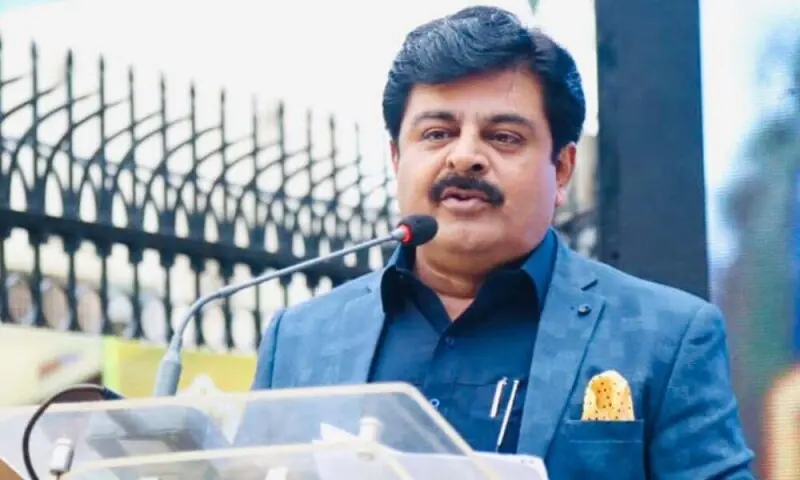
KARACHI: The Government of Sindh, in collaboration with the private sector and social organizations, has established 1,420 new Non-Formal Education (NFE) centers to promote access to education across the province. In this regard, a signing ceremony was held in Karachi in the presence of Sindh Education Minister Syed Sardar Ali Shah, where agreements were signed with more than 30 social organizations under the social partnership initiative. The event was organized by the Directorate of Literacy and Non-Formal Education, School Education Department. Secretary School Education Zahid Ali Abbasi, Managing Director Sindh Education Foundation Ghanwar Laghari, Director Literacy and Non-Formal Education Abdul Jabbar Mari, Executive Director STEDA Rasool Bux Shah, and representatives of various social organizations were also present on the occasion. Addressing the ceremony, Sindh Education Minister Syed Sardar Ali Shah said that effective measures are being taken to provide education to out-of-school children through public–private and social partnerships. He stated that Sindh has emerged as a model province in promoting flexible and non-formal education, and for the first time a formal curriculum for non-formal education has been introduced. Sindh Education Minister said that currently around 2.5 million children in Pakistan are out of school, a challenge faced by all provinces. Under the non-formal education system, children who could not enrol in school by the age of nine are given the opportunity to complete primary education within 24 months. The accelerated non-formal education program is particularly beneficial for children who have been unable to access the conventional education system. The minister added that many children are compelled to work or support their families; therefore the government has introduced an alternative and flexible education model that allows children to study at non-formal centers according to their convenience. He further pointed out that Sindh has nearly three million nomadic, socially marginalized, and homeless individuals whose children have remained deprived of education for generations. The state, he emphasized, has a responsibility to ensure educational access for these children. He added that the issue of out-of-school children cannot be attributed solely to the education department, as poverty, law and order conditions, social norms, and psychological factors also play a major role in keeping children out of school. Speaking on the occasion, Secretary School Education Zahid Ali Abbasi said that the establishment of 1,420 non-formal education centers under community partnership marks the second phase of the initiative. In the first phase, 500 non-formal centers were set up, where more than 16,000 students are currently enrolled, the majority of whom are girls, as community-based education makes access easier for them. Director Literacy and Non-Formal Education Abdul Jabbar Mari stated that these non-formal centers will be operated in collaboration with over 30 NGOs, INGOs, and community organizations. The 1,420 centers will be established in Jamshoro, Jacobabad, Kashmore, Mirpurkhas, Tharparkar, and Umerkot, and will be digitally monitored. He added that the government aims to expand the number of non-formal education centers to 3,000 across Sindh, which will help more than 100,000 out-of-school children complete their education. At the conclusion of the ceremony, in the presence of Sindh Education Minister Syed Sardar Ali Shah, formal agreements were signed with representatives of various social and community organizations for the establishment of non-formal education centers. Copyright Business Recorder, 2025