


 Dawn.com
 Pak-Afghan trade disruptions fuel regional instability: experts
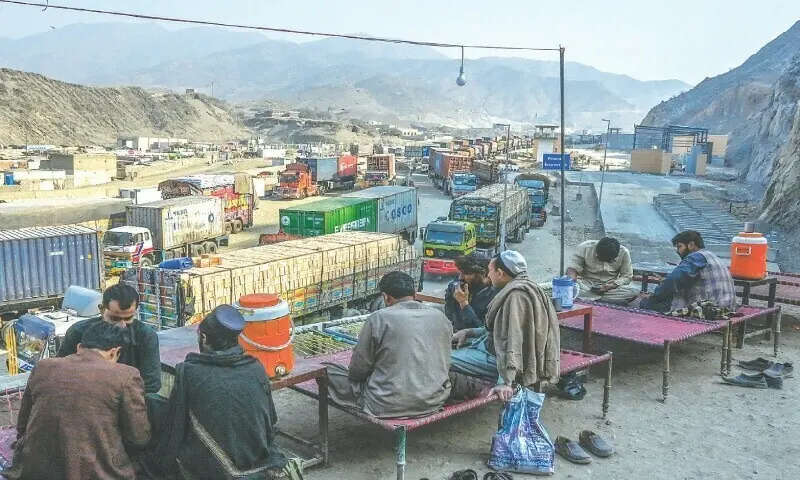
ISLAMABAD: Exclusionary economic measures cause prolonged disruptions in Pakistan-Afghanistan trade and transit, and generate wide-ranging economic and social consequences across the region. Uncertainty, rather than cost alone, has emerged as the most damaging factor, eroding livelihoods, weakening regional connectivity and placing disproportionate strain on border communities between the two countries. These concerns were raised at an online dialogue on “Exploring Pathways to Pakistan-Afghanistan Trade and Economic Connectivity” organised by the Centre for Research and Security Studies (CRSS) as part of it’s the beyond boundaries initiative on Monday. The dialogue convened policymakers, customs officials, business leaders, and economic experts from Pakistan and Afghanistan to reflect on the evolving trade dynamics and their broader regional implications. Khan Jan Alokozay, Co-President of the Pakistan-Afghanistan Joint Chamber of Commerce and Industry (PAJCCI), said peace in the region was inseparable from economic stability, adding that robust and predictable trade formed the foundation of durable bilateral relations. Without continuity in trade, he cautioned, broader objectives of peace and regional integration would remain fragile. Fazal Moqeem Khan, former president Sarhad Chamber of Commerce and Industry, called for the establishment of cross-border economic zones to institutionalise trade and transit cooperation with manufacturers on both sides collaborating and heightening joint stakes and move beyond ad hoc arrangements. He warned that isolated or one-sided approaches to trade were not viable and will ultimately weaken both economies. Highlighting the human cost of trade disruptions, Mujeeb Shinwari, president All Torkham Customs Clearing Agents Association, noted that border communities bear the brunt of repeated closures as their economic lifelines depend directly on cross-border trade. He observed that persistent disruptions had crippled local economies and undermined livelihoods in already vulnerable areas. Emphasising the political economy of trade, Naqeebullah Safi, executive director AJCCI’s Kabul office, said trade should shape politics rather than be subordinated to it. He noted that while elite groups retain mobility through air travel, lower-income and border populations have suffered disproportionately, warning that continued uncertainty risks permanently diverting Afghan markets away from Pakistan and vice versa. Ibrahim Shams, former vice president Afghanistan Investment Support Agency (AISA), said economic deprivation lied at the core of instability. He cautioned that prolonged trade blockages exacerbate insecurity rather than mitigate it with ordinary citizens bearing the heaviest costs. Mohammad Ibrar Aimal, an Afghan scholar, highlighted how sustained disruptions have stalled production, disrupted supply chains and resulted in job losses, particularly in agriculture-linked and small-scale industries operating across Pakistan, Afghanistan and the wider region. Ahmad Shah Yarzada, an Afghan businessman, called for a unified appeal for the normalisation of trade and economic activity, jointly led by traders, tribal elders and border communities on both sides. He noted that with Pakistan–Afghanistan trade repeatedly disrupted, many Afghan businesses have started pivoting towards Iran and Central Asia. While these alternative routes involve higher operational costs, they offer greater certainty, underscoring the urgent need to restore stability and predictability in Pakistan-Afghanistan trade relations. Focusing on operational challenges, Arbab Qaiser, chief customs wing, FBR Islamabad, highlighted recent efforts to address the issue of pending containers at ports, pointing to measures aimed at easing clearance delays and reducing bottlenecks. He said the interlinked nature of regional economic dependencies required improved operational coordination and smoother communication among relevant stakeholders on both sides. A common concern raised during the dialogue was the lack of organised and coordinated engagement by chambers of commerce, which has limited structured communication between traders and implementing authorities. The participants stressed the need for stronger private-sector coordination and more organised advocacy to collectively identify procedural bottlenecks and support smoother trade and transit operations. Imtiaz Gul, executive director CRSS, warned that prolonged deadlock in trade and economic connectivity carried consequences far beyond immediate commercial losses. He said sustained disruptions shrink employment opportunities, expand informal economies and intensify social pressures, ultimately undermining long-term regional stability. Published in Dawn, December 30th, 2025