


 Business Recorder
 UAE vows to pull remaining forces from Yemen in crisis with Saudi Arabia
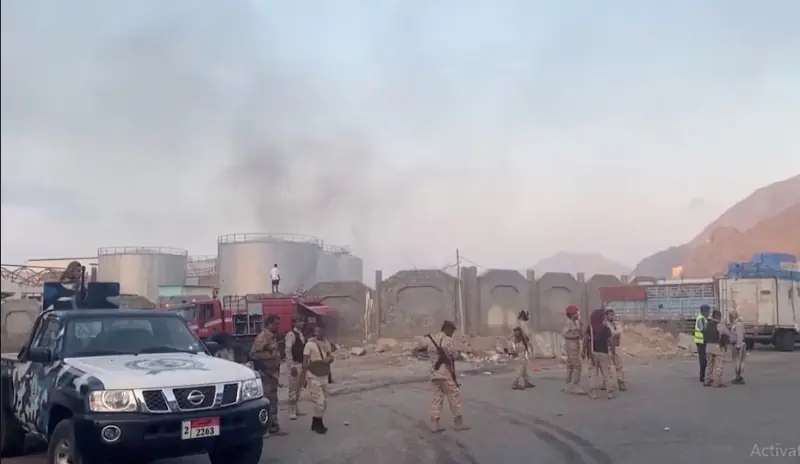
The United Arab Emirates (UAE) said on Tuesday it was pulling its remaining forces out of Yemen after Saudi Arabia backed a call for UAE forces to leave within 24 hours, in a major crisis between the two Gulf powers and oil producers. Hours earlier, Saudi-led coalition forces had attacked the southern Yemeni port of Mukalla. The airstrike on what Riyadh said was a UAE-linked weapons shipment was the most significant escalation to date in a widening rift between the two Gulf monarchies. Once the twin pillars of regional security, the Gulf heavyweights have seen their interests diverge on everything from oil quotas to geopolitical influence. The UAE defence ministry said it had voluntarily ended the mission of its counterterrorism units , its only forces still there after it “concluded” its military presence in 2019. The ministry said its remaining mission was limited to “specialised personnel as part of counterterrorism efforts, in coordination with relevant international partners”. In a statement, it said recent developments had prompted a comprehensive assessment, the state news agency WAM reported. UAE, Saudi interests in Yemen diverged in recent years Saudi Arabia had accused the UAE of pressuring Yemen’s separatist Southern Transitional Council (STC) to push towards the kingdom’s borders, and declaring its national security a “red line”. It was Riyadh’s strongest language yet in the falling-out between the neighbours, who once cooperated in a coalition against Yemen’s Iran‑aligned Houthis but have seen their interests there steadily diverge. The UAE withdrawal of the few forces it had kept in Yemen may ease tensions for now. But the real issue is whether it will keep supporting the STC. Riyadh for its part has continued, through the coalition it heads, to back Yemen’s internationally recognised government and the cabinet said it hoped the UAE would end all military or financial assistance to the STC. The coalition bombed what it said was a dock used to provide foreign military support to the separatists. Rashad al-Alimi, head of Yemen’s Saudi-backed presidential council, gave Emirati forces 24 hours to leave. The UAE said it had been surprised by the airstrike, and that the shipments in question did not contain weapons and were destined for the Emirati forces. But it said it sought a solution “that prevents escalation, based on reliable facts and existing coordination”. In a televised speech, Alimi said it had been “definitively confirmed that the United Arab Emirates pressured and directed the STC to undermine and rebel against the authority of the state through military escalation”, according to the Yemeni state news agency. Saudi Arabia and the UAE are both major players in the OPEC oil exporters’ group, and any disagreements between them could hamper consensus on oil output. They and six other OPEC+ members meet online on Sunday, and OPEC+ delegates say they will extend a policy of maintaining first-quarter production unchanged. Major stock indexes in the Gulf fell. Saudi ally accuses UAE of fuelling strife in Yemen The UAE was a member of the Saudi-led coalition battling the Houthi movement from 2015. In 2019 it started to draw down its troops but remained committed to the Saudi-backed government. The STC later decided to seek self-rule in the south, and this month launched an offensive against Saudi-supported Yemeni troops. The advance broke years of stalemate, with the STC defying Saudi warnings to claim broad control of the south, including Hadramout province. Tuesday’s airstrike followed the weekend arrival of two ships from the UAE port of Fujairah on Saturday and Sunday without coalition authorisation, the coalition said. The Saudi state news agency published a video showing a ship it identified as “Greenland”, from which it said arms and combat vehicles were unloaded. The registered owner and operator of the Greenland, a roll-on/roll-off cargo vessel, is Salem Al Makrani Cargo Company, headquartered in Dubai, with a branch in Fujairah, the company website indicates. Strike caused no casualties, Saudi state media says The coalition said the strike caused no casualties or collateral damage, according to Saudi state media. Two sources told Reuters that it targeted the dock where the cargoes were unloaded. Reuters could not immediately verify what had been hit or the nature or origin of any cargoes that may have been attacked. Yemeni state TV showed what it said was black smoke rising from the port in the early morning, with burned vehicles. Alimi declared a no-fly zone, and a sea and ground blockade on all ports and crossings for 72 hours. Aidarous al-Zubaidi, head of the STC and deputy head of the presidential council, said in a joint statement with three other members of the council that the UAE remained a main partner in the fight against the Houthis. It rejected Alimi’s orders and said they lacked consensus.