


 Dawn.com
 Afghanistan bears heavier economic cost as Pakistan trade suspension bites harder
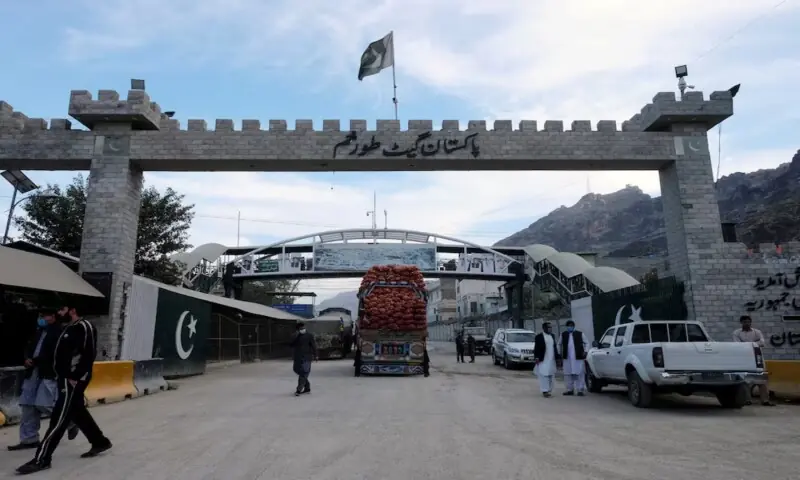
Unlike the common perception, the suspension of bilateral trade between Islamabad and Kabul for nearly two-and-a-half months has hit Afghanistan far harder than Pakistan, with export losses running several times higher for Kabul, calling attention to the uneven economic toll of the prolonged disruption. Pakistan–Afghanistan relations have deteriorated amid tensions over the banned Tehreek-i-Taliban Pakistan (TTP), with Islamabad pressing Kabul to curb cross-border terrorism. After border clashes on October 11, a temporary ceasefire followed talks in Doha and later in Istanbul, but successive rounds of negotiations failed to produce a workable solution despite mediation by Turkiye and Qatar. Pakistan declared the talks effectively over on November 7 after big differences persisted, after which Afghanistan suspended trade ties, while Pakistan had already closed its border following the clashes. Trade data shows that the export losses for Afghanistan have reached around 10 per cent since October 10, 2025, compared with about 0.6pc for Pakistan due to the suspension of bilateral trade, placing Kabul at a clear disadvantage as the prolonged disruption continues to weigh more heavily on the Afghan economy. Nearly 46pc of Afghanistan’s total exports are destined for Pakistan, including a sizable volume routed onward to India via the Wagah border, whereas Afghanistan accounts for only around 3.46pc of Pakistan’s global exports, according to trade data. This assessment does not include transit trade, which represents about 40pc of Afghanistan’s total imports, a factor that further places Kabul in a disadvantaged position. India has emerged as Kabul’s second-largest export destination, accounting for around 40pc of Afghanistan’s total exports, despite being a non-bordering country. By contrast, exports to Afghanistan’s other three neighbours remain marginal, standing at 1.94pc for Iran, 3.14pc for Uzbekistan, and just 0.37pc for Tajikistan. This pattern highlights the heavy concentration of Afghanistan’s export markets in Pakistan and India, and the critical role of the Wagah border for Afghan exports routed onward to the Indian market. Kabul may divert a portion of its remaining imports to Central Asian states, Iran, and India, but it would struggle to find alternative markets for selling its fruits and vegetables, which accounted for 71pc of total exports in 2024, according to the World Bank estimates. This raises a critical question as to why the Taliban appear willing to disrupt supply chains that are likely to inflict significant damage on an already struggling Afghan economy. A related question confronts Islamabad as well: how Pakistan plans to manage the loss of a market exceeding $1 billion, even though Afghanistan’s share in Pakistan’s overall exports remains relatively small. As social media activists trade hostile rhetoric across the Pakistan-Afghanistan border, little attention is being paid to the economic fallout of a prolonged trade disruption. Extended border closures risk triggering job losses on both sides, while setbacks to agricultural trade are likely to deepen poverty in Afghanistan, where livelihoods remain heavily dependent on cross-border commerce. Pakistan’s trade engagement with Afghanistan operates across several channels, comprising bilateral exports and imports, the use of its land routes and seaports for Afghan transit cargo, and the onward movement of Afghan exports to India through the Wagah border. Trucks loaded with supplies to leave for Afghanistan are seen stranded at the Michni checkpost, after the main Pakistan-Afghan border crossing closed after clashes, in Torkham, Pakistan September 7, 2023. — Reuters/Fayaz Aziz/file photo In contrast, Pakistan has yet to significantly leverage Afghanistan as a transit corridor for its own exports to Central Asian States (CAS), which is very marginal in both volume and value. An analysis of trade data from Pakistan Customs, the International Trade Centre (ITC), the Pakistan Business Council, and leading exporters in Pakistan and Afghanistan points to a different reality. Regardless of whether the immediate losses are small or large, disruptions in supply chains tend to have lasting consequences, as once market access is lost, regaining a foothold in each other’s markets becomes increasingly difficult. Pakistan’s exports to Afghanistan Before the Taliban takeover in August 2021, Pakistan had a strong trade surplus with Afghanistan, exporting $1.019bn vs. $579 million in imports in FY21. However, exports dropped to $762m in FY22, slightly rebounded to $953m in FY23, and rose to $1.390b in FY24. Medicines, rice, and cement consistently remained the top export items. Since October 10, however, the suspension of trade has begun to translate into measurable losses. Pakistan’s average export losses are estimated at $222.5m, equivalent to about 0.6pc of its total exports, while Afghanistan’s losses are estimated at $173m, amounting to around 10pc of Kabul’s average annual exports to the world, underscoring the sharply unequal economic impact of the disruption. This situation has placed Pakistan’s exporters at a disadvantage, particularly those dealing in the top three export items, along with allied construction industries that had benefited from the recent surge in construction activity in Afghanistan. Former president of the Sarhad Chamber of Commerce and Industry (SCCI) Muhammad Ishaq said the suspension of trade has “resulted in losses for both countries, with industries in Punjab and Khyber Pakhtunkhwa (KP) bearing the brunt of the disruption.” He noted that the formal sector has emerged as the “principal victim of the prolonged border closures.” The data showed that more than 90pc of Pakistan’s exports to Afghanistan are routed through customs stations in KP, with the bulk passing through the Torkham border crossing. By contrast, exports via the Chaman border in Balochistan remain negligible, further concentrating the impact of the trade halt on businesses and industries linked to the KP corridor. Alternative to Pakistan’s exports Historically, Afghanistan has managed to find alternatives to Pakistani goods whenever imports were restricted or borders were closed. In recent years, Kabul has increasingly shifted its food and fuel security towards Central Asian States, whereas it had previously relied heavily on Pakistan for food imports, particularly flour, sugar, and other essential items. Pakistan’s major exports to Afghanistan now include cement, pharmaceutical products, rice, and a limited range of textiles and construction materials. The current suspension of trade is therefore providing Kabul with an opportunity, and a justification, to push Afghan importers towards alternative suppliers, potentially accelerating a shift that could prove difficult to reverse even after borders reopen. President of the Afghanistan–Pakistan Joint Chamber of Commerce (APJCC), Khan Jan Alokozai, said: “Afghan importers have already begun shifting orders away from Pakistan in response to the prolonged suspension of trade, particularly in key sectors such as cement and pharmaceuticals.” He added that Afghan traders were now placing cement orders with Iran, Uzbekistan, and Tajikistan, noting that Iranian cement was available at lower prices than Pakistani supplies. On pharmaceuticals, Alokozai said, “Importers had started sourcing medicines from Turkey, Uzbekistan, and Iran, while Afghanistan had also begun importing medicines from India via air cargo. At present, Pakistani pharmaceutical products still account for around 60–70pc of Afghanistan’s market, but that share is now under pressure.” He acknowledged that the trade suspension had resulted in losses on both sides. While prices in Afghanistan had risen in the immediate aftermath of the disruption, he said traders expected the situation to stabilise over time as alternative supply arrangements were put in place. “Business representatives had held several meetings with Afghanistan’s commerce and interior ministers to seek a resolution, but so far no breakthrough had been achieved,” he said. Afghanistan exports to Pakistan In the post-Taliban period, Afghanistan’s exports to Pakistan stood at $795n in FY22, increased to $893m in FY23, fell sharply to $539m in FY24, and then recovered to $612m in FY25, keeping Pakistan as Afghanistan’s single largest export market. This trajectory is often overlooked in discussions on bilateral trade, despite its importance in understanding the depth of Afghanistan’s dependence on the Pakistani market. According to a World Bank report, Pakistan accounted for 45pc of Afghanistan’s total exports in 2024, down from 54pc in 2023, but still far ahead of any other destination. The report notes that food and coal dominated these shipments, together making up 63pc of Afghanistan’s exports to Pakistan. Afghanistan exports to India via Wagah border After Pakistan, India has emerged as Afghanistan’s second-largest export destination, with Afghan exporters relying on a mix of routes to access the Indian market. Shipments move through air cargo and via Iran’s Bandar Abbas port, but a sizable portion of Afghan exports to India continues to transit through the Wagah border. Afghan traders also use Pakistan’s Karachi ports for overseas shipments. In August 2019, Pakistan suspended bilateral trade with India following New Delhi’s decision to revoke the special status of Indian-occupied Jammu and Kashmir. Despite the halt in direct trade, Pakistan continued to keep the Wagah border operational to facilitate Afghan exports to the Indian market, allowing Afghanistan to maintain access to a key trade route even amid heightened regional tensions. Pakistani Rangers (wearing black uniforms) and Indian Border Security Force (BSF) officers lower their national flags during a parade on Pakistan’s 72nd Independence Day, at the Pakistan-India joint check-post at Wagah border, near Lahore, Pakistan, August 14, 2019. — Reuters/ Mohsin Raza Official data shows that between 2021–22 and 2025–26, Afghanistan’s exports with a declared value of Rs156.8b ($611.11m) were transported through Pakistan to India via the Wagah border and Karachi port to external markets, involving a total of 11,355 trucks. A breakdown of the figures indicates that Wagah handled the bulk of this traffic, accounting for 10,031 trucks carrying exports valued at Rs127.4bn ($507.66m). In comparison, Karachi port facilitated 1,324 trucks with a declared export value of Rs29.36bn ($103.45m) over the same five-year period, underscoring the dominant role of the land route in Afghanistan’s export transit through Pakistan. Diversion of Afghan transit trade Afghanistan’s total import bill stood at $10.8b in 2024, of which Pakistan accounted for $3.496bn, or 32.37pc of total imports. The remaining share was sourced from a widening pool of suppliers, reflecting a gradual diversion of Afghan transit and imports towards Iran, Uzbekistan, Tajikistan, Turkmenistan, India, China, and the United Arab Emirates (UAE). In recent years, Pakistan has placed several smuggling-prone items on the negative list for transit cargo, tightening controls on Afghan shipments. As a result, the value of Afghan imports transiting through Pakistan declined sharply, falling to $2.432bn in FY24 from $6.701bn in FY23, and dropping further to $1.012bn in FY25. With the current suspension of trade, industry estimates suggest the figure could slip below the $1bn mark in FY26, deepening the shift in Afghanistan’s import routes and suppliers. Urging both governments to facilitate trade, Alokozai said that businessmen have little choice but to seek alternative routes whenever disruptions or hurdles emerge from either side. “Transit trade through Pakistan has repeatedly faced unprecedented obstacles due to shifting policies, which in turn raised demurrage costs for importers,“ he said. “As a result,” he added, “Afghan traders are increasingly diverting their imports towards Central Asian states and Iran in search of more stable and predictable supply routes.” Pakistan transit trade to Central Asia In recent years, Pakistan has signed transit trade agreements with several Central Asian States, a framework that hinges heavily on stable relations between Islamabad and Kabul. Pakistan has already begun handling transit cargo linked to Tajikistan and Uzbekistan, but the current suspension of trade with Afghanistan is now disrupting these emerging corridors. Trucks loaded with supplies to leave for Afghanistan are seen stranded at the Michni checkpost, after the main Pakistan-Afghan border crossing closed after clashes, in Torkham, Pakistan September 7, 2023. — Reuters/Fayaz Aziz According to Alokozai, containers from CASs carrying goods, particularly cotton, for Pakistan are currently stranded on the Afghan side due to the trade halt. He added that Pakistani transit cargo has also piled up within Afghanistan, reflecting how quickly the suspension has begun to affect two-way transit flows beyond bilateral trade. Ex-Sarhad Chamber of Commerce and Industry president Ishaq said the disruption has also stalled planned industrial relocation. “The segments of Punjab’s textile industry had begun shifting operations to Uzbekistan, but the current uncertainty has brought that process to a halt,” he noted. Cotton and coal imports from Uzbekistan and Tajikistan, which were being used by industries in KP and Punjab, have also been affected, he added. While the government has allowed transit via Iran for access to CASs markets, Ishaq pointed out that the route is significantly longer. The distance from Torkham to CASs is around 850 kilometres, making it far shorter and more cost-effective. Longer routes, he said, sharply increase transportation costs, reducing the competitiveness of both exports and imports. Pakistan and Afghanistan have remained economically interconnected despite repeated disruptions dating back to 1947. Bilateral trade was suspended on three occasions: first from 1949 to 1950, again in 1955, and later between 1961 and 1963. Over time, formal trade has contracted, and routes have shifted, particularly during the period from 1979 to 1989, as Afghanistan’s commercial orientation increasingly turned toward northern CASs and western routes through Iran.