


 Ruptly
 'FACA troops are everywhere, so we feel safe' - Bangui locals welcome increased military presence as CAR awaits critical election results
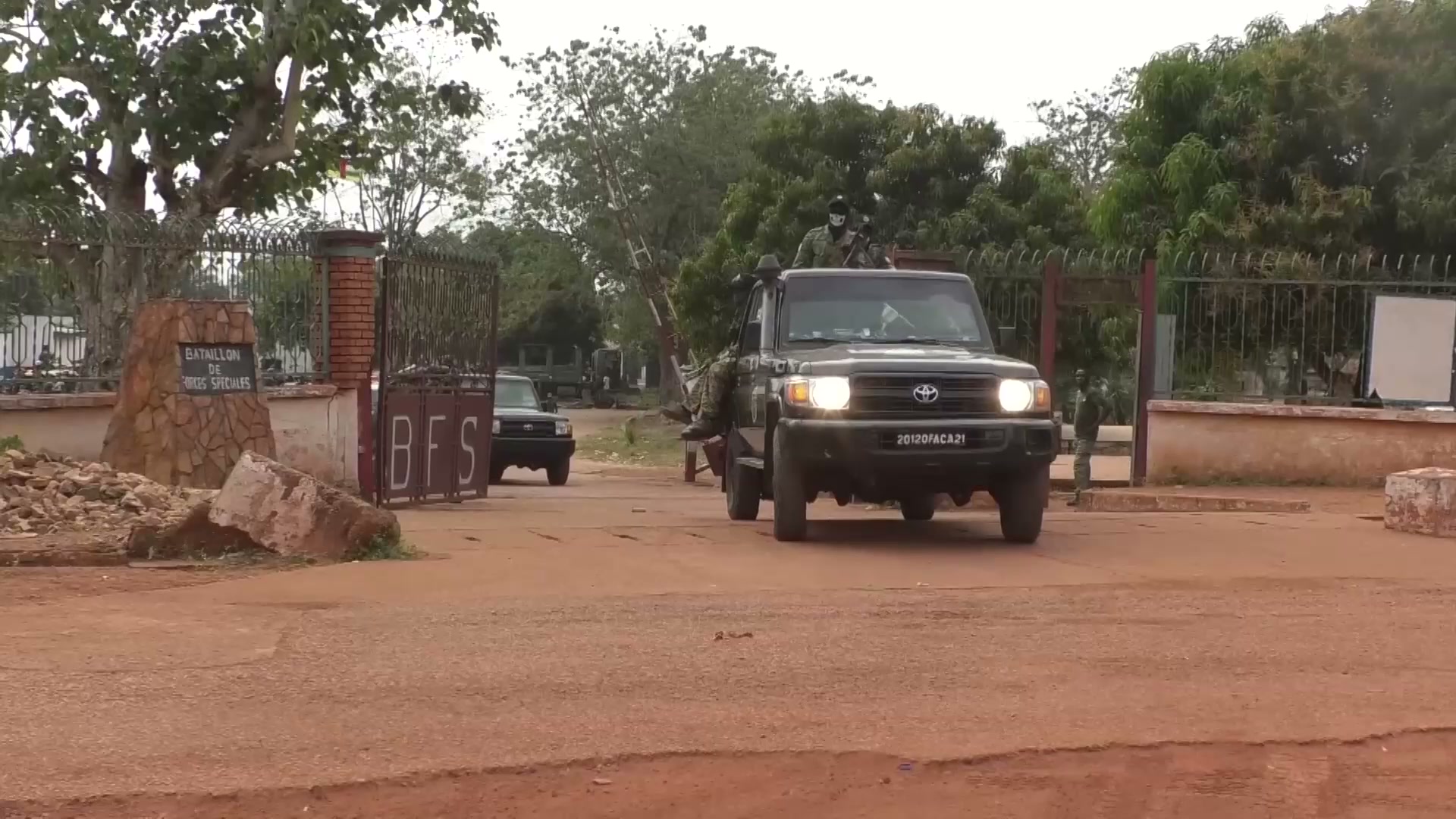
"The Central African Republic Armed Forces (FACA) were heavily deployed across Bangui on Tuesday, as officials sought to safeguard public order ahead of the presidential election results. Footage shows military vehicles carrying troops stationed at polling stations and in busy city squares, part of a coordinated large-scale operation. "The public has eagerly awaited this initiative," said a local. "After the painful events we experienced, the population began to think that, at some point, as if the defence and security forces had distanced themselves from them. So, seeing them tour the different sectors, the different arrondissements, in any case, it's an insurance policy." FACA troops are supporting peacekeeping efforts in coordination with the UN mission, MINUSCA, which, together with the UN, has deployed over 38,000 soldiers and law enforcement officers across Bangui and other major provincial hubs, including Bambari and Bossangoa. "Yesterday it was the MINUSCA, now we have our FACA, who are working like crazy," noted another resident. "Seeing our FACA everywhere - in the neighbourhood, along the streets, on the roads - gives us hope for safety. We've forgotten about all the robberies because there are FACA [troops] present, in full view, everywhere," he added. The country saw widespread public unrest during the last presidential election in 2021, when the opposition alliance Coalition of Patriots for Change (CPC) reportedly aimed to disrupt the election and overthrow the government, resulting in over 1,700 deaths and mass displacement. Provisional election results are expected by January 5 in a vote widely seen as likely to extend President Faustin-Archange Touadera's rule beyond two terms for the first time in the country's history. Touadera, who oversaw a controversial 2023 referendum that removed presidential term limits, has campaigned on promises of peace, security, and infrastructure development. He faces six opposition candidates, including former prime ministers Anicet-Georges Dologuele and Henri-Marie Dondra. The main opposition coalition, known by its French acronym BRDC, boycotted the vote, citing conditions that they said were not conducive to a free and fair election. In addition to choosing a president, voters also cast ballots for national lawmakers, regional representatives and, for the first time in nearly four decades, municipal administrators."