


 Dawn.com
 Snowy peaks and Silk Road secrets: a winter journey through Uzbekistan
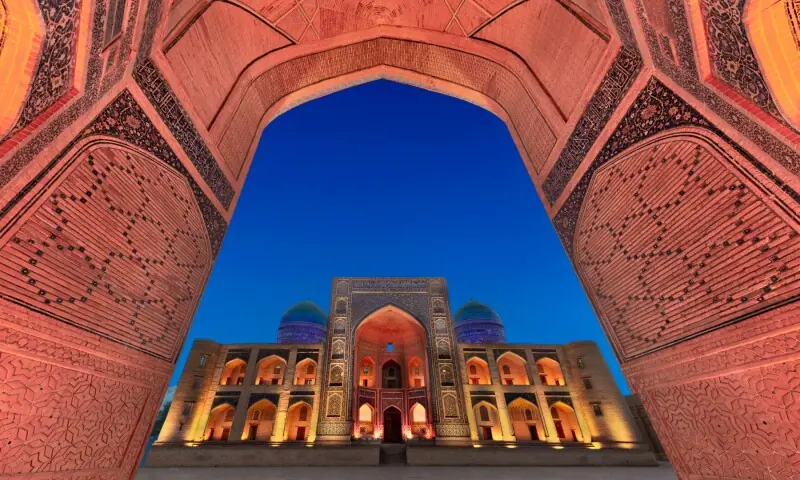
For many travel enthusiasts, the year-end holiday is synonymous with seeking a climate that actually requires a jacket. Uzbekistan has emerged as a compelling alternative for those wanting a mix of alpine adventure and deep Islamic history. The gateway to Central Asia is more accessible than ever, offering a winter experience that is both culturally familiar and geographically spectacular. Amirsoy: A new winter standard The highlight for any winter traveller is the Amirsoy Mountain Resort, the largest ski destination in Uzbekistan. Nestled on the spurs of the Chatkal Ridge within the western Tian Shan Mountains (a Unesco World Heritage site), it is located just an hour’s drive from Tashkent. It is easy to see why the resort is a draw as the majestic, sprawling peaks create a stunning backdrop, offering a sharp, beautiful contrast between the crisp, sunny air and the endless blankets of white snow. The highlight for any winter traveller is the Amirsoy Mountain Resort, the largest ski destination in Uzbekistan. — Via The Star Amirsoy features high-speed gondolas that take visitors up to 2,290m to ski down the slopes. Even if you aren’t a skier, the “top of the world” views from the peak are worth the trip. For families, the resort provides designated areas for tubing and sledging, activities that require zero experience but offer plenty of fun in the snow, alongside five-star chalets for housing the whole family. Everything from winter jackets to boots can be rented on-site, making it easy for those coming from the tropics to jump straight into the action. Amirsoy features high-speed gondolas that take visitors up to 2,290m to ski down the slopes. Even if you aren’t a skier, the “top of the world” views from the peak are worth the trip. — via The Star Tashkent: The urban hub Tashkent itself is a city of wide boulevards and surprising greenery, even in the colder months. It serves as a base where you can experience the intersection of ancient history and modern life. Tashkent itself is a city of wide boulevards and surprising greenery, even in the colder months. — Via The Star The Tashkent Metro is a must-visit; the stations are designed with marble, chandeliers and intricate mosaics, making a simple commute feel like a walk through an underground museum. The stations are designed with marble, chandeliers and intricate mosaics. — Via The Star In the old part of the city, the Hazrati Imam Complex brings together mausoleums, mosques and libraries, crowned with blue domes. The Uthman Quran, the world’s oldest Quran, once housed here, is now preserved at the Centre for Islamic Civilisation, a modern cultural landmark dedicated to Uzbekistan’s Islamic heritage and its role in world civilisation. Nearby, the Chorsu Bazaar offers a sensory overload of smells and people. The Hazrati Imam Complex brings together mausoleums, mosques and libraries, crowned with blue domes. — Via The Star Under its massive blue dome, you can find everything from local spices and dried fruits to the famous Tashkent bread (non), which is stamped with unique patterns and baked fresh in clay ovens. However, come prepared with local cash (Uzbek Som/UZS), as some vendors will only accept local currency. The Chorsu Bazaar offers a sensory overload of smells and people. — Via The Star The golden road: Samarkand and Bukhara No trip to Uzbekistan is complete without boarding the Afrosiyob high-speed train. In just about two hours, you can reach Samarkand, a city that feels pulled from a history book. The Registan is the stunning, historic heart of Samarkand, a public square famed for its breathtaking ensemble of three majestic madrasas (Islamic schools) – Ulugh Beg, Sher-Dor and Tilla-Kori – showcasing intricate tilework and grand portals, making it a Unesco World Heritage site and an iconic symbol of Central Asian Islamic architecture. — Via The Star The Registan is the stunning, historic heart of Samarkand, a public square famed for its breathtaking ensemble of three majestic madrasas (Islamic schools) – Ulugh Beg, Sher-Dor and Tilla-Kori – showcasing intricate tilework and grand portals, making it a Unesco World Heritage site and an iconic symbol of Central Asian Islamic architecture. The patterns in the tiles at the Shah-i Zinda in Samarkand are decorated in blue, white and turquoise tiles. The patterns in the tiles at the Shah-i Zinda in Samarkand are decorated in blue, white and turquoise tiles. — Via The Star Marvel at sapphire-tiled masterpieces like the breathtaking Shah-i-Zinda necropolis and the opulent Gur-e-Amir Mausoleum, the final resting place of Amir Timur. Marvel at sapphire-tiled masterpieces like the breathtaking Shah-i-Zinda necropolis and the opulent Gur-e-Amir Mausoleum, the final resting place of Amir Timur. — Via The Star For Muslims, the true heart of Samarkand lies at the Imam Al-Bukhari Memorial Complex. As the final resting place of the scholar who compiled the most authentic hadith used in religious life, this site is a deeply spiritual pilgrimage destination. For the best photos, arrive early at opening (7am) or near closing (7pm) to capture the shimmering turquoise domes in soft golden light without the heavy midday tour groups. Finally, walk through Registan Square, where the three towering madrasas are especially atmospheric and quiet during the winter off-season. Further west lies Bukhara, the spiritual heart of Uzbekistan and Central Asia. Renowned for its deep Islamic heritage, this “open-air museum” remains a sacred beacon of the Muslim world. Walking through the narrow alleys of the Ark Fortress or standing at the foot of the Kalyan Minaret, a structure so impressive that even invaders in the 12th century refused to destroy it, gives you a profound sense of the scale of the ancient Silk Road. Walking through the narrow alleys of the Ark Fortress or standing at the foot of the Kalyan Minaret, a structure so impressive that even invaders in the 12th century refused to destroy it, gives you a profound sense of the scale of the ancient Silk Road. — Via The Star Bukhara is also the country’s premier destination for artisanal souvenirs. Its historic 16th-century trading domes are still filled with masters practising ancient crafts, from intricate gold embroidery and hand-stitched suzani textiles to the city’s famous bird-shaped hand-forged scissors and high-quality ikat silks. Bukhara offers both a treasure trove of heritage gifts and a deep connection to an Islamic history that has remained remarkably unchanged for centuries. Halal Comfort and Hospitality As a majority-Muslim country, travellers are spoilt for choice when it comes to finding halal food. You will find yourself gravitating toward Plov, the national rice dish cooked in massive cauldrons with tender lamb and yellow carrots. Other staples like Samsa (flaky meat pastries), Mastava (soup with spiced meat and rice) and Shurpa (a hearty lamb soup) provide the perfect warmth after a day of sightseeing. As a majority-Muslim country, travellers are spoilt for choice when it comes to finding halal food. — Via The Star Expect to be welcomed with endless tea (choy) and warm bread, especially if you choose to stay in traditional boutique hotels that are restored madrasas or 19th-century mansions. From five-star city centre hotels to immersive boutiques, guests are greeted with a “welcome tea”, served in an ornate piala (ceramic bowl), reflecting a culture that treats every traveller as a deeply honoured guest and friend. If you are looking for a winter break that offers more than just a cold breeze, the snow-capped mountains and turquoise domes of Uzbekistan are waiting to be explored. This article was originally published on The Star , an ANN partner of Dawn. Header image: The Mir-i-Arab Madrasah in Bukhara, Uzbekistan, viewed through an archway. — Via The Star