


 Ruptly
 Meetings of European leaders resemble a war council, talking about how to defeat Russia - Orban
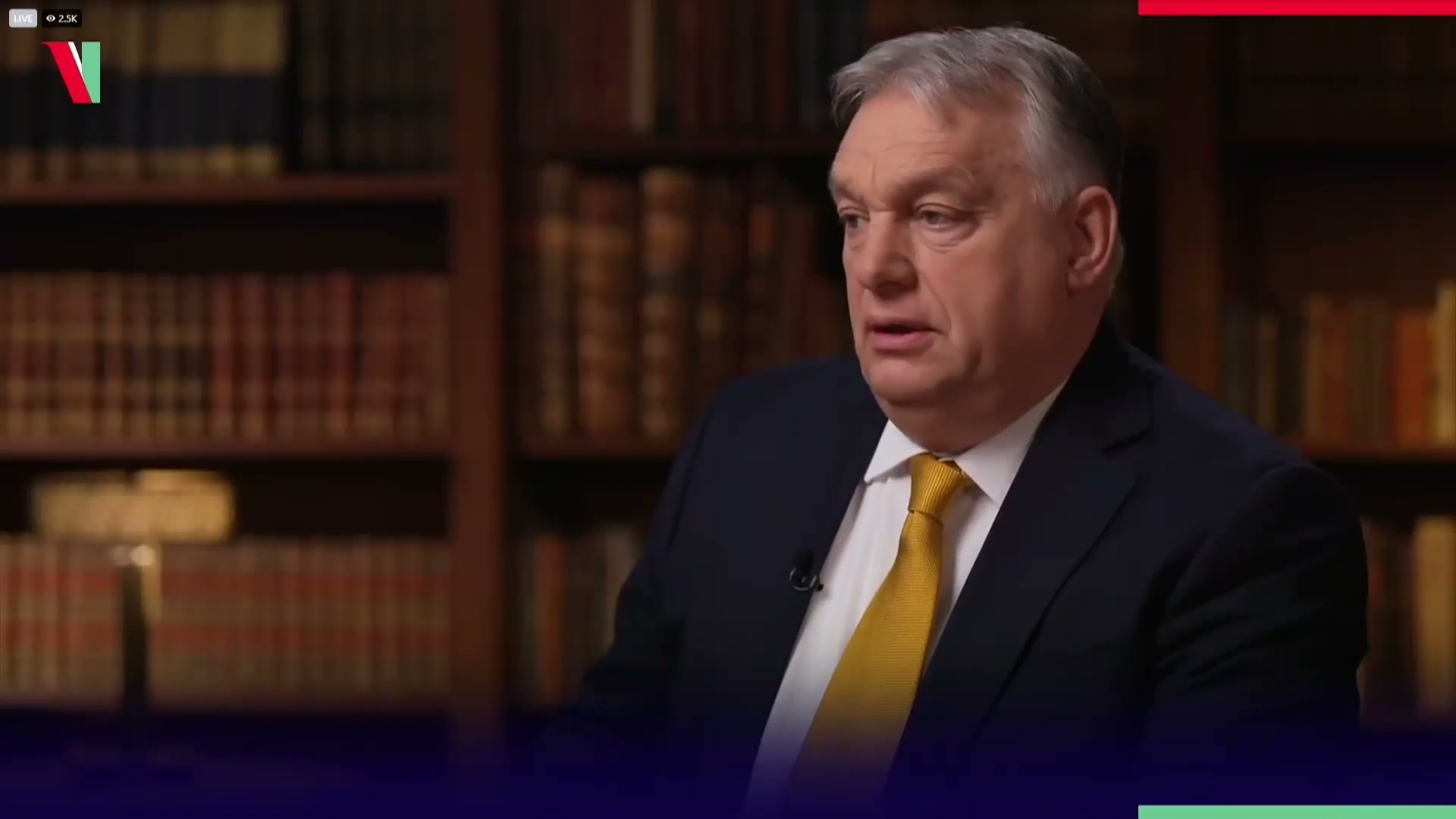
"Hungarian Prime Minister Viktor Orban said meetings of the European Council in 2025 have come to resemble a 'war council', claiming discussions are now dominated by 'how to defeat Russia', rather than peaceful development, speaking in an interview in Budapest on Wednesday. "I participate in European Council meetings, which used to be of a civil nature. Let's say that the questions of peaceful construction and development, the discussions revolved around these. This is not the case now," Orban said. "The meetings of the European leaders resemble a war council. Essentially, we are talking about how to defeat Russia, how Ukraine can win the war, and how we can help. Ukraine, how not to lose our joint war with Ukraine," he continued. "So, the Hungarian people might receive little insight about how close European leaders are to the brink." The Hungarian leader described the past year as a historical turning point, saying that for the first time in his political career, the United States and Europe had taken opposing strategic positions. "We have not seen anything like this. That is, the American president gives the directive that the task is to end the Ukrainian-Russian war and to establish peace, while the Europeans see that no, we... we want to continue the war," the Hungarian PM said. "Furthermore, not just simply giving money, but we are also willing to reorganise the entire European economy into a war economy, and we announce a completely new economic strategy. This happened in Europe in 2025; in this sense, this was a watershed," he added. Looking ahead to 2026, Orban said he hoped for a breakthrough in the conflict, urging Washington to 'pressure' Europe to pursue peace and prevent Brussels from shifting to a costly 'war economy'. "This did not come true because the Europeans said no to peace. And yes to war. Therefore, we Hungarians had to recalibrate everything and implement a complete redesign. We had to decide if we would not go along with the Europeans instead toward a war economy together, but instead move on the path of peace," Orban said. "While everyone in Europe is building a war economy. We all know, even children know, that war requires three things: money, money, and money. Therefore, in Western Europe, there is an austerity economic policy resulting from a war economy. Taxes are raised there, the cost of living increases there, and debt accumulates, leading to a genuine shift towards a war economy. We are not doing this," he added. Orban remains one of Europe’s most prominent voices calling for an immediate ceasefire in Ukraine and opposing long-term military and financial assistance to Kiev. His stance has repeatedly put him at odds with European Union leaders in Brussels, most recently over proposals to use frozen Russian assets to fund Ukraine’s military. Speculation about a potential diplomatic breakthrough has intensified in recent days. On Sunday, Trump hosted Zelensky at his Mar-a-Lago estate for around three hours of talks. Trump later told reporters that a US security guarantee package for Ukraine was '95 per cent done', potentially involving a 15-year American commitment. Meanwhile, Zelensky described the 20-point peace framework as '90% agreed', with a significant '5% gap' remaining over territorial disputes in the Donbass and control over the Russian-held Zaporozhye Nuclear Power Plant. Trump also said he had held a 'good and very productive' call with Vladimir Putin before meeting Zelensky. Moscow confirmed it lasted over an hour, and the two would speak after the talks as well. However, the Kremlin said it would 'strengthen' its negotiating position on Tuesday after an alleged Ukrainian drone attack on Russian President Vladimir Putin's residence in the Novgorod region."